Burkina Faso’s military leader calls for democracy to be ‘forgotten’
- Reading time: 5 min
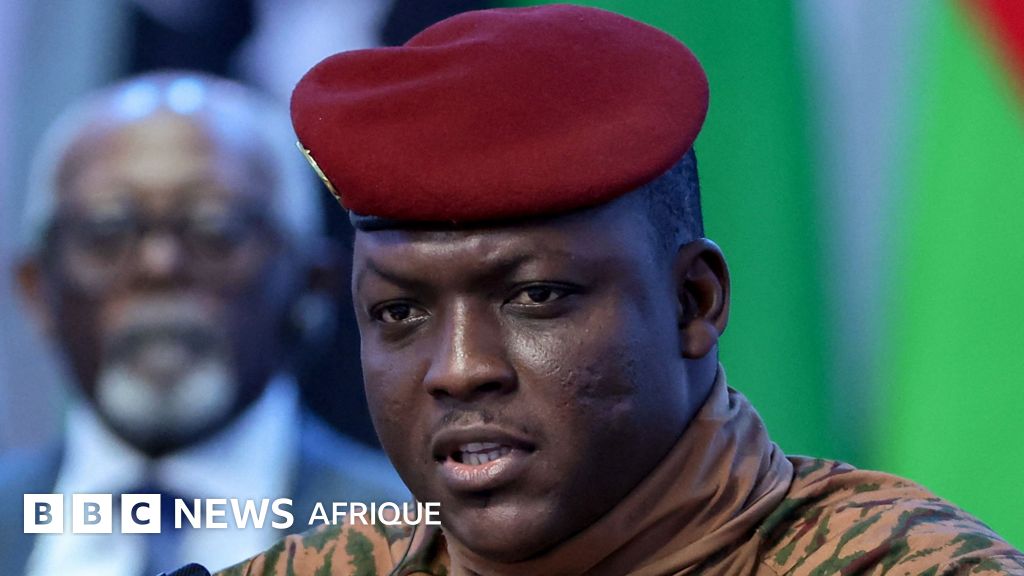
Burkina Faso’s military leader, Captain Ibrahim Traoré, has declared that the country should “forget” about democracy, calling it incompatible with Burkina Faso’s path forward. In a televised interview, he asserted that democracy “does not suit us” and accused Western powers of using it to destabilize nations.
From promise to reversal: the broken democratic timeline
Three years after seizing power in a coup, Traoré had initially pledged to restore democratic governance by July 2024. Yet just two months before that deadline, the military junta extended his mandate by five years, effectively abandoning the democratic transition. This move followed a January announcement banning all political parties as part of a broader effort to “rebuild the state.”
“Democracy brings death”: Traoré’s controversial stance
During the interview, Traoré stated bluntly: “People must forget the issue of democracy. Democracy is not for us.” He pointed to Libya as a cautionary example, highlighting how Western-backed regime change led to prolonged instability and division in the North African nation. “Wherever Western powers attempt to impose democracy, it always ends in bloodshed,” he argued.
Traoré, 38, positions himself as a revolutionary leader fighting Western imperialism. He dismissed political parties as divisive and corrupt, claiming they embody “all vices: lying, flattery, and empty rhetoric.” Instead, he promotes a system based on sovereignty, patriotism, and revolutionary mobilization, where traditional leaders and grassroots structures would play a central role.
Economic and military autonomy: the pillars of a new Burkina Faso
The military ruler emphasized the need for economic and military self-reliance, arguing that Burkina Faso cannot progress with a standard eight-hour workday. He also stressed hard work as essential to closing the gap with wealthier nations. However, his governance has been marked by repression of dissent, targeting opposition figures, media outlets, and civil society groups. Critics have accused his government of punishing opponents by sending them to the frontlines of the fight against Islamist militants.
Despite these controversies, Traoré has gained significant support across Africa for his anti-Western rhetoric and panafricanist vision. Like neighboring juntas in Mali and Niger, Burkina Faso has distanced itself from Western allies—particularly France—in its fight against Islamist insurgents. Instead, it has turned to Russia for military support, though violence in the region shows no signs of abating.
Human rights under strain: a growing civilian toll
Since Traoré’s rise to power in 2023, more than 1,800 civilians have been killed in Burkina Faso, according to recent reports. Two-thirds of these deaths are attributed to state forces and allied militias, with the remainder linked to Islamist militants. The ongoing conflict continues to devastate communities across the country.
Traoré’s rejection of democracy and tightening grip on power signal a dramatic shift in Burkina Faso’s political trajectory, leaving many to question the future of governance and human rights in the nation.