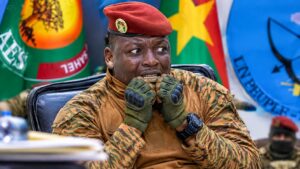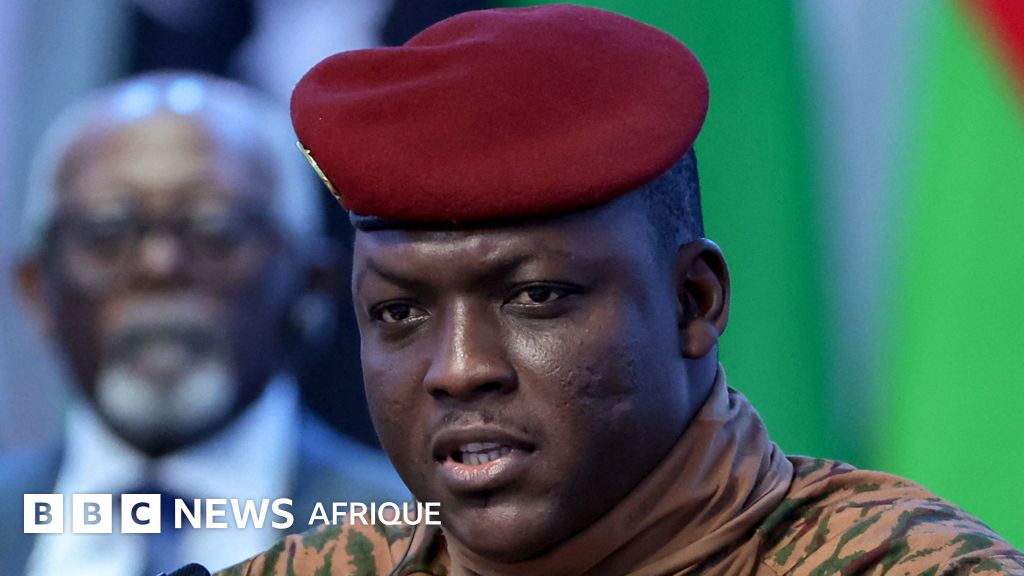
The head of Burkina Faso’s military government has declared that democracy is not suitable for the nation and must be ‘forgotten’ by its people. This bold statement came during a nationally televised interview where Captain Ibrahim Traoré outlined his administration’s rejection of Western-style governance.

Rejection of Western political models
Speaking to state television viewers, Traoré stated bluntly: ‘People must abandon the idea of democracy. It is not for us.’ The 38-year-old leader, who presents himself as a revolutionary figure fighting Western imperialism, drew parallels with Libya’s experience under Muammar Gaddafi, suggesting it as an example of what could happen when Western intervention follows political change.
Gaddafi’s four-decade rule, which provided social services while maintaining an authoritarian grip, ended violently during a Western-backed uprising. Since his death, Libya has remained mired in political divisions, with no successful elections held and ongoing conflicts among armed groups.
Alternative governance vision
The military leader, who seized power three years ago, had previously promised to restore democratic rule by July 2024. However, with two months remaining before that deadline, his administration announced a five-year extension of its mandate, citing the need for a unique national approach.
Traoré outlined a governance model he described as ‘our own path, not copied from anyone’. This system prioritizes sovereignty, patriotism, and revolutionary mobilization, with traditional leaders and grassroots structures playing key roles. He emphasized the need for economic and military self-reliance, arguing that shorter workdays would not help Burkina Faso catch up with wealthier nations.
Crackdown on political opposition
The government has banned all political parties as part of its state rebuilding plan. Traoré dismissed traditional politicians as corrupt figures, stating: ‘In Africa – at least in Burkina Faso – a real politician embodies all vices: liars, flatterers, and empty talkers.’
Since taking control, Traoré has suppressed dissent through measures targeting opposition groups, media outlets, and civil society organizations. Reports indicate critics have been sent to frontline positions in the fight against Islamist militants, raising concerns about forced conscription.
Regional context and ongoing insurgency
Burkina Faso’s rejection of democracy aligns with its neighbors Mali and Niger, both governed by military juntas. These three nations have distanced themselves from Western partners, particularly France, in their fight against Islamist militants responsible for a decade-long insurgency in the Sahel region.
Instead, they have turned to Russia for military support, though violence continues unabated. Human Rights Watch recently reported over 1,800 civilian deaths in Burkina Faso since Traoré’s 2023 takeover, with two-thirds attributed to government forces and allied militias.