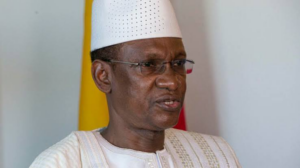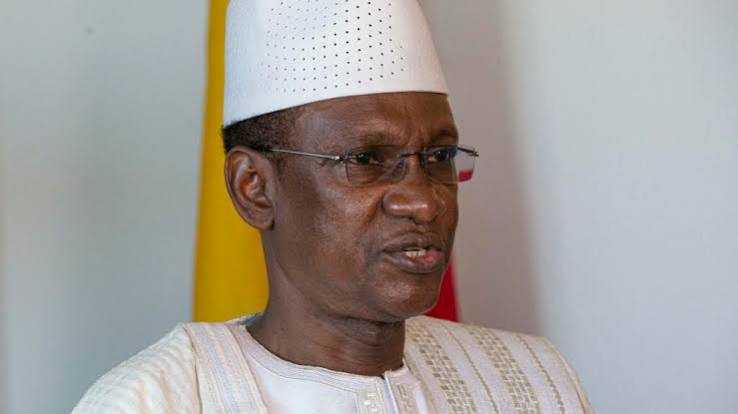
The clock struck 440 days this week in Mali, a sobering milestone that marks the duration of Choguel Kokalla Maïga’s pretrial detention. Once the military junta’s most outspoken advocate, architect of its ideological framework, and a bridge between civil rule and military rule, the former prime minister now finds himself in a cell — a stark reversal that underscores the fragility of political loyalties in Bamako’s shifting corridors of power.
From UN podium to prison cell: The rise and fall of a military ally
Not long ago, Choguel Maïga stood at the United Nations, delivering speeches on Mali’s “rediscovered sovereignty” and defending every strategic move made by the country’s military leadership. He wasn’t just a figurehead; he was the voice that gave the junta’s actions ideological consistency and public legitimacy. His role was pivotal in justifying the transition and maintaining a facade of civilian inclusion within the military-led government.
Yet when he began to voice dissent — even cautiously — or sought to carve out his own political space within the regime, the alliance shattered. His swift removal from power and subsequent detention exposed a harsh truth: in Mali’s current system, loyalty has an expiration date, and political divergence carries severe consequences.
Pretrial detention weaponized: how justice becomes an instrument of silence
The fact that Choguel Maïga has now spent over a year in pretrial detention without a verdict reveals more than just legal inefficiency. It exposes a deliberate strategy: stretching judicial procedures to neutralize opponents indefinitely. What was intended as a mechanism for preserving order has morphed into a tool for silencing critics under the banner of “national security” and “institutional reform.”
This prolonged detention sends a chilling message across Mali’s political landscape:
- Institutional hypocrisy: Despite official rhetoric celebrating transparency and the end of impunity, the state continues to rely on prolonged detention as a means of control, denying due process to those who challenge the status quo.
- Self-inflicted isolation: Choguel Maïga now bears the consequences of the very system he helped legitimize. The same legal and security structures he defended during his time in office are now being turned against him.
- A warning to rivals: His case serves as a stark reminder to every politician in Mali: service rendered yesterday guarantees no protection today. Even the most trusted allies can be discarded if they step even a fraction outside the official line.
What 440 days of detention reveals about Mali’s transition
This record-breaking detention isn’t just a personal tragedy — it’s a symptom of a transition spiraling out of control. By keeping Choguel Maïga behind bars, the military leadership appears determined to close the chapter on civilian influence within government. But this approach carries a heavy cost: it signals to both domestic and international observers that the regime values the silence of prisons over the vibrancy of public debate.
These 440 days reflect a deeper crisis — a system so fearful of internal dissent that it consumes its own founders to preserve an illusion of total control. In doing so, it not only undermines Mali’s democratic aspirations but also risks deepening political fractures across society.
The human and economic toll of prolonged detention
The consequences of such prolonged incarceration extend beyond politics. For Choguel Maïga’s family, it means emotional distress and financial strain. For the country, it means a brain drain as skilled leaders are sidelined, and foreign investors hesitate amid growing signs of instability. The longer this detention drags on, the higher the price Mali will pay — not just in justice delayed, but in opportunities lost and trust eroded.
As the junta tightens its grip, the question remains: at what point does silencing dissent become self-sabotage? When the architects of the transition are the first to be broken by it, the foundations of the entire system begin to crack.