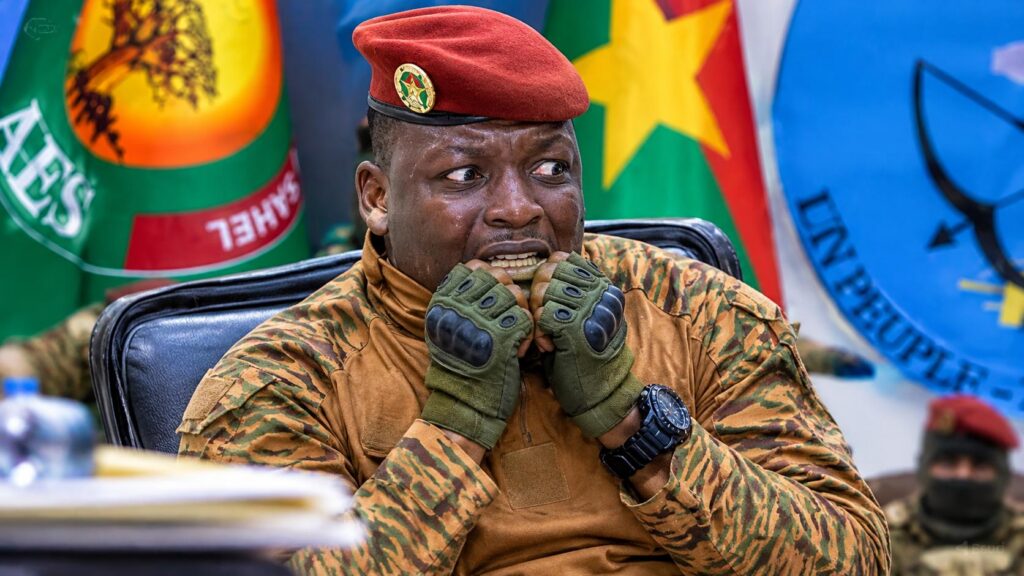
Ibrahim Traoré’s decision to skip the Russia-Africa summit has sent ripples through Burkina Faso’s political landscape, raising critical questions about the stability of his leadership and the internal divisions threatening his regime. As Africa’s geopolitical alliances shift, the Burkinabè president’s absence from a high-profile international gathering could signal deeper vulnerabilities within his circle of power.
The Cost of Close Ties with Moscow: A Double-Edged Sword
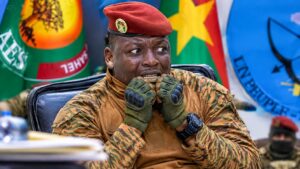
Traoré’s public alignment with Vladimir Poutine over the past year has reshaped Burkina Faso’s diplomatic posture, positioning the country as a bold, sovereignist actor intent on breaking from its colonial past. Yet this strategic pivot, while bolstering his international image, may have inadvertently exposed fractures within his own administration. Reports suggest his absence from the summit stems not from diplomatic indifference but from grave security concerns: the very allies he once trusted may now be viewed as potential threats to his rule.
Propaganda vs. Reality: The Fragility of a Carefully Constructed Image
Traoré’s leadership has been meticulously crafted around a narrative of determination and national renewal, with social media amplifying his image as a defiant, anti-Western champion. However, critics argue that this propaganda-first approach risks obscuring the country’s mounting challenges rising insurgency, humanitarian crises, and economic strain leaving his regime vulnerable to both public skepticism and internal dissent. When a government prioritizes perception over substance, even its most loyal supporters may begin to question its long-term viability.
Could the very tactics that elevated Traoré to power now be eroding the trust of those who once stood beside him?
Security Through Suspicion: The Military’s Unseen Fault Lines
In regimes born from coups, loyalty is currency and trust is a luxury. Traoré’s ascent was secured through alliances with military factions, whose leaders now wield disproportionate influence over national security and governance. Yet as power consolidates, so do rivalries. The president’s reported wariness of his inner circle hints at a troubling reality: in Burkina Faso’s power structure, the strongest security threats may come from those sworn to protect him.
An absence at a summit is one thing; a fracture within the ranks that makes such an absence necessary is another. Without concrete evidence of a coup plot, the question remains: Is this a precautionary measure or a symptom of a regime struggling to hold itself together?
Diplomacy’s Double-Edged Impact on Domestic Stability
Traoré’s international posturing has undeniably burnished his credentials as a statesman willing to defy global expectations. But geopolitical boldness offers no shield against domestic discord. If his administration is indeed contending with internal power struggles, his diplomatic engagements once a tool for consolidating legitimacy could now be overshadowed by the specter of instability. The Russia-Africa summit may have been the stage for showcasing Burkina Faso’s new alliances, but it may also have highlighted the cracks in its foundation.
Three Scenarios Behind the Absence
Strategic Caution: A leader prioritizing internal security above diplomatic visibility, wary of leaving his seat vulnerable to a power vacuum.
Internal Dissent: Growing discontent among military or political allies who once enabled his rise but now challenge his decisions.
Propaganda Over Substance: A reliance on image-building that has failed to address the nation’s urgent crises, undermining both public and elite confidence.
The Ultimate Test: Can Burkina Faso’s Leadership Hold Its Own?
The coming weeks will reveal whether Traoré’s absence was a calculated move or a sign of deeper instability. What cannot be denied is the high stakes: a leader’s ability to maintain cohesion within his ranks may now be the most decisive factor in Burkina Faso’s future. As the country grapples with insurgency and economic hardship, the internal divisions plaguing its leadership could prove far more destructive than any external pressure.
For now, the world watches Russia and Africa unite but in Ouagadougou, the real drama unfolds behind closed doors.
By Rose Njoya — Journalist