The Niger crisis sends shockwaves to Burkina Faso and Togo
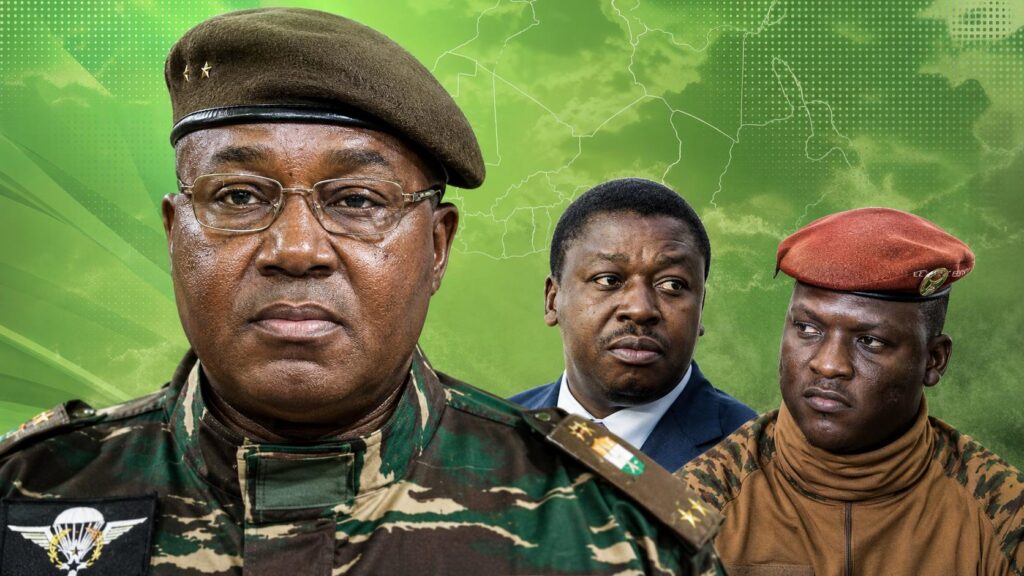
The recent turmoil in Niamey has exposed a stark reality for Niger’s neighboring allies, Burkina Faso and Togo. The heavy gunfire and political instability that destabilized General Abdourahamane Tiani’s regime serve as a stark reminder that no military-led government in the Sahel region is immune to internal fractures. What happened in Niger is not an isolated incident—it is a ticking time bomb for Ibrahim Traoré in Ouagadougou and Faure Gnassingbé in Lomé.
Burkina Faso: a regime under constant military threat
For Captain Ibrahim Traoré, the specter of a mutiny looms large. The Burkinabè government operates under relentless suspicion within its own ranks. Multiple thwarted destabilization attempts—including failed coups in early 2026 and late 2023—have left the regime in Ouagadougou walking a tightrope.
Seeing Niamey descend into chaos forces Traoré to confront his own vulnerabilities. The same factors threatening Tiani’s grip on power are deeply embedded in Burkina Faso:
- Soldier fatigue and broken promises: Despite nationalist rhetoric, frontline troops face overwhelming security pressures, and their sacrifices go unrecognized. Disillusionment among junior officers is a powder keg for rebellion.
- Fragmented military loyalties: Repeated purges within the Burkinabè army and the heavy reliance on civilian militias (VDP) have widened divisions. Like in Niamey, the threat of dissident factions taking up arms is more real than ever.
Togo’s leadership scrambles to secure its defenses
While Togo’s situation appears calmer on the surface, the recent August 2026 military reshuffle reveals deep unease. President Faure Gnassingbé’s urgent overhaul of top military and intelligence positions was not just routine—it was a desperate bid to control potential threats.
The reshuffle signals that Gnassingbé is acutely aware of growing garrison tensions, particularly in the northern regions under the Koundjoaré operation. His actions expose a chilling truth: when a leader reshuffles their army and intelligence chiefs in haste, it is because loyalty is no longer guaranteed. The Togolese military, historically a key pillar of power, remains an unpredictable force.
How instability spreads like wildfire
The Niamey crisis is a direct consequence of a dangerous gamble: using military force to enforce political agendas. When command chains fracture under pressure, the institution collapses from within. The events of August 29 in Niger prove that when a regime prioritizes control over stability, every night in Ouagadougou and Lomé becomes a silent countdown to chaos.
Traoré and Gnassingbé now face an unavoidable truth: without institutional legitimacy, power rests solely on the barrel of a gun. The question is no longer if, but when, the next mutiny will strike.