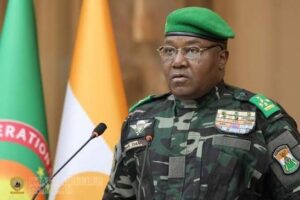
The regime in Niamey has irrevocably crossed a moral and political line, shattering any remaining credibility it claimed to uphold. Under the guise of ‘reclaimed sovereignty,’ the National Council for the Safeguarding of the Homeland (CNSP) has just exposed its true nature in the bloodiest possible way. During the violent clashes of August 28-29, the general in power, Abdourahamane Tiani, made a staggering choice: to suppress rebellious soldiers from the 101st base not with loyal troops, but with foreign paramilitary forces, turning their weapons against their own comrades.
From sovereignty rhetoric to foreign mercenary reality
Since seizing power in July 2023, the military junta has relentlessly promoted a narrative of national dignity, rejecting foreign interference and vowing to restore the army’s rightful place. Yet, when faced with internal dissent in the heart of Niamey, the regime’s actions spoke louder than words. By summoning foreign mercenaries to crush Nigerian soldiers in their own capital, Tiani has not only betrayed his own propaganda—he has committed an act of treason against the nation itself.
The hollow meaning of ‘sovereignty’
Sovereignty is not achieved by swapping one overlord for another. When a leader must rely on foreign guns to protect his throne from his own people and army, his authority ceases to be sovereign—it becomes a proxy occupation. The general’s decision to outsource national security to foreign actors has reshaped the power dynamics in Niamey, leaving soldiers to witness a bitter irony: foreign forces now dictate the rhythm of Niger’s political life.
The army turned against itself
The descent into this self-destructive spiral reveals the deep paranoia gripping the junta. After years of a stalled transition and worsening security threats, the regime has grown so distrustful of its own soldiers that it now sees them as threats. The use of foreign mercenaries to suppress Nigerian troops has severed the sacred bond between a commander and his men, inflicting wounds that may never heal.
- An institutional crime: Shedding the blood of national soldiers at the hands of foreigners on native soil rips apart the army’s unity and plunges it into an identity crisis.
- A collapse of military legitimacy: The regime’s founding narrative—restoring order—has collapsed. Instead of defending Niger’s borders, it now wages war on its own soldiers in the capital.
The historical verdict
The general’s alliance with foreign mercenaries has exposed the fatal flaw in his rule: power built on borrowed force is power doomed to fail. Tiani’s claim of being a ‘patriot’ has been silenced by the gunfire in Niamey. History will remember those who promised to free Niger not as liberators, but as the architects of its soldiers’ bloodshed at foreign hands.