How blanket restrictions on Mohamid families are reshaping lives in Niger
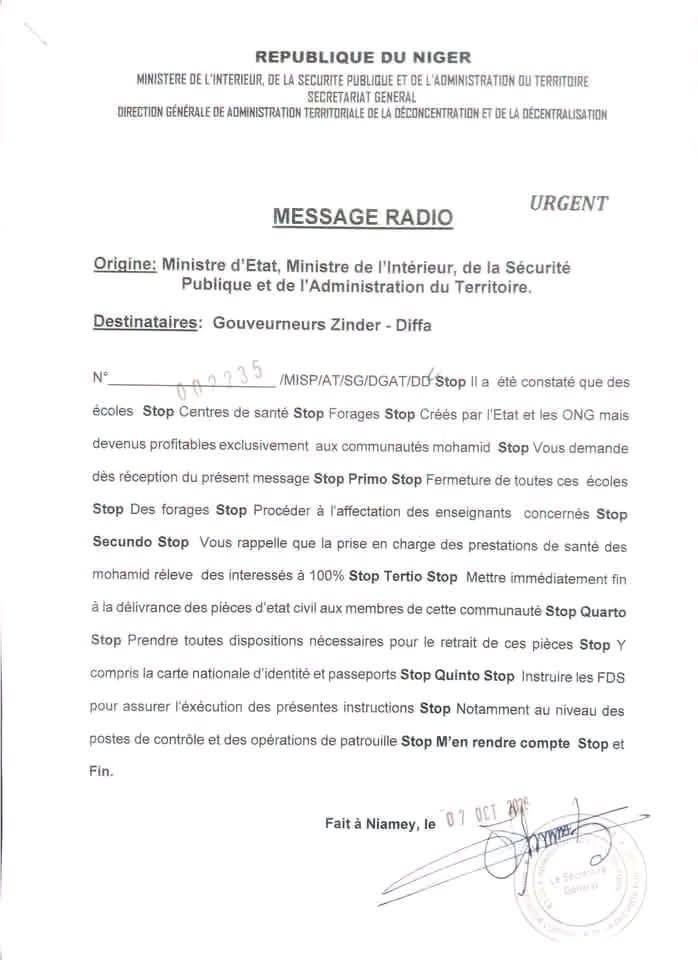
The decision to shut down schools, cut off water access, suspend healthcare support, and withdraw identity documents for the entire Mohamid community in Niger’s Zinder and Diffa regions has triggered a crisis far beyond administrative policy. What began as a directive from the Ministry of Interior has rapidly evolved into a humanitarian and economic emergency, threatening the fundamental rights and daily survival of thousands of citizens. Officials claim the measures target security risks, but the reality on the ground tells a different story—one of collective punishment that undermines national cohesion and state legitimacy.
When basic rights become leverage in state security initiatives
Access to education, clean water, healthcare, and legal identity are not privileges granted by authorities—they are essential components of human dignity and participation in society. Yet recent measures enforced against the Mohamid people have systematically dismantled these rights under the guise of national security.
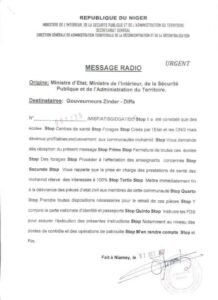
The October 2026 directive issued by Niger’s Interior Ministry ordered the closure of schools serving Mohamid children, the sealing of community water wells, and the suspension of publicly funded healthcare for members of the group. Equally alarming is the instruction to revoke and withhold national identity cards and passports, stripping individuals of their legal personhood and access to public services. Security forces have been mobilized to enforce compliance, raising serious concerns about the militarization of civilian governance.
These actions raise urgent questions: Is there documented evidence linking the entire Mohamid community to security threats? Are there proportionate alternatives to collective punishment? And what legal safeguards protect affected families from arbitrary deprivation of rights?
Breaking down the human cost
- Education interrupted: School closures deny children—especially girls—opportunities for learning and future socioeconomic mobility, deepening cycles of poverty and marginalization.
- Water scarcity intensified: In a region where water is scarce, the closure of community wells threatens not only drinking supplies but also livestock-dependent livelihoods that sustain local economies.
- Healthcare denied: Collective suspension of medical support leaves vulnerable individuals—including the elderly and pregnant women—without essential care, increasing preventable health risks.
- Legal limbo imposed: Deprivation of identity documents renders people stateless in practice, blocking access to employment, land ownership, and even movement within the country.
The myth of collective guilt in counter-terrorism strategy
Niger faces real security threats in its eastern border regions, where armed groups and illicit trafficking networks operate. However, the conflation of an entire ethnic or community identity with criminal behavior violates the most basic tenets of justice: individual responsibility and due process.
Under international law and Niger’s own constitution, no person may be held accountable for crimes they did not commit. The principle of nulla poena sine lege—a fundamental rule of law—demands that sanctions apply only to identified individuals proven guilty in fair judicial proceedings. Collective punishment not only violates this principle but fuels resentment, radicalization, and distrust in state institutions.
The government has not provided transparent, verifiable evidence justifying these sweeping measures against the Mohamid. Without clear justification under national or international law, the policy risks being seen not as a security imperative, but as an act of discrimination disguised as state authority.
A climate of increasing restriction under military rule
Since the July 2023 military takeover led by General Abdourahamane Tiani, Niger has experienced a marked contraction of civic freedoms. Political parties have been dissolved, civil society organizations restricted, independent media suppressed, and individuals detained without due process. These developments have drawn sharp criticism from human rights organizations globally.
In July 2026, a major rights watchdog reported a surge in human rights abuses under the transitional regime, including arbitrary detentions and the denial of nationality to opposition figures. Just weeks later, further reports highlighted the withdrawal of citizenship from dozens of exiled activists, raising fears of statelessness and legal insecurity. While these cases differ in scope from the Mohamid measures, they share a troubling pattern: the use of administrative power to curtail rights without adequate legal recourse or transparency.
This broader context underscores the urgency of scrutinizing the Mohamid policy. When state actions target entire populations without clear legal basis or due process, they erode public trust in institutions and undermine the social contract that sustains national stability.
From policy to poverty: how exclusion threatens the national economy
The Mohamid community contributes significantly to Niger’s economy through trade, transport, and livestock rearing. By disrupting access to essential services and identity verification, the government is not only harming families—it is undermining the commercial and labor networks that support local markets and food security.
Disruptions to education reduce the future workforce’s skills and productivity. Water shortages cripple agriculture and pastoralism, the backbone of rural economies. Loss of identity documents blocks access to banking, land registry, and government services, discouraging investment and normal civic participation. In a country already grappling with food insecurity and climate stress, these measures risk pushing vulnerable households into deeper poverty.
The economic fallout extends beyond the Mohamid. Businesses reliant on their trade, transporters moving goods across Diffa and Zinder, and even non-Mohamid residents sharing markets and water points are indirectly affected. When a state enforces exclusion policies, the damage ripples through the entire social fabric.
Time for accountability and reversal
The Nigerien government must immediately suspend the enforcement of collective measures against the Mohamid community. All schools, water points, and health centers serving the population must be reopened without delay. Identity documents, once revoked, must be reinstated through individualized, lawful procedures with full appeal rights guaranteed.
An independent commission should investigate the origins and implementation of the October 2026 directive, ensuring transparency and identifying those responsible for violations. Civil society, religious leaders, and regional partners must be included in this process to rebuild trust and ensure compliance with national and international law.
Security and human rights are not opposing goals—they are mutually reinforcing pillars of a stable state. A government that governs through exclusion cannot claim to protect its people. True sovereignty lies not in the power to punish, but in the duty to uphold justice for all.