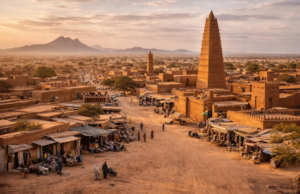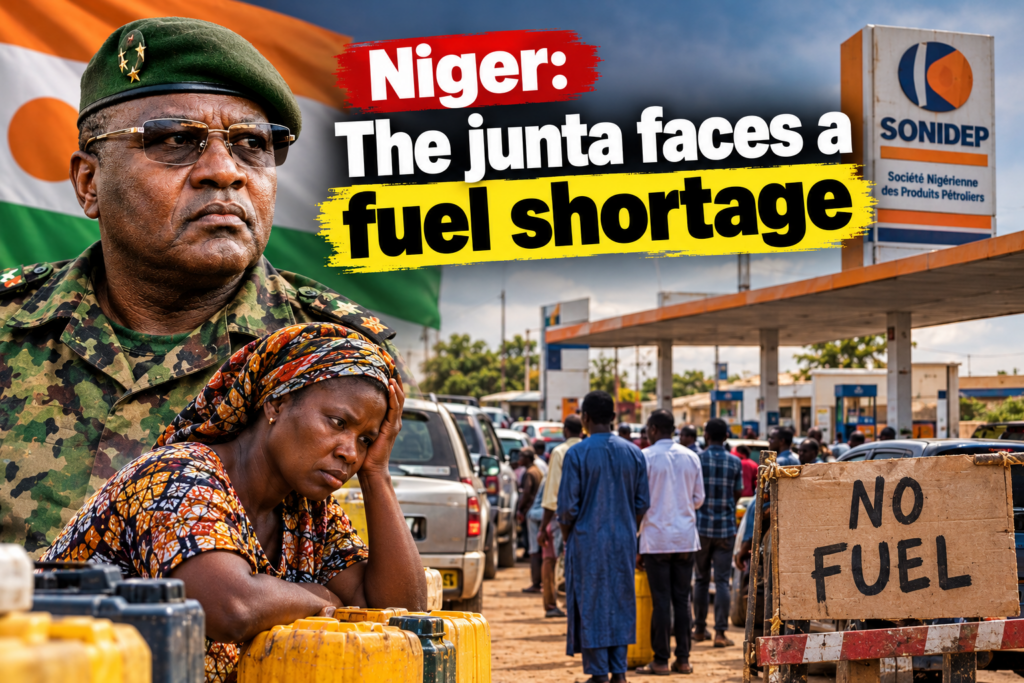
Niamey’s streets tell a stark story of resilience strained by necessity. As fuel shortages deepen across Niger, the disruption extends far beyond station closures it stalls taxis, halts small businesses, and inflates transport costs, compounding the economic strain on households already stretched thin. A nation endowed with oil reserves now grapples with the paradox of scarcity: why, despite production capacity, does the lifeblood of its economy remain out of reach for its people?
From oil fields to empty pumps: the breakdown in fuel supply
For weeks, motorists in Niger’s capital have faced queues stretching for kilometers outside gas stations, where rationing has become the norm. The crisis, once confined to regional disparities, has now engulfed Niamey, where commuters, traders, and service providers confront an erratic supply chain. The disconnect between Niger’s oil production and its domestic availability highlights systemic vulnerabilities in refining, storage, distribution, and market coordination. Regardless of how much oil the country extracts, the failure to translate reserves into accessible fuel underscores a critical governance challenge.
The consequences ripple through the economy. Truckers report delays that delay food deliveries, pushing local prices upward. Taxi drivers shorten routes to conserve fuel, leaving commuters stranded. Small business owners, already operating on tight margins, face rising overheads as transport costs surge. The ripple effect of a single missing link fuel chokes essential services, slows livelihoods, and erodes public confidence in the state’s capacity to manage its resources.
Junta under scrutiny: promises versus real-world solutions
The crisis erupts at a pivotal moment for Niger’s military leadership, which assumed power in July 2023 with pledges to restore national sovereignty and improve living standards. Central to its narrative is the assertion of control over natural resources and economic self-determination. Yet for citizens, sovereignty is not declared it is measured in tangible outcomes: reliable electricity, accessible fuel, stable prices, and functioning markets. When fuel becomes a luxury, the junta’s ambitious agenda risks appearing disconnected from reality.
The public scrutiny intensifies with every delayed shipment and unanswered question. How much fuel is actually produced? Where are the bottlenecks in the supply chain? What measures are being taken to stabilize distribution? Without transparent communication, citizens are left to navigate a market clouded by rumor and speculation. The junta’s credibility now hinges on its ability to not only acknowledge the crisis but to present coherent, executable solutions that restore trust in its stewardship.
Sovereignty tested: the human and economic toll of persistent shortages
Niger’s fuel crisis is not merely an economic problem it is a social one. Families rely on affordable transport to reach hospitals, schools, and markets. Farmers depend on diesel to power irrigation pumps. Students depend on gasoline to reach university campuses. When fuel becomes scarce or prohibitively expensive, these fundamental activities grind to a halt. The longer the shortages persist, the deeper the economic scars become, with inflation pressures eroding purchasing power and pushing vulnerable households toward destitution.
The junta faces a defining challenge: to translate resource wealth into public benefit. This requires more than policy declarations it demands operational clarity, logistical solutions, and accountability. Whether through emergency stock releases, strategic distribution reforms, or private-sector collaboration, decisive action is needed now. For the military government, the fuel crisis is not just an administrative issue it is a test of legitimacy, resilience, and responsiveness to the people it governs.
What needs to happen next
Immediate transparency: Publish verified data on fuel stocks, production volumes, and distribution timelines to quell speculation and restore public trust.
Targeted interventions: Prioritize critical sectors such as healthcare, agriculture, and public transport to minimize disruption and protect livelihoods.
Infrastructure investment: Accelerate upgrades to refining, storage, and distribution networks to prevent future shortages and reduce dependence on imports.
Public communication: Establish regular updates on progress and set realistic timelines for normalization to manage expectations and reduce panic.
The paradox at the heart of Niger’s energy dilemma is glaring: a nation producing oil yet unable to consistently supply fuel to its people. Until this gap is bridged, the pressure on authorities will continue to mount not from political opponents alone, but from a weary population demanding proof that governance serves its most basic needs.
By Georges Essomba — Journalist