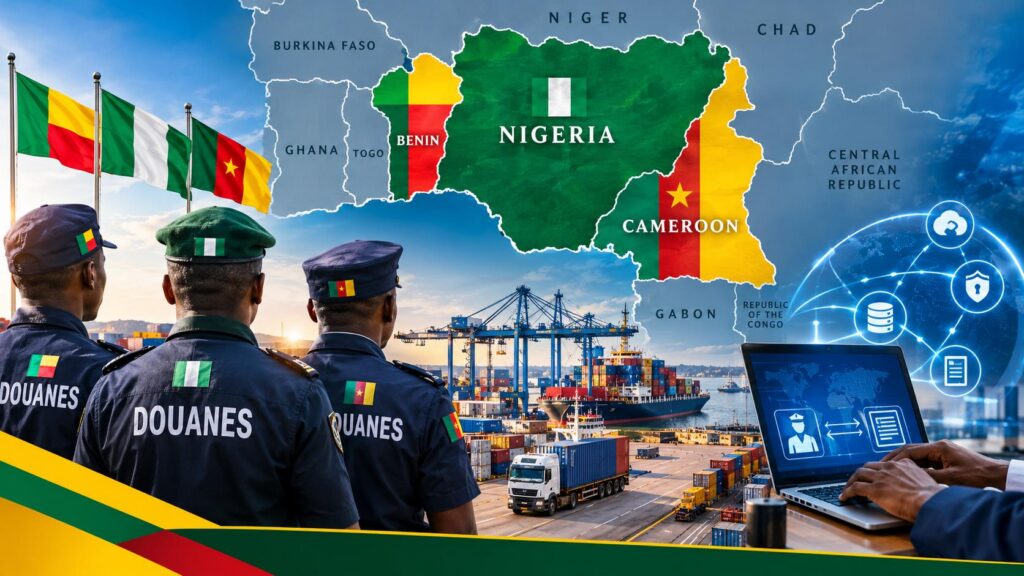
The future of commerce across West Africa is taking a decisive turn as Benin, Nigeria, and Cameroon move forward with plans to digitally synchronize their customs systems. This groundbreaking initiative, supported by Afreximbank, aims to streamline border crossings, slash clearance times, and bolster economic resilience across the region. But beyond the technological leap, the real stakes lie in tangible results: faster trade, lower operational costs, and a stronger business environment for entrepreneurs operating across these key markets.
Why customs interoperability matters for west african economies
In an era where delays at borders translate directly into lost revenue and reduced competitiveness, the inefficiency of manual customs processes continues to weigh heavily on regional trade. Importing goods into Benin, transiting through Nigeria, or exporting from Cameroon often means navigating redundant checks, fragmented data systems, and prolonged administrative delays. These bottlenecks not only inflate costs for businesses but also stifle economic growth by slowing down the movement of goods essential for local industries and consumers.
By creating a unified digital customs platform, the three countries seek to eliminate duplication, accelerate clearance procedures, and enhance transparency. The goal isn’t just modernization it’s about creating a seamless trade corridor that benefits enterprises of all sizes, from small-scale traders to large multinational logistics firms.
Real-world consequences: who gains and who risks falling behind
The competitive edge for Benin’s port and logistics sector
Positioned at the heart of West Africa’s trade network, Benin’s port of Cotonou plays a pivotal role in supplying neighboring landlocked nations. Efficient customs clearance is not just beneficial it’s vital for maintaining Benin’s status as a regional logistics hub. Faster processing means reduced waiting times for trucks, lower storage costs, and improved service for customers across Burkina Faso, Niger, and Mali.
For local businesses relying on timely imports of raw materials or export of finished goods, the impact could be immediate. Reduced border delays translate into lower inventory costs, more predictable delivery timelines, and a stronger ability to compete with imports from Asia or Europe. A well-functioning customs system also enhances trust in Benin’s business environment, potentially attracting foreign investment and long-term partnerships.
Operational risks: delays in implementation could cost the region dearly
Yet the success of this initiative is not guaranteed. Technical hurdles such as incompatible software platforms, inconsistent data standards, or cybersecurity vulnerabilities could undermine the entire system. Moreover, without synchronized operational procedures and adequately trained customs personnel, the digital upgrade alone may fail to deliver the promised efficiency gains.
Small and medium-sized enterprises (SMEs), which form the backbone of West Africa’s economy, are particularly vulnerable to implementation delays. Without clear timelines and transparent communication, businesses may continue to face uncertainty, leading to delayed shipments, higher operational costs, and lost revenue. The cost of inaction continued inefficiency, reduced trade volumes, and missed economic opportunities could far outweigh the short-term challenges of transitioning to a new system.
African trade facilitation: more than just technology
While digital integration is a critical step, the true measure of success will lie in how well the three countries align their policies, train their staff, and maintain the system over time. Afreximbank’s involvement signals a broader commitment to reducing non-tariff barriers across the continent. However, regional cooperation must extend beyond mere data sharing to include harmonized customs codes, joint training programs, and shared risk assessment protocols.
Only a holistic approach combining technology, human capital, and regulatory alignment can ensure that the customs interoperability project delivers measurable economic benefits. Without these safeguards, the system risks becoming another layer of complexity rather than a catalyst for growth.
What’s next? turning vision into measurable progress
The next phase will be critical. Governments must finalize implementation timelines, define which data fields will be shared, and establish robust systems to protect sensitive trade information. Equally important will be the deployment of pilot programs that allow businesses to experience the benefits firsthand such as reduced clearance times and fewer inspection delays.
For this initiative to truly transform West African trade, transparency and accountability will be key. Clear public reporting on performance metrics such as average clearance times before and after implementation, cost reductions, and trade volume increases will help build confidence among businesses and investors alike. Ultimately, the success of this customs synchronization will be judged not by the technology itself, but by its real-world impact on the ground: faster, fairer, and more predictable trade for all.
By Georges Essomba — Journalist