From minor failure to environmental time bomb
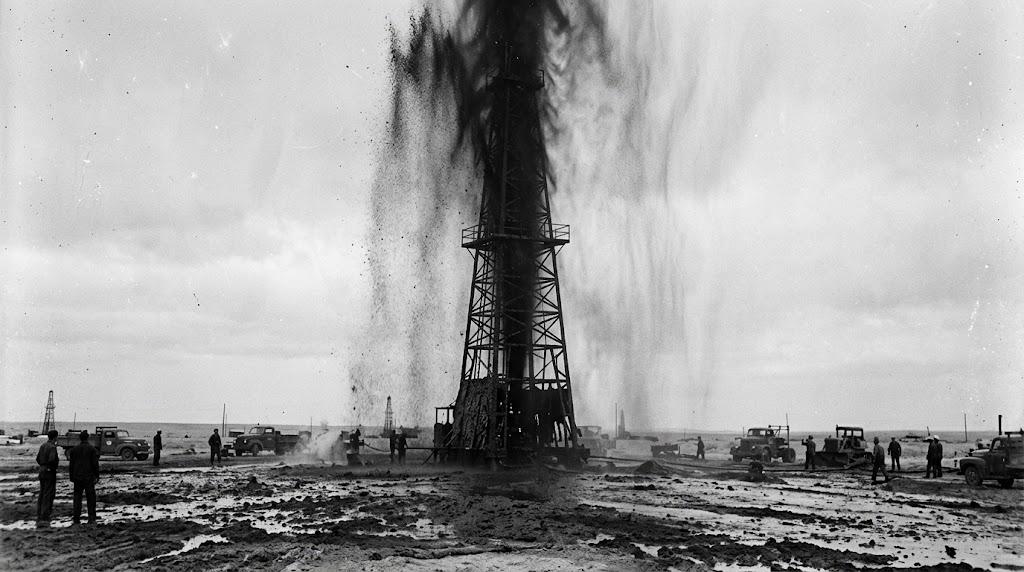
The industrial world’s disregard for the Sahara’s fragile ecosystem now threatens to ignite a regional environmental disaster. What began as a technical malfunction at the Goumeri W8 well in the Agadem block has spiraled into an unrelenting hemorrhage of crude oil and toxic gases, casting a shadow over Niger’s fragile balance between economic ambition and ecological survival.
A 17-day silence that deepened the crisis
The first two and a half weeks passed under a shroud of deliberate silence. Despite the uncontrolled eruption of hydrocarbons and methane more than 1,700 kilometers from the capital Niamey, neither the Nigerien government nor the site operator, the Chinese multinational CNPC, issued any public statement. Only on October 12 did authorities reluctantly acknowledge a crisis labeled as having “exceptional severity.”
The CNPC’s silence speaks volumes. Far from its domestic oversight, the corporation has treated the African subsoil as an environmental free-for-all, with scant regard for transparency or accountability.
The invisible threat changing the desert’s air forever
Official statements downplayed the damage, but satellite data from the European Copernicus programme reveals the true scale of the catastrophe. The well is releasing over 40 tonnes of methane per hour — a colorless, odorless gas 80 times more potent than carbon dioxide over a 20-year period. In three weeks alone, more than 17,000 tonnes of methane have been vented into the atmosphere.
The flow has shown no sign of abating, contradicting claims of partial control. Neighbouring wells, including Goumeri W3 and W4, now face contamination risks, while the poisoned air spreads unchecked across the Sahara.
Economic speed at the cost of human and ecological safety
This disaster was not unforeseeable — it was ignited by a rush for black gold. Niger’s push to ramp up oil production to 90,000 barrels per day, destined for the pipeline to Benin, prioritized volume over safety and maintenance. With two workers already severely injured, the human toll is clear.
Faced with its own technical incapacity, the Nigerien government has had to call in emergency support from Algerian experts at Sonatrach. This late-stage reliance on foreign assistance exposes the yawning chasm between lofty oil ambitions and the lack of industrial expertise to manage such risks.
The Sahara is not a dumping ground for hydrocarbons
The absence of immediate casualties does not absolve CNPC of responsibility or the state of its duty to act. An open-air poisoning of the atmosphere demands urgent action — yet no concrete response has matched the scale of the threat. The desert’s fragile ecosystem cannot absorb this abuse without long-term consequences for climate, health, and regional stability.
Niger stands at a crossroads: pursue unchecked extraction and risk turning the Sahara into a climate tinderbox, or enforce real environmental safeguards before the damage becomes irreversible.