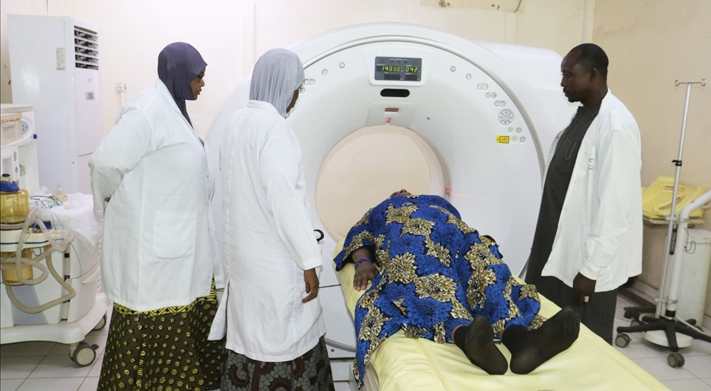
Niger invests in domestic healthcare to reduce foreign medical evacuations
What was once considered an unavoidable necessity due to local healthcare limitations may soon become an exception rather than the norm. Under the leadership of Colonel-Major Garba Hakimi, Niger’s Minister of Public Health and Hygiene, the country is undergoing a strategic healthcare transformation aimed at strengthening its medical infrastructure to treat more patients domestically.
Modern medical equipment transforms local treatment capabilities
The foundation of this shift lies in the acquisition of advanced medical technology, including 64-slice CT scanners, MRI machines, and linear accelerators for radiotherapy. These investments are particularly impactful in cancer care, where Niger now provides all three essential treatment pillars—surgery, chemotherapy, and radiotherapy—within its borders. This reduces dependence on expensive and often inaccessible evacuations abroad.
Cardiac care is another area benefiting from this transformation. Complex cardiac surgeries are now performed locally at a fraction of the cost of foreign alternatives. Beyond medical milestones, this marks a fundamental change in healthcare philosophy: Niger is increasingly treating conditions that were once outsourced.
Social and economic benefits of domestic healthcare expansion
The expansion of Niger’s technical capacity delivers far-reaching advantages. Families no longer face the financial burden of overseas treatment, while specialized care becomes more accessible. Additionally, the initiative bolsters national expertise and reinforces the country’s healthcare sovereignty.
Is the era of medical evacuations ending?
While not entirely obsolete, medical evacuations are becoming less frequent. Highly specialized cases may still require foreign intervention, but the trajectory is clear: Niger is building a self-sufficient medical system. Through upgraded equipment, enhanced skills, and expanded specialized care, the nation is committed to treating conditions domestically that were once managed abroad.