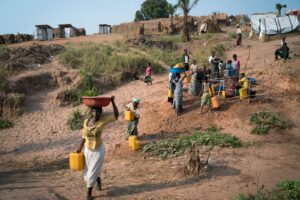
 Over the past 25 years, the Democratic Republic of Congo (DRC) has grappled with an unrelenting hunger crisis. Today, more than 26.5 million people in the country struggle to meet their basic food needs, placing the DRC third on the global hunger index—ranking just behind Somalia and South Sudan. Yet despite this alarming statistic, international attention remains disproportionately focused on the latter two nations.
Decades of conflict fuel food insecurity
The DRC’s hunger crisis stems from prolonged armed conflict along its eastern border, dating back to the First Congo War in 1996. Unlike the acute famines in Somalia and South Sudan, driven by extreme weather, the DRC’s crisis is rooted in entrenched violence—a harder narrative to capture in global media. Last year, the M23 rebel group seized control of Goma, a critical trade hub for eastern DRC, displacing an additional 7.8 million people. This escalation has worsened food security and sanitation challenges, making humanitarian aid both more critical and more logistically daunting.
Humanitarian response and urgent relief efforts
The United Nations Food and Agriculture Organization (FAO) and the World Food Programme (WFP) are leading the charge to combat food insecurity in the DRC. With a $10 million allocation from the DRC Humanitarian Fund, their joint initiatives have delivered immediate food aid and cash assistance to nearly 1.3 million people. While this effort marks significant progress, it falls far short of the $214 million required to address the needs of all affected Congolese.
Long-term solutions for food security
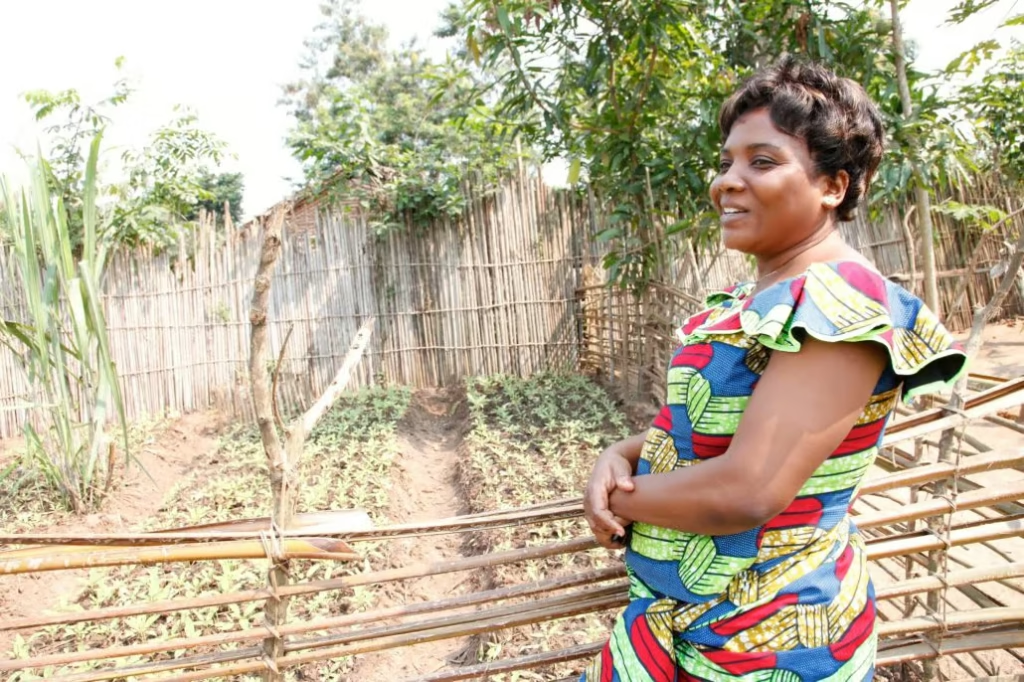
Beyond emergency relief, the FAO and WFP are prioritizing sustainable solutions to build community resilience. Malnutrition remains a dire concern, with over 4.18 million children under five suffering from acute malnutrition. To combat this, the WFP has launched nutrition-focused cooking classes in dozens of villages, teaching families to prepare balanced meals using locally sourced ingredients—empowering communities while reducing dependency on external aid.
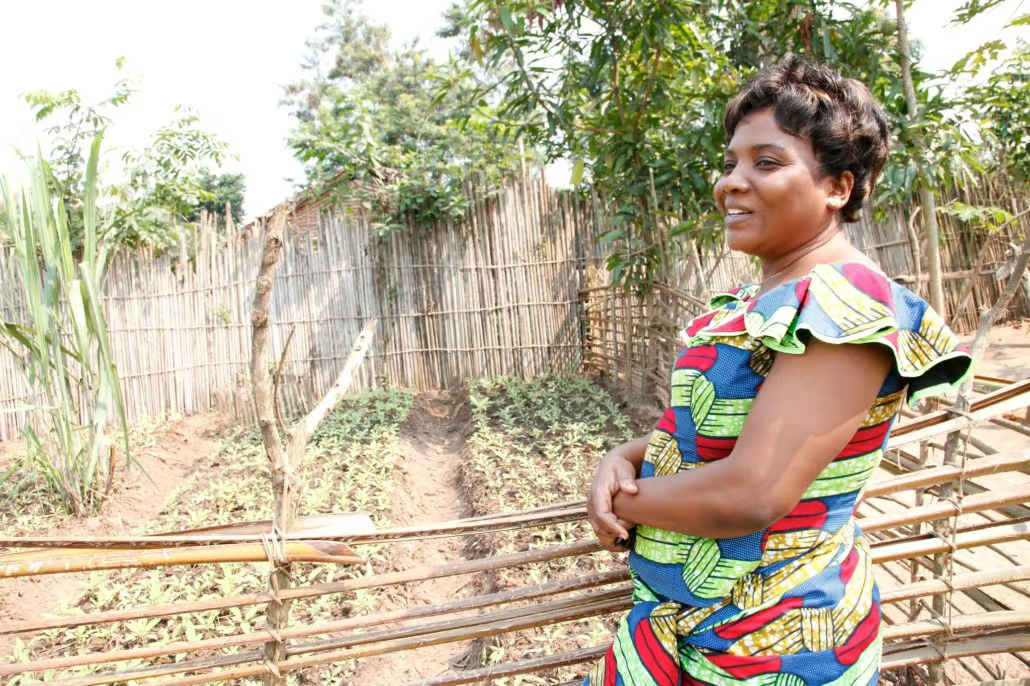
The FAO is also investing in agricultural recovery, providing seeds, tools, and livelihood support to help families restore food production. However, critical funding gaps persist. An additional $163 million is urgently needed to scale up agricultural assistance before the next planting season—without which, the window for recovery may close.
Funding shortfalls and the path forward
The DRC’s hunger crisis, exacerbated by conflict and displacement, would have spiraled further after the M23 takeover of Goma were it not for the FAO and WFP’s interventions. Their dual strategy—combining immediate relief with long-term agricultural support—offers a lifeline, but a $214 million funding deficit threatens progress. Ending chronic hunger in the DRC demands sustained international donations and a commitment to both emergency relief and long-term food security. Only through collective action can the current humanitarian crisis be transformed into a sustainable future for the Congolese people.