Listen to the articleDuration: 6 min
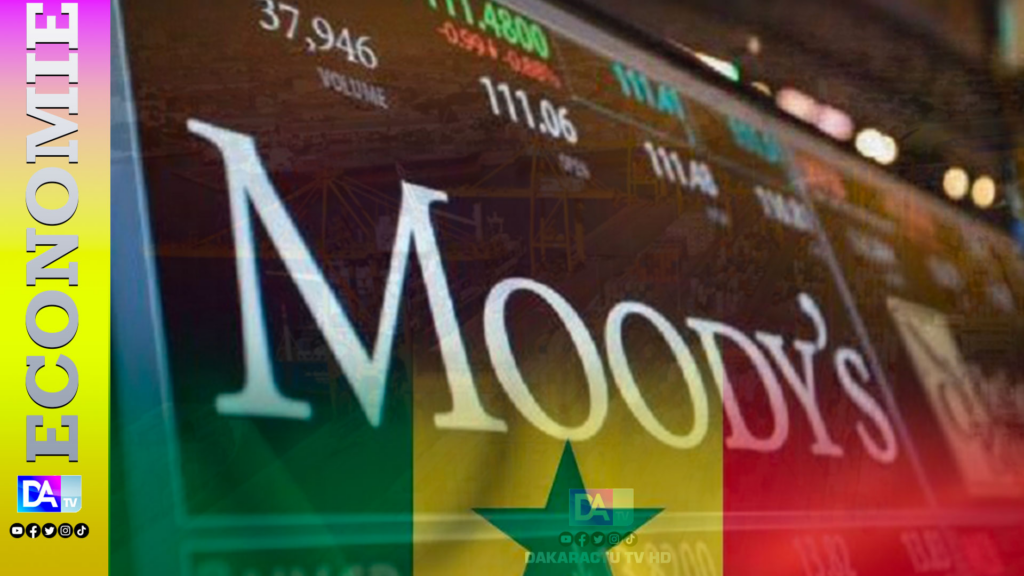
Moody’s Ratings has officially lowered Senegal’s credit rating to Caa2, down from its previous Caa1 assessment, maintaining a negative outlook. This significant downgrade impacts the nation’s long-term foreign and local currency issuer ratings, as well as its senior unsecured foreign currency notes. Meanwhile, the short-term rating remains confirmed at “Not Prime.” This decision comes amidst an ongoing International Monetary Fund (IMF) mission in Dakar, which is actively negotiating a new financial program with Senegalese authorities. The previous program, a disbursement initiative, stalled in November 2025 following the government’s refusal to consider debt restructuring.
The Caa2 rating places Senegal firmly in the category of “highly speculative” debt. An analysis from Oxford Economics, dated June 4, 2026, previously highlighted market sentiment, noting that Senegalese sovereign spreads had reached levels comparable to those of Venezuela and Lebanon – countries historically associated with default risk. This erosion of market perception is more than just semantic. Between September and December 2025, Senegal’s Eurobonds saw approximately 20% of their value disappear, with yield spreads on international markets doubling from an annual average of 800 basis points to 1,500 basis points. The Eurobond due in 2048 was trading at just 51 cents on the euro, representing a 49% discount, while the 2028 Eurobond, whose amortization began in March 2026, showed a discount exceeding 30%.
Moody’s also revised Senegal’s country ceilings downward, from Ba3 to B1 for local currency and from B1 to B2 for foreign currency. The agency explicitly linked this decision to prevailing institutional tensions. The dismissal of former Prime Minister Ousmane Sonko and his subsequent election as President of the National Assembly have intensified the power struggle between the executive and legislative branches. According to Moody’s, this dynamic elevates the risk of delays in implementing critical budgetary measures.
However, one factor offers a degree of mitigation to this challenging outlook. Senegal’s membership in the West African Economic and Monetary Union (UEMOA) continues to be a crucial source of support, as noted by Moody’s. The pegging of the CFA franc to the euro and the robust level of regional foreign exchange reserves, approximately 38 billion dollars by the end of May 2026, help to limit the risk of a currency or balance of payments crisis, even as significant fiscal pressure persists.
This marks the third downgrade for Senegal in just over a year. Following an initial reduction from B3 to Caa1 in October 2025 – a move then contested by the Ministry of Finance as based on “speculative, subjective, and biased” assumptions – and a similar downgrade by S&P earlier this year, the nation now enters the final phase of discussions with the IMF in an environment of markedly higher risk than a year ago.
The Caa2 rating places Senegal firmly in the category of “highly speculative” debt. An analysis from Oxford Economics, dated June 4, 2026, previously highlighted market sentiment, noting that Senegalese sovereign spreads had reached levels comparable to those of Venezuela and Lebanon – countries historically associated with default risk. This erosion of market perception is more than just semantic. Between September and December 2025, Senegal’s Eurobonds saw approximately 20% of their value disappear, with yield spreads on international markets doubling from an annual average of 800 basis points to 1,500 basis points. The Eurobond due in 2048 was trading at just 51 cents on the euro, representing a 49% discount, while the 2028 Eurobond, whose amortization began in March 2026, showed a discount exceeding 30%.
Mounting financial pressures and debt burdens
From a technical risk perspective, Moody’s precisely quantifies the intense pressure on public finances. Senegal faces gross financing needs estimated at roughly 25% of its GDP. Annual principal repayments alone account for approximately 18% of GDP, and interest payments surged from 16.1% to 23.7% of state revenues between 2023 and 2026. The nation’s total public debt, including state-owned enterprises, is estimated at nearly 108% of GDP. This figure contrasts with the IMF’s projection of debt reaching 132% of GDP by the end of 2024, following the disclosure of previously “hidden debt” from the prior administration. Further illustrating this strain, during regional UEMOA auctions in December 2025, only 35 billion FCFA were successfully raised out of 95 billion FCFA offered, with the weighted average yield soaring by 158 basis points in a single month. This indicates that even the regional market, traditionally a safety net, is exhibiting signs of saturation.Costly repayments and institutional instability
The practical implications for the State are evident in its concrete financial obligations. In March 2026, Dakar was compelled to secure nearly 485 million dollars, including approximately 394 million in principal, to service a tranche of a 2.2 billion dollar Eurobond issued in 2018. This was achieved by relying on local banks due to the lack of easy access to international markets. Concurrently, the IMF had suspended a 1.8 billion dollar loan program due to disagreements over restructuring. It is precisely these recurring maturities, coupled with other Eurobonds coming due in 2026 – a year identified by the World Bank as a peak for Sub-Saharan African repayments – that the new Caa2 rating makes significantly more expensive to refinance.Moody’s also revised Senegal’s country ceilings downward, from Ba3 to B1 for local currency and from B1 to B2 for foreign currency. The agency explicitly linked this decision to prevailing institutional tensions. The dismissal of former Prime Minister Ousmane Sonko and his subsequent election as President of the National Assembly have intensified the power struggle between the executive and legislative branches. According to Moody’s, this dynamic elevates the risk of delays in implementing critical budgetary measures.
However, one factor offers a degree of mitigation to this challenging outlook. Senegal’s membership in the West African Economic and Monetary Union (UEMOA) continues to be a crucial source of support, as noted by Moody’s. The pegging of the CFA franc to the euro and the robust level of regional foreign exchange reserves, approximately 38 billion dollars by the end of May 2026, help to limit the risk of a currency or balance of payments crisis, even as significant fiscal pressure persists.
This marks the third downgrade for Senegal in just over a year. Following an initial reduction from B3 to Caa1 in October 2025 – a move then contested by the Ministry of Finance as based on “speculative, subjective, and biased” assumptions – and a similar downgrade by S&P earlier this year, the nation now enters the final phase of discussions with the IMF in an environment of markedly higher risk than a year ago.