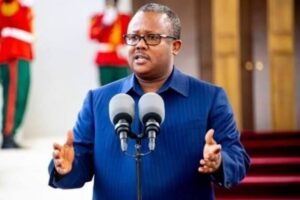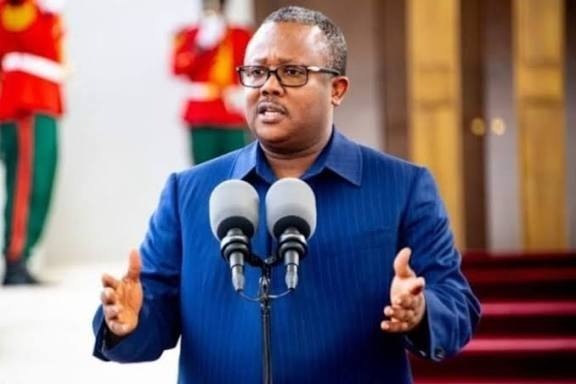
Bissau — Guinea-Bissau is teetering on the edge of a constitutional cliff following another chapter in its long-running political turmoil. Exiled former President Umaro Sissoco Embaló has broken months of silence to declare his intent to return home and contest the upcoming presidential election—a move that has sent shockwaves through the nation’s fragile political landscape. In response, the country’s military leadership has slammed the door shut, labeling his return bid an attempt to destabilize and undermine a delicate transition process.
Why the fight over Embaló’s return threatens national stability
Since his abrupt ouster in November 2025, Embaló has positioned himself not as a defeated politician, but as a legitimate contender determined to reclaim power through the ballot box. His publicly stated ambition to return and contest the election—originally scheduled for late 2026—has galvanized a coalition of a dozen political groups under the banner of the “Republican Platform,” a strategic alliance forged to unify support behind his candidacy.
Yet the military junta, now firmly in control of state institutions, sees his return as a direct threat to public order. Military authorities have issued a sweeping statement declaring that Embaló will not be permitted to step foot on Bissau-Guinean soil. In their view, allowing him back would reignite tensions and destabilize a transition process already under immense strain. “No individual responsible for undermining national peace and stability will be allowed to exploit the transition for electoral agitation,” declared a senior army spokesperson, underscoring the regime’s refusal to tolerate dissent.
November’s coup: a disputed power grab wrapped in secrecy
The roots of today’s standoff trace back to November 26, 2025, when Guinea-Bissau’s political crisis took a dramatic turn. Just three days after a highly contested presidential vote in which both Embaló and his main rival claimed victory, heavy gunfire erupted in the capital. Within hours, armed units from the People’s Revolutionary Armed Forces had surrounded the presidential palace and detained Embaló. The self-styled “High Command for the Restoration of National Security” immediately suspended the electoral process, citing concerns over alleged election manipulation.
Almost immediately, the coup sparked international skepticism and domestic dissent. Observers, diplomats, and opposition figures dismissed it as a staged political maneuver—a “self-coup”—allegedly orchestrated by Embaló himself to avoid accepting defeat. He was swiftly exfiltrated to Dakar, leaving behind a country mired in legal limbo and institutional paralysis.
Was the coup a setup—or a failed rebellion?
The junta’s narrative insists Embaló’s removal was necessary to prevent a descent into further chaos. Detractors argue, however, that the entire episode was a premeditated power play by the former president to retain influence. Now, his announced return has only deepened divisions between civilian supporters, military authorities, and marginalized political factions.
What happens when democracy is locked out?
The consequences of blocking Embaló’s return extend far beyond symbolism. With the opposition sidelined—either exiled or facing legal reprisals—the military’s decision casts a long shadow over the integrity of the electoral process. Critics warn that by excluding a major political figure, the junta risks rendering the election illegitimate in the eyes of a significant portion of the population.
As the country grapples with a crumbling economy and eroding public trust, the ban on Embaló’s return has become a flashpoint. Supporters accuse the military of entrenching authoritarian control, while the ruling junta frames its stance as a safeguard for stability. Meanwhile, citizens are left in limbo: uncertain about their future, struggling with rising costs, and questioning whether their voices will matter in a transition controlled by guns, not votes.
From exile to insurgency: the growing cost of exclusion
Embaló’s defiant message from abroad—delivered through carefully coordinated political messaging—has transformed his return into a moral and political rallying cry. His supporters now frame his exclusion as a betrayal of democratic principles, while military leaders insist they are protecting the nation from a dangerous revanchist.
The standoff has already begun to spill into the streets. Small protests have erupted in Bissau, and regional diplomatic pressure is mounting. Yet neither side shows signs of backing down. The military insists on a controlled transition under its supervision, while Embaló’s network vows to escalate efforts—legal, political, and potentially even through civil mobilization—to force a reversal of the ban.
In the balance hangs not just a single election, but the soul of Guinea-Bissau’s fragile democracy. As the days pass, the risk grows not only of further unrest, but of a deeper fracture between the governed and those who claim to govern—one that may prove impossible to mend.
Looking ahead: a nation caught between a banned leader and a barricaded regime
The next chapter in this crisis remains unwritten. Will Guinea-Bissau’s military rulers soften their stance? Can Embaló engineer a political comeback from abroad? Or will the country slide into prolonged instability, with elections delayed, legitimacy questioned, and the hopes of a new generation of leaders crushed under the weight of old grievances?
What is certain is that the junta’s veto has turned a personal ambition into a national dilemma—one that threatens to define the future of one of Africa’s least stable democracies.