How a mutiny at air base 101 triggered a widening purge
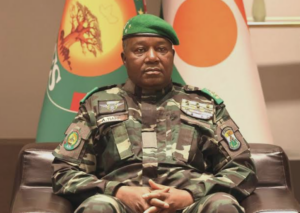
The detention of Major General Moussa Salaou Barmou, once a central figure in Niger’s ruling military circle, did not emerge from nowhere. It followed the failed mutiny of August 28 and 29 at Air Base 101, an episode that exposed cracks inside the security apparatus and set off a chain reaction at the highest levels of command.
On September 11, 2026, a presidential decree removed Barmou from his post as chief of general staff of the Nigerien Armed Forces. He was then placed under house arrest. The move came roughly two weeks after the abortive uprising, and it signaled that the junta’s response would be swift, public and severe.
From coup architect to liability
Barmou had been a leading player in the July 2023 overthrow of President Mohamed Bazoum. Until recently, he embodied the operational strength of Niger’s special forces and the continuity of military rule in Niamey. But the events at Air Base 101 shattered the outward unity of the command structure.
Although no official evidence has established his direct involvement in the August insubordination, suspicion from the top of the regime was enough to seal his fate. General Abdourahamane Tiani immediately handed control of the armed forces to Brigadier General Mamane Sani Kiaou, previously head of the land army.
The paranoia that drives internal purges
Behind the removal lies a deeper pattern. The resolution of the August crisis, supported on the ground by personnel from the Russian Africa Corps formation, laid bare fractures within Niger’s security institutions that had been building for months.
By neutralizing one of the country’s most influential officers, the junta is sending a clear deterrent message across the entire military hierarchy: internal dissent will not be tolerated, and even the faintest suspicion of disloyalty carries immediate consequences.
A cycle that traps its own architects
In the capital, reactions have swung between unconfirmed rumors of a denial and a bitter recognition of a broader crisis of trust. For critics of the regime, the trajectory illustrates an inherent trap of governments born from force: they often end up consumed by suspicion toward the very people who built them.
By turning against its earliest allies, the Niamey leadership reveals how fragile alliances become when they rest on constitutional rupture. Barmou’s case is another reminder that inside the machinery of military regimes, yesterday’s loyalty rarely guarantees tomorrow’s safety.