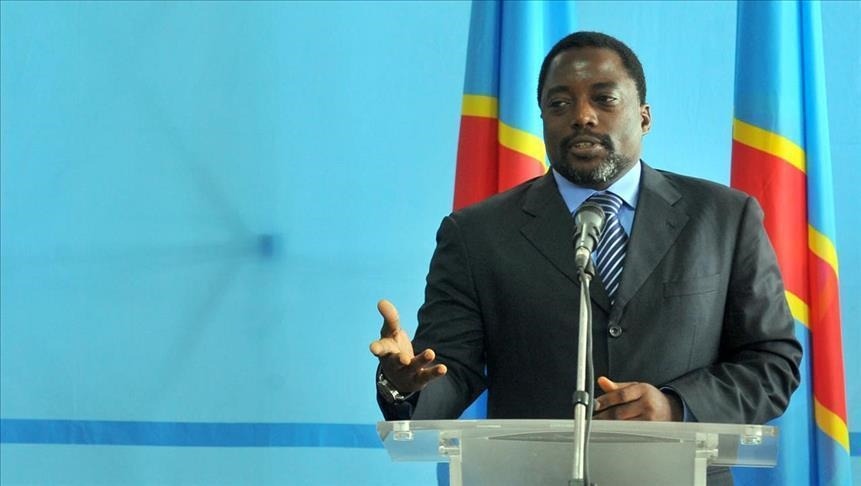
In a strategic move that could reshape Congo’s political and military landscape, former President Joseph Kabila has taken the helm of the Front pour la Refondation de la Nation (FRN), a newly announced politico-military coalition based in Goma, eastern DRC. The FRN brings together key figures from the Alliance Fleuve Congo (AFC) and the M23 rebel group, both of which have been locked in a bitter struggle against President Félix Tshisekedi’s government. But with the stakes higher than ever, the big question remains: Can this alliance truly challenge Kinshasa’s grip on power?
Who makes up the FRN coalition?
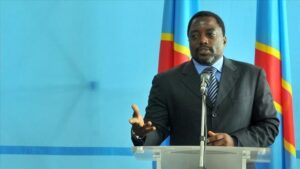
The FRN’s leadership team reads like a who’s who of Congo’s fractured opposition. Joseph Kabila steps in as chairman, flanked by two vice-presidents: Corneille Nangaa, former head of the Independent National Electoral Commission and AFC leader, and Bertrand Bisimwa, the M23’s political chief. The military wing is led by General Sultani Makenga, commander of the M23’s forces, who now oversees the Revolutionary Congolese Army’s general staff. Completing the leadership lineup is Freddy Rukema Kaniki, appointed as secretary-general.
The FRN’s founding declaration states that it replaces the AFC, effectively dissolving the alliance while leaving the M23’s status somewhat ambiguous. The document does not clarify whether the M23 will maintain its separate identity under the new structure, leaving observers to speculate about the coalition’s long-term cohesion.
What does the FRN aim to achieve?
The FRN has framed itself as a unifying force against what it calls the «tyranny» of Kinshasa’s government, vowing to end what it describes as systemic corruption, institutional weakening, and political discrimination. In its founding charter, the coalition explicitly reserves the right to use «all means necessary,» including armed struggle, to achieve its goals. However, the announcement provided scant details on its military strategy or operational timeline, leaving analysts scrambling to fill in the blanks.
The coalition’s rhetoric is unmistakably confrontational. It accuses President Tshisekedi’s administration of undermining democratic institutions, failing to honor ceasefire agreements, and refusing to release political prisoners. These claims, while unproven, resonate with many in eastern Congo who have grown disillusioned with Kinshasa’s handling of the crisis. Whether the FRN can translate this discontent into a viable challenge remains an open question.
How does this fit into Congo’s ongoing conflict?
The timing of the FRN’s launch is anything but coincidental. The M23 and government forces have been locked in a devastating conflict in eastern DRC for years, with the rebels seizing control of key cities like Goma in a 2025 offensive. The United Nations and Western governments have repeatedly accused Rwanda of supporting the M23, a charge Kigali has consistently denied. Meanwhile, backchannel negotiations in Doha and bilateral talks between Kinshasa and Kigali have done little to ease tensions.
Against this backdrop, the FRN’s emergence adds a volatile new layer to the crisis. The coalition’s leaders have already drawn sharp criticism from Kinshasa, where authorities have long accused Kabila of backing the AFC/M23. In 2025, a military court sentenced Kabila to death in absentia on charges of treason, war crimes, and rebellion—charges he dismisses as politically motivated. With the FRN now positioning him at the forefront of armed resistance, the stakes have never been higher for Congo’s stability.
Military ambitions and diplomatic fallout
The FRN’s military wing, the Revolutionary Congolese Army, is now under General Makenga’s command. While the coalition has not outlined a clear battle plan, its leaders have made it clear that force remains a viable option. This raises urgent questions about the FRN’s capacity to coordinate operations across multiple armed factions and its potential impact on the already fragile peace process.
Diplomatic efforts to de-escalate the conflict face an uphill battle. The FRN’s formation comes as international mediators scramble to revive stalled ceasefire agreements and prisoner exchange deals. The coalition’s accusation that Kinshasa has failed to uphold its commitments further complicates these negotiations, leaving the door open for renewed violence.
What’s next for Congo’s opposition?
The FRN’s arrival on the scene marks a potential turning point in Congo’s political turmoil. By uniting Kabila’s political influence with the M23’s military muscle, the coalition could either consolidate opposition forces or deepen internal divisions. For President Tshisekedi, the challenge is twofold: countering the FRN’s narrative while addressing the grievances that fuel its rise.
Yet without a concrete strategy or proof of broad-based support, the FRN’s long-term viability remains uncertain. Will it succeed in rallying Congo’s fractured opposition behind a unified front, or will infighting and unmet expectations derail its ambitions? One thing is clear: Congo’s political landscape has just become far more unpredictable.