The latest confirmation of Nigeria’s recognition of the Sahrawi Arab Democratic Republic (SADR) goes beyond a routine diplomatic gesture. By reasserting its commitment to self-determination, decolonization, and the sanctity of colonial-era borders, Abuja sends a clear political message that challenges Morocco’s narrative of a closed Sahara Occidental dispute.
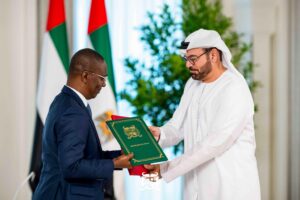
During a recent visit to Abuja, Mohamed Yeslem Beissat, special envoy of Sahrawi President Brahim Ghali, delivered a formal message to Nigerian counterpart Bola Ahmed Tinubu. The discussions underscored the depth of bilateral relations and mutual intent to expand cooperation, while reinforcing the African Union’s foundational principles—particularly the right of peoples to self-determination.
This stance carries significant weight in the context of Morocco’s persistent regional ambitions. For years, Moroccan authorities have promoted the Nigeria-Morocco gas pipeline as a cornerstone of Africa’s energy future, positioning it as proof of strategic alignment between Rabat and Abuja. Yet Nigeria’s unwavering support for the SADR dismantles the illusion that economic cooperation with Morocco equates to political alignment on the Western Sahara issue.
The pipeline project, often hailed in official statements, faces mounting skepticism due to its staggering costs, security hurdles, financing challenges, and an impractically long route. Against this backdrop, Nigeria’s steadfast recognition of the SADR serves as a rebuttal to claims of Abuja shifting toward Rabat’s position.
Beyond Nigeria, the Sahrawi leadership continues to strengthen its diplomatic foothold across Africa. As a founding member of the African Union, the SADR remains active in rallying member states to uphold the continent’s consensus on decolonizing Western Sahara and resuming UN-led political negotiations. Recent engagements with multiple African capitals reflect a push to solidify historical alliances and emphasize that the Sahrawi question remains, for much of Africa, an unresolved matter of decolonization under international law.