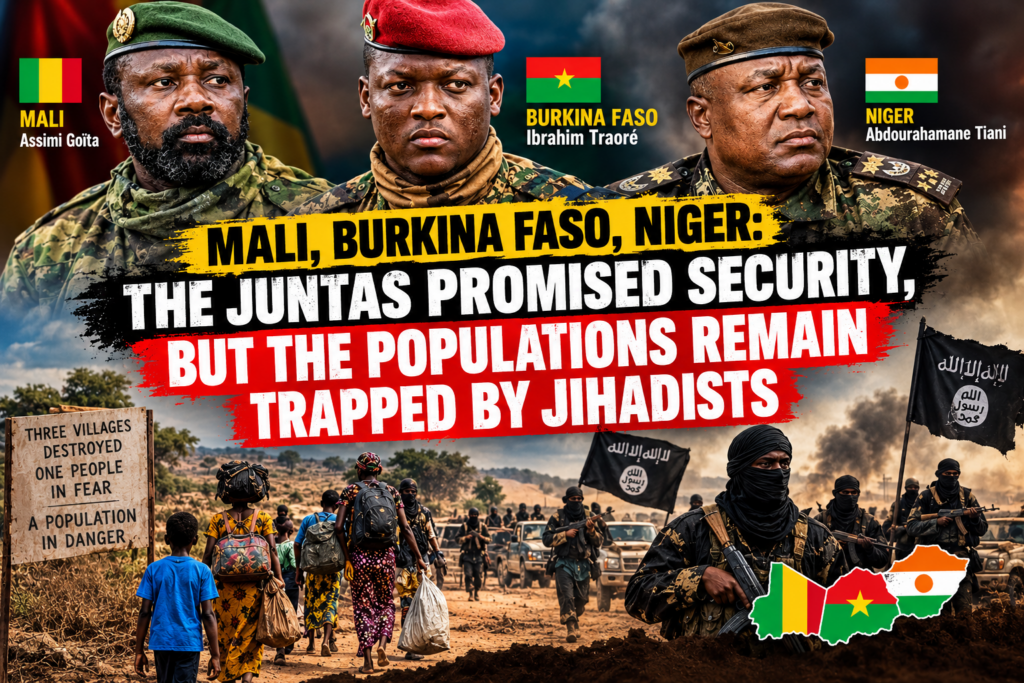
An escalating conflict with real-world consequences
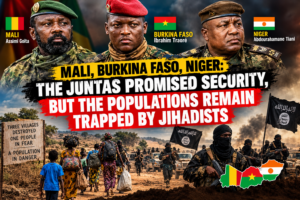
The borderlands of Mali, Burkina Faso, and Niger have become a battleground where the Islamic State in the Sahel and the Group for Support of Islam and Muslims (JNIM), an Al-Qaeda affiliate, wage an increasingly bloody struggle. What began as isolated militant skirmishes has exploded into a full-blown turf war, with both groups claiming territory and authority over local populations. Amid the chaos, one group pays the highest price: civilians trapped in the crossfire.
The human cost of jihadist rivalry
As the Islamic State in the Sahel and JNIM battle for dominance, their clashes have left hundreds dead and thousands displaced. But the real tragedy goes beyond casualty numbers. Entire communities now face daily violence, restricted movement, and economic collapse. Markets lie abandoned, farmers hesitate to tend their fields, and families flee in search of safety, often leaving behind homes and livelihoods. The promise of security, once a cornerstone of military rule, is proving hollow for those living in the most dangerous zones.
For these residents, survival has become a priority over political slogans. The absence of stable governance and consistent protection means that essential services healthcare, education, and trade are increasingly out of reach. In this environment, even the most basic daily routines carry risk, as jihadist groups impose their will through intimidation and violence.
Military regimes under scrutiny
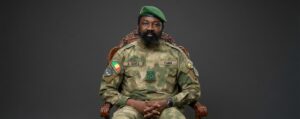
The juntas in Bamako, Ouagadougou, and Niamey rose to power promising to restore order and reclaim lost territories. Yet as the jihadist conflict intensifies, their ability to deliver on this pledge is being questioned. While each regime has cited foreign interference and sovereignty as reasons for their military realignments, the persistent violence in the tri-border region exposes a harsh reality: sovereignty means little if citizens cannot move freely or trust in their government’s protection.
The state’s weakened presence in rural areas only compounds the problem. Military operations may be conducted, but they often fail to provide lasting security. Without a sustained return of administrative services, the cycle of violence and displacement continues unbroken. For civilians, the gap between government promises and daily reality grows ever wider.
Who protects the people when the fighting draws near?
The escalation between the Islamic State in the Sahel and JNIM is not just a battle for territory it is a war on civilians. As the groups compete for influence, they also target communities suspected of aiding the rival faction. Schools close, healthcare facilities shut down, and farmers abandon their lands. The result is a slow but devastating unraveling of daily life for rural populations.
In this context, the claims made by militant groups about their victories or losses must be viewed with skepticism. Propaganda often distorts reality, and without independent verification, the true scale of the conflict remains obscured. What is clear, however, is that civilians bear the brunt of an escalation they did not choose.
The sovereignty challenge: From rhetoric to results
The Alliance of Sahel States, formed by Mali, Burkina Faso, and Niger, was meant to symbolize a new era of self-reliance and security. But rhetoric alone cannot restore peace. For the juntas, the test of their legitimacy now lies in measurable outcomes: fewer attacks, restored public services, and safe return for displaced families. So far, these benchmarks remain elusive in the most vulnerable regions.
The challenge is not just military but systemic. Governments must address the root causes of instability the absence of governance, the lack of economic opportunity, and the failure to protect civilians in active conflict zones. Without progress in these areas, the promise of sovereignty will continue to ring hollow in the ears of those living under the shadow of jihadist violence.
Accountability in the face of ongoing threats
While the juntas cannot be solely blamed for the Sahel’s security crisis a problem with deep historical roots their responsibility lies in their response. Citizens do not judge a government by its criticism of past partners or its defiance on the international stage, but by its ability to safeguard lives and livelihoods. In the tri-border region, that test is failing.
Until the juntas can demonstrate tangible improvements in security, the cycle of violence and displacement will persist. For the people of Mali, Burkina Faso, and Niger, the question remains: Can sovereignty truly exist when fear dictates daily life?
By Georges Essomba — Journalist