Logistical shift leaves questions for Agadez and Niamey
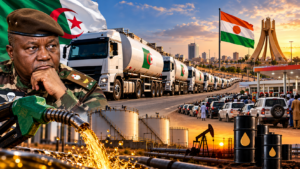
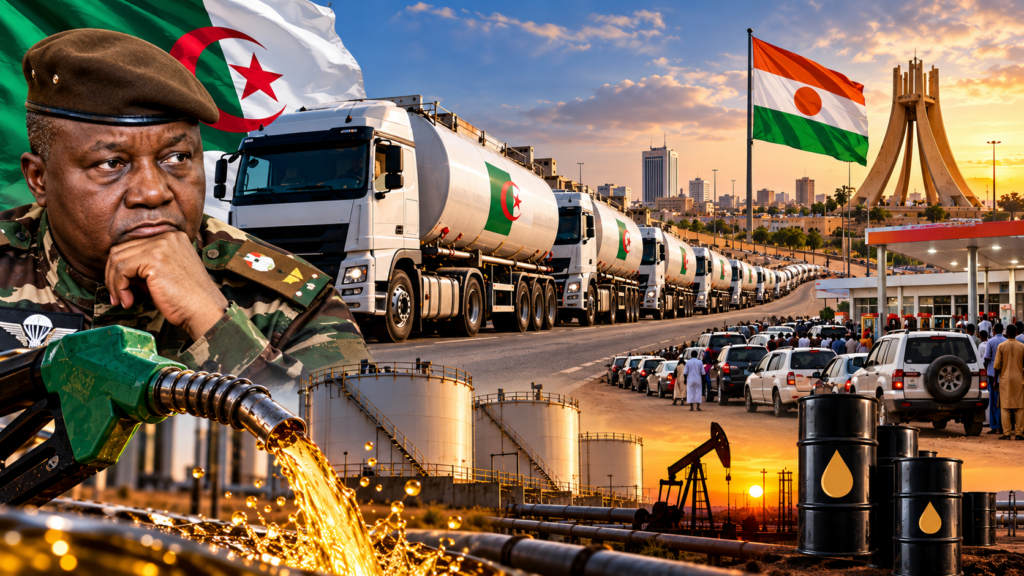
Originally scheduled to ease fuel shortages in Agadez, 150 tankers each carrying 25,000 litres of Algerian-sourced gasoline have reportedly been rerouted to Niamey instead. The strategic pivot underscores the pressure on Niger’s authorities to prioritize the capital’s immediate energy needs over other regional demands.
With a total volume of 3.75 million litres, the delivery represents a significant intervention at a time when fuel availability directly impacts public transport, small businesses, healthcare services and emergency response operations. Yet without clear public justification, the change raises concerns about the decision-making process behind the shift and its long-term implications for regional fuel distribution.
Cost discrepancies fuel public scrutiny over supply choices
The delivered fuel arrives at 800 FCFA per litre, with repayment provided in crude oil. This arrangement contrasts sharply with Nigeria’s previous supply route, which delivered fuel to Niamey at 702 FCFA per litre, inclusive of transport. The 98 FCFA difference per litre translates to an additional 367.5 million FCFA for the full volume, underscoring the financial trade-off involved in the Algerian deal.
However, cost cannot be assessed in isolation. Supply reliability, transit security and delivery timing all factor into the overall value. While a higher price may be justified by urgency or supply chain stability, the absence of transparent pricing benchmarks and comparative data leaves citizens and businesses questioning whether this is a strategic necessity or a costly short-term fix.
Crude oil repayment raises further accounting questions
The mechanism of settling the bill in crude oil adds another layer of complexity. How will the value of the oil be determined? When will it be delivered? And how will these credits be accounted for in the national budget? Without accessible answers, the true cost of the transaction remains uncertain, complicating efforts to assess its economic impact on Niger’s already strained public finances.
Strategic reserves emerge as critical missing piece
Beyond immediate delivery concerns, the episode highlights the urgent need for Niger to build and maintain strategic fuel reserves. Niamey’s daily consumption, combined with rising demand from industries and emergency services, demands more than emergency shipments. A one-time infusion of 3.75 million litres can provide temporary relief, but without a structured reserve policy, the capital remains vulnerable to future disruptions.
Key details remain unclear: How much of the delivered fuel will be consumed immediately? How much will be stored, and under what conditions? What are the current storage capacities in Niamey? And how long could these reserves last in case of a supply cutoff? Without this information, it is difficult to determine whether the shipment is strengthening resilience or merely postponing the next crisis.
Storage infrastructure demands long-term investment
Effective reserve management requires more than tanker arrivals. It demands modern storage facilities, inventory tracking, anti-corruption safeguards and regular stock rotation. To date, Niger’s public discourse has focused on arrivals, not on the systems needed to sustain supply security. Until such infrastructure is in place, each emergency shipment regardless of origin will only provide fleeting relief.
The danger of emergency over strategy
While the arrival of Algerian fuel may address an immediate crisis, it does not resolve the underlying vulnerabilities in Niger’s energy supply chain. Diversifying suppliers is a step forward, but sustainable energy security depends on planning, not reaction.
If Agadez was initially the intended beneficiary of this shipment, authorities must clarify why priorities shifted and how delayed deliveries will be managed. If Niamey was the target all along, the government must explain how this volume supports both immediate consumption and long-term resilience. Transparency in these decisions is not optional; it is foundational to public trust and economic stability.
What lies ahead for Niger’s fuel future
The 3.75 million litres from Algeria may offer temporary breathing space, but Niger cannot afford to treat fuel supply as a recurring emergency. A capital city cannot function reliably when its energy lifeline depends on ad hoc imports and opaque agreements. The fuel currently flowing into Niamey must become the foundation not the exception of a broader strategy to secure energy, stabilize prices and protect the national economy.
In the absence of clear reserves and transparent policies, Niamey remains one breakdown away from paralysis. As the saying goes: a city without fuel reserves is like a boat without a river powerless when it matters most.
By Rose Njoya — Journalist