Cameroon’s domestic gas market is advancing with the launch of a competitive tender on September 1, 2026, for 60,000 metric tonnes of liquefied petroleum gas (LPG). This official announcement, signed by Okie Johnson Ndoh, who chairs the ad hoc Commission for Petroleum Product Imports (CIPP), divides the total volume into two distinct lots: one for 35,000 tonnes and another for 25,000 tonnes. The primary objective of this operation is to fulfill the nation’s consumption requirements for the 2026 fiscal year.
Interested bidders can obtain application documents from the headquarters of the Hydrocarbon Price Stabilization Fund (CSPH), conveniently located at the Warda roundabout in Yaoundé. The crucial bid opening and award ceremony are scheduled for September 8, at noon, to take place at the same venue. At this initial stage, specific details regarding the projected market value, the origin of the products, or the logistical arrangements for transport have not yet been disclosed. These key parameters are anticipated to emerge following a thorough technical evaluation of all submitted proposals.
A significant volume representing nearly five months of external purchases
When viewed against recent trade flows, the sheer scale of this tender is quite substantial. The Ministry of Economy, Planning, and Regional Development (MINEPAT), in its 2025 report on the Cameroonian economy, drawing on data from the Directorate General of Customs, revealed that the country imported 150,420 tonnes of liquefied butane last year. This figure marks an increase from 145,163 tonnes imported in 2024, representing a 3.6% year-on-year growth. This steady rise underscores a persistent increase in demand, driven by ongoing urbanization and the gradual shift away from wood energy.
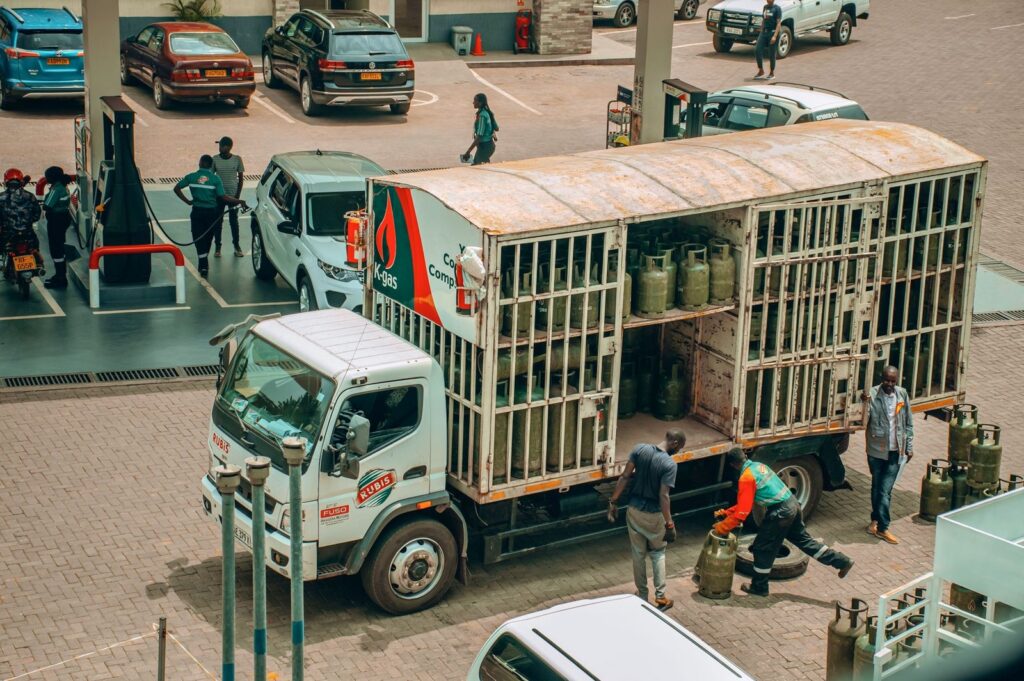
Despite the increased volume, the customs bill experienced a decline, dropping from 59.38 billion to 56.159 billion FCFA. This 5.4% reduction is primarily attributed to a relaxation in average import prices. Within this context, the 60,000 tonnes sought through the current tender account for 39.9% of the total volume acquired in 2025, which is equivalent to nearly five months of average monthly consumption. In terms of commercial units, this tonnage translates to approximately 4.8 million 12.5 kg gas cylinders. Based on an average customs value of around 373,348 FCFA per tonne last year, the theoretical value of this market could approach 22.4 billion FCFA. However, the final price will ultimately depend on the specific technical requirements chosen and the delivery conditions successfully negotiated.
Bipaga: a limited local buffer for national demand
Cameroon does possess a national production capacity through the Bipaga gas treatment center, situated in the Southern region and operational since 2018. The 2023 annual report from the National Hydrocarbons Corporation (SNH) indicated that 34,699 tonnes of LPG were delivered that year, an increase from 28,677 tonnes in 2022. This 21% progression marked the facility’s second-best performance since its inception. Nevertheless, these domestic volumes remain structurally inadequate to fully satisfy the country’s internal demand.
In July 2026, SNH confirmed that Bipaga is projected to maintain an annual LPG output of approximately 30,000 tonnes, even with the cessation of operations at the Hilli Episeyo floating unit. This baseline production level is significantly below the 150,420 tonnes imported in 2025. This considerable disparity highlights the Cameroonian market’s susceptibility to external shocks, whether related to logistics or pricing, thereby justifying the frequent tenders initiated by the CSPH to safeguard essential supplies.
A critical issue for energy security and price stability
The tender launched on September 1st is therefore pursuing two interconnected objectives. On one hand, it aims to eliminate any potential risk of supply disruption during the final quarter of 2026, particularly in a nation where butane gas is the primary urban domestic fuel. On the other hand, authorities are striving to manage the budgetary exposure linked to the implicit subsidy on bottled gas prices, a long-standing burden on public finances managed through the CSPH’s stabilization mechanism.
In practical terms, the true scope of this market — including its final cost, delivery schedule, and impact on strategic reserves — will only become fully apparent once the adjudication process concludes on September 8th. The composition of the selected bids will also reveal whether the government intends to favor existing operators within the Cameroonian market or to open opportunities to new international traders.