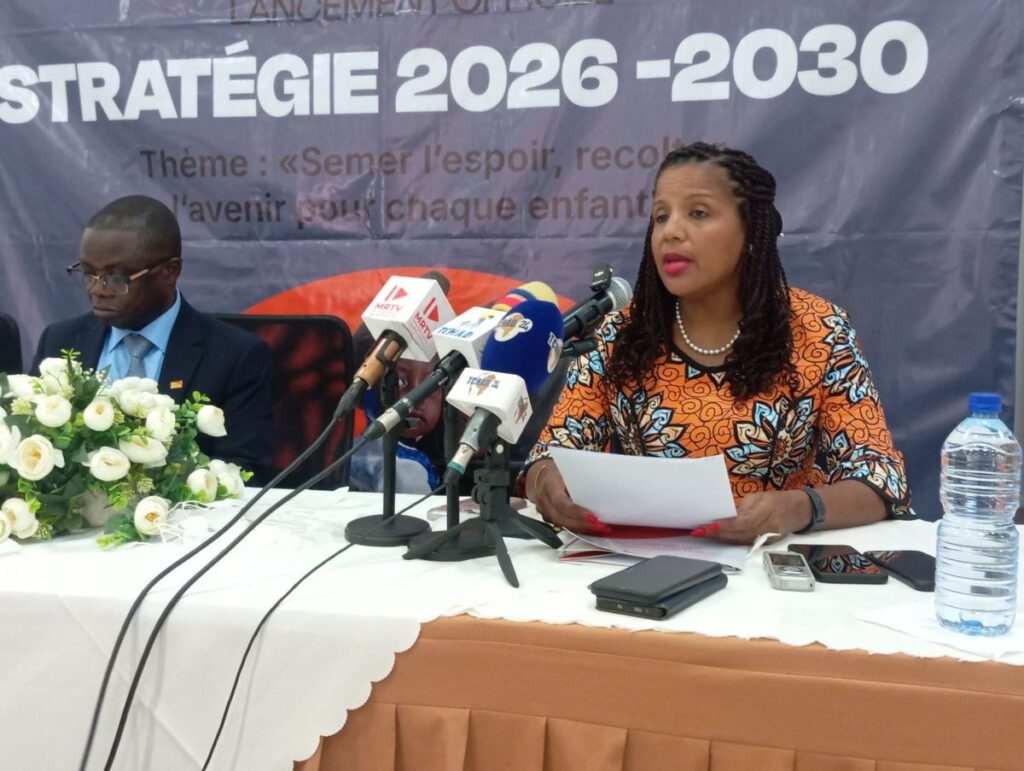
In a landmark gathering at N’Djamena’s Résidence Hotel, World Vision Tchad introduced its bold five-year strategy for 2026–2030, setting an ambitious goal: transforming the lives of 3.29 million children across the country, including 3.09 million of the most vulnerable. The plan integrates humanitarian aid, sustainable development, and peacebuilding to create lasting change.
Speaking to journalists, government representatives, and development partners, the organization’s leadership framed the initiative as a response to Tchad’s most pressing challenges—persistent poverty, malnutrition, climate shocks, and recurring humanitarian crises. Carla Dominique Denizard, Regional Director for West Africa, described the strategy as “bold and transformative,” emphasizing its alignment with continental and global development agendas, including the African Union’s Agenda 2063 and the Sustainable Development Goals.
a multi-dimensional approach to child welfare
The new roadmap prioritizes five key areas to ensure children not only survive but thrive:
- Health and Nutrition: Scaling up maternal and child health programs, with a focus on combating chronic malnutrition—a critical issue affecting nearly 42% of Tchadians living below the poverty line.
- Education: Expanding the Unlock Literacy initiative to strengthen early reading skills, a foundation for lifelong learning and economic opportunity.
- Child Protection: Strengthening systems to shield children from violence, exploitation, and harmful practices, ensuring their safety and dignity.
- Climate Resilience: Building community capacity to adapt to environmental changes, reducing vulnerability to droughts and other climate-related disasters.
- Social Cohesion: Promoting peacebuilding efforts to address underlying tensions and foster stability in fragile regions.
Denizard highlighted the urgency of collaboration, noting that no single actor can tackle Tchad’s challenges alone. “The children of Tchad deserve a future where they are protected, nourished, and empowered to reach their full potential,” she stated. The strategy’s “Humanitarian-Development-Peace Nexus” model ensures that emergency responses transition seamlessly into long-term solutions, creating sustainable pathways out of poverty.
from vision to action: a 20% boost in impact
Édouard Ngoy Wangoy, National Director of World Vision Tchad, called the launch a “historic milestone,” reflecting a 20% increase in ambition compared to previous plans. “Our goal is clear: by 2030, we will reach 3.29 million children, with 3.09 million from the most marginalized communities,” he said. “We are not just aiming for survival—we are committing to flourishing.”
Wangoy acknowledged Tchad’s deep-seated struggles, from food insecurity to climate-induced displacement, but stressed that the strategy is designed to turn these obstacles into opportunities. The plan leverages local partnerships, community leadership, and cultural insights to ensure interventions are both effective and sustainable. “This is about more than aid—it’s about empowering Tchadian children to shape their own futures,” he added.
a call for collective action
Closing the event, World Vision Tchad’s leadership extended an invitation to all stakeholders—government agencies, financial partners, civil society, religious leaders, and media—to join forces in implementing the strategy. “Achieving this vision requires unity,” they emphasized. “Together, we can build a Tchad where every child is safe, educated, and given the chance to thrive.”
With this ambitious roadmap, World Vision Tchad is positioning itself as a catalyst for change, aligning its efforts with national and global priorities to create a brighter future for the country’s youngest citizens.