From mining sites to political control: the hidden equation of Burkina Faso’s gold
In Burkina Faso, where gold extraction generates billions annually, the country’s largest mines have become pawns in a silent power struggle. The recent security arrangements between Ouagadougou and Moscow are not merely about combating jihadist threats—they reflect a deeper exchange where economic leverage, political survival, and foreign influence converge. The fate of these mines now determines not only the country’s stability but also the durability of Captain Ibrahim Traoré’s transitional leadership.
Behind the Bissa mine: a security contract that raises questions
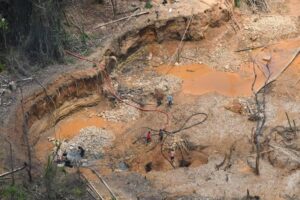
At the heart of this evolving dynamic lies the Bissa gold mine, operated by the Russian group Nordgold. The site has become a battleground not just for metals, but for influence over Burkina Faso’s security architecture. Recent reports reveal an internal dispute among Russian private military companies (PMCs) vying for control over the mine’s protection—a contest that exposes the intricate links between resource protection and regime security.
One of these firms, RSB-Group, was recently excluded from the security contract after what it called ‘irregular procedures.’ In response, the company allegedly mobilized local officials by highlighting security failures linked to its competitors, going so far as to cite attacks on Fulani villages as evidence of mismanagement. While these claims demand independent verification, the incident underscores a troubling pattern: protecting Burkina Faso’s gold wealth is no longer just an economic imperative—it’s a tool of political leverage.
The real cost of mining security for rural communities
For villages near Bissa and other gold-rich zones, the arrival of foreign security firms has brought neither safety nor stability. On the contrary, local populations have faced escalating violence, displacement, and economic hardship as armed groups exploit the chaos. The irony is stark: the same mines generating billions in revenue for state coffers and foreign investors are increasingly becoming magnets for conflict that destabilizes the very communities they rely on.
International observers warn that this model risks turning Burkina Faso’s mineral wealth into a liability—both economically and socially. The security narrative, once framed as a shield against terrorism, now appears increasingly intertwined with the protection of extractive industries and, by extension, the survival of the Traoré regime.
Moscow’s rising role: security aid with strings attached?
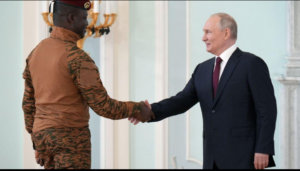
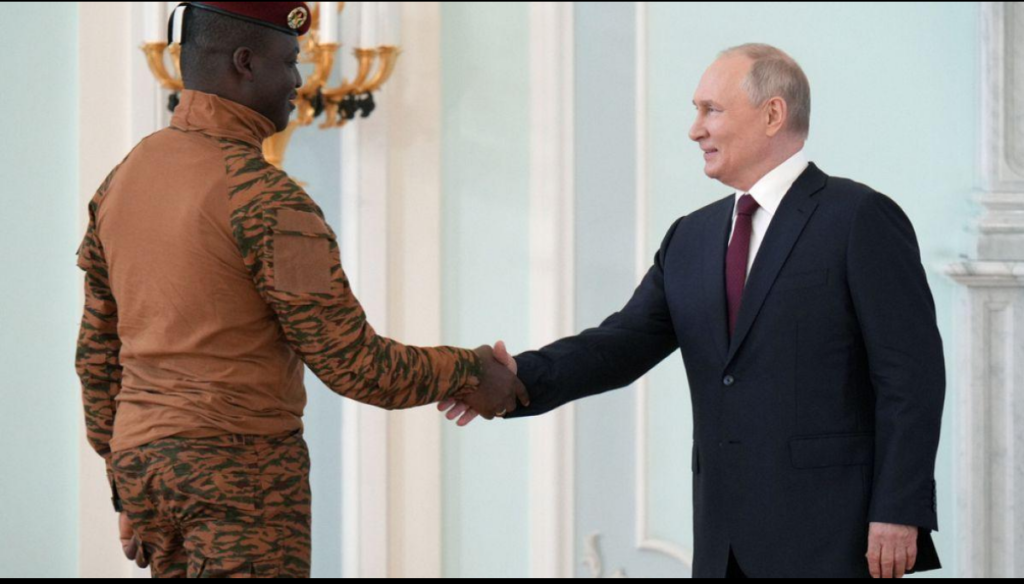
Since seizing power in September 2022, Captain Ibrahim Traoré has forged a strategic partnership with Russia that extends far beyond ideological alignment. From training elite units to deploying personnel in Ouagadougou, Moscow’s engagement in Burkina Faso’s security sector has visibly intensified. During a July 2024 ceremony, images confirmed the presence of Russian paramilitaries standing alongside Traoré—raising immediate questions about their operational mandate.
Analysts suggest that while counterterrorism remains a stated goal, the deployment’s real priority may lie in safeguarding Traoré’s government from both internal and external threats. This dual mission—protecting the regime while fighting insurgents—mirrors the playbook Moscow has employed in other African nations, where military support is often accompanied by economic concessions in sectors like mining and energy.
Gold as collateral: how mineral resources shape foreign influence
The economic stakes are substantial. Nordgold, a major Russian mining operator in Burkina Faso, holds concessions at Bissa and Bouly—sites that now sit at the center of the security debate. These assets grant Moscow a direct financial stake in the country’s stability, making the protection of these mines a matter of strategic interest.
In February 2023, the Burkinabe government temporarily seized 300 kg of gold from Bissa Gold under the pretext of a public emergency, promising compensation. While framed as a fiscal measure, the move signaled a shift: gold is no longer merely an export commodity—it’s a political resource, one that can be mobilized in times of crisis to finance state operations or reinforce alliances abroad.
The unspoken pact: security for concessions?
No public agreement explicitly ties Traoré’s protection to Russian access to Burkinabe gold fields. Yet the convergence of interests is undeniable. For Moscow, control over mining security ensures the continuity of lucrative operations and strengthens its political footprint in West Africa. For Traoré, Russian backing provides a lifeline in a region plagued by coups and insurgencies, while also offering a narrative of sovereignty against Western influence.
The Bissa affair reveals how these interests collide in practice. When RSB-Group was sidelined, it did not quietly accept defeat. Instead, the firm pressed its case by alleging that rival PMCs had failed to prevent attacks on Fulani communities—an inflammatory accusation that could stoke ethnic tensions and undermine Traoré’s legitimacy. Such tactics illustrate how commercial competition in the security sector can escalate into a destabilizing force, threatening both local peace and the integrity of the government.
A strategic gamble with no guarantees
Despite these developments, experts caution against drawing simplistic conclusions. While the evidence points to a growing symbiosis between security cooperation and mining interests, the exact nature of any quid pro quo remains unclear. The Combating Terrorism Center at West Point notes that while Russian forces in Burkina Faso likely serve political ends, their direct involvement in mining operations has yet to be substantiated.
What is clear is that Ouagadougou’s relationship with Moscow is evolving into a high-stakes exchange: security for sovereignty, protection for profit. For the Burkinabe people, the consequences are tangible. As gold revenues fund state initiatives and foreign contractors patrol resource-rich zones, the line between national development and foreign exploitation blurs—leaving citizens to bear the cost of a fragile and contested alliance.
Looking ahead: who benefits from Burkina Faso’s gold?
The future of Burkina Faso’s mining sector—and indeed its political stability—will depend on whether its gold continues to fuel foreign influence or serves as a foundation for equitable growth. The Bissa mine saga is more than a corporate dispute; it’s a microcosm of a larger struggle where power, wealth, and security are being renegotiated under the shadow of the Kremlin.
As Traoré tightens his grip with Russian support, and as foreign firms expand their foothold in Burkinabe soil, one question looms largest: will the country’s mineral wealth ever translate into tangible benefits for its people—or will it remain a bargaining chip in a geopolitical game with no clear winners?