US strategy shifts to trade and security in the Sahel
The recent visit of Nick Checker, head of the US State Department’s African Affairs Bureau, to Mali this week signals Washington’s re-engagement with the Sahel region. However, this marks a strategic recalibration rather than a return to previous policies. The new approach focuses on three key pillars: a pivot toward trade diplomacy—particularly in mineral resources—a renewed security focus with reduced permanent military presence, and a shift from broad humanitarian aid to targeted economic and security partnerships.
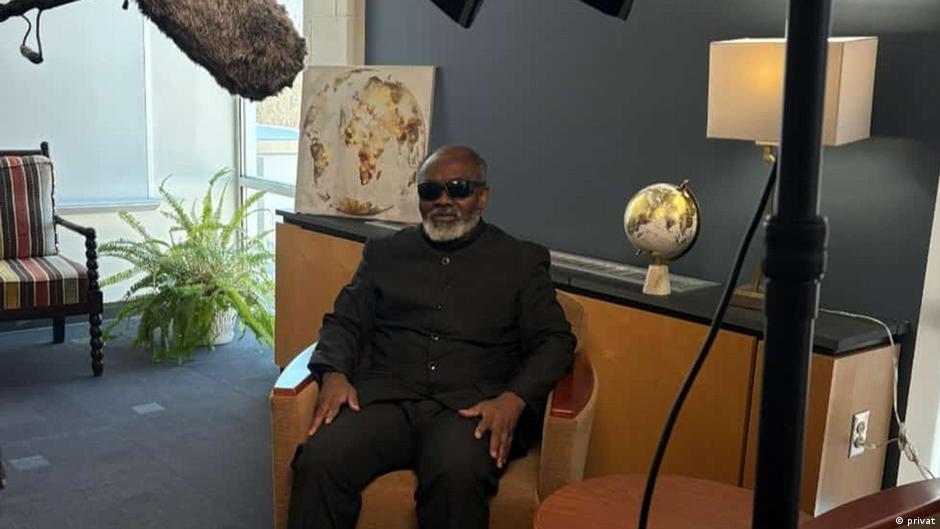
Dr. Gnaka Lagoke on the shifting sands of US-Sahel relations
Washington’s evolving priorities in West Africa
DW: Dr. Gnaka Lagoke, Nick Checker recently met with Mali’s foreign minister and transitional leader Assimi Goïta during his visit to Bamako. What changes has the Trump administration introduced in US foreign policy toward the Sahel, and what are its objectives in West Africa?
When President Bazoum was ousted in Niger, we witnessed a stark contrast between France’s aggressive stance—mobilizing a coalition to reinstate Bazoum—and the United States’ measured response. The US chose observation over intervention, even after Niger’s new authorities demanded the closure of US military bases and withdrawal from the country. This restraint was evident during Joe Biden’s presidency and continues under Donald Trump’s administration.
In today’s geopolitical climate, marked by tensions between Russia and China, the US has recalibrated its strategy to emphasize both security and economic interests. The Sahel is rich in strategic minerals, and access to these resources has become a cornerstone of American foreign policy. Similar dynamics are playing out in Venezuela, Iran, and the Democratic Republic of Congo—where critical mineral deposits are fueling US engagement.
Why Nigeria has become Washington’s preferred partner in West Africa
DW: With the US withdrawing its permanent military presence from Niger, why has Nigeria emerged as America’s key ally in West Africa?
When President Trump pledged to protect Christians allegedly targeted by Islamist militants in Nigeria, the US conducted airstrikes in northern regions with Nigeria’s approval. However, analysts widely agree that these strikes alone cannot dismantle extremist networks. The deeper motivations likely involve securing Nigeria’s oil reserves and other valuable resources. This dual focus on security and economic leverage mirrors the broader US strategy in the Sahel, potentially leading to new military basing agreements in the region. Notably, US facilities previously located in Niger have reportedly relocated to Benin and Côte d’Ivoire.
Potential advantages for AES countries in partnering with Trump’s America
DW: What benefits could the Alliance of Sahel States (AES) countries gain from collaborating with the Trump administration?
First, the US offers a diplomatic alternative to the isolation imposed by France and the European Union, presenting itself as a more flexible partner. Second, in the context of growing US-China rivalry, Washington’s approach provides African nations with greater strategic autonomy. The US has emphasized respect for the sovereignty of Mali, Burkina Faso, and Niger—a stance likely to resonate with regional populations.
However, reports suggest that complex networks involving France, the US, and other actors may still seek regime change in the AES countries. Whether this reflects a genuine shift in US policy or a tactical maneuver remains to be seen. History will be the judge.
Key takeaways
- Security pivot: The US is prioritizing targeted security partnerships over large-scale military deployments in the Sahel.
- Economic leverage: Access to critical minerals is driving US engagement, particularly in Nigeria and other resource-rich nations.
- Strategic realignment: Washington’s approach offers AES countries an alternative to Western isolation while maintaining a focus on sovereignty.