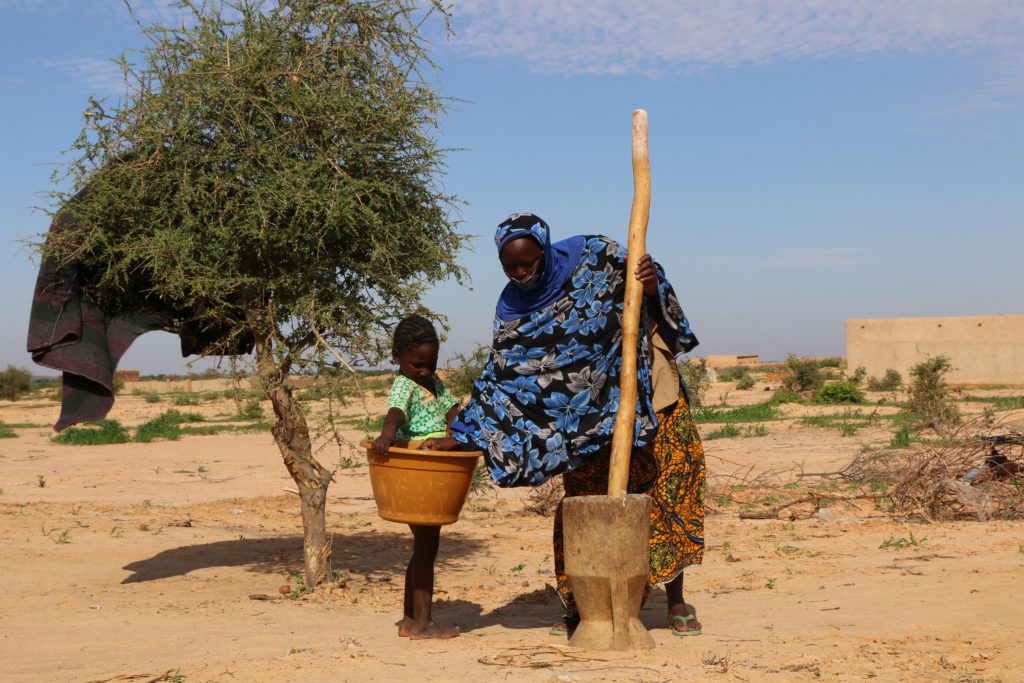
The escalating conflict in Niger’s Sahel region, particularly in the Tillabéri area near the borders with Mali and Burkina Faso, has led to a sharp rise in violence targeting children, warns a new report.
This 64-page document, titled “I Have Nothing Left but Myself: Rising Consequences of Conflict on Children in Tillabéri”, highlights the devastating toll the violence is taking on young lives in a region plagued by attacks from the Islamic State in the Greater Sahara (ISGS) and the Group for the Support of Islam and Muslims (GSIM), an Al-Qaeda affiliate.
Children in these conflict zones face multiple threats, including targeted killings, forced recruitment, and exposure to extreme violence. Many have witnessed massacres in their villages, leading to severe psychological trauma. In some areas, women and girls are confined to their homes, facing risks of abduction or forced marriages to fighters.
A generation of children in Tillabéri is growing up surrounded by death and destruction, with armed groups repeatedly attacking schools, food reserves, and deliberately targeting young people for recruitment.
Regional Crisis Analyst
The report documents how ISGS and GSIM have committed war crimes, including civilian killings and assaults on educational facilities. In 2021 alone, over 60 children were killed in Niger’s portion of the tri-border area, with ISGS allegedly responsible for most large-scale massacres.
Survivors describe harrowing scenes of masked gunmen on motorcycles opening fire on civilians, often sparing no one. A 13- or 14-year-old boy recounted, “We’ve grown accustomed to gunfire and seeing bodies piled up.” Another child, witness to the murder of a 12-year-old friend, shared, “I often have nightmares of being chased by men on motorcycles or relive Wahab pleading with the attackers.”
Witnesses report that Nigerien security forces frequently arrive too late—or not at all—after attacks, leaving communities vulnerable. “We’ve been abandoned,” said one 50-year-old man, echoing the sentiments of many displaced families.
child recruitment and forced labor by armed groups
The recruitment of children by GSIM has surged in 2021, particularly in the Torodi department near the Burkina Faso border. Fighters target boys as young as 15, offering incentives like food, money, or clothing to lure recruits. Training sessions range from one week to three months, with children often deployed as spies, scouts, or lookouts—roles that constitute direct participation in hostilities under international law.
systematic attacks on education and healthcare
Armed groups opposing “Western education” have burned down schools and threatened teachers, forcing closures across Tillabéri. By June 2021, 377 schools were shut, displacing over 31,000 children from education. Many rural schools, constructed from thatch, are easily destroyed in arson attacks.
A 15-year-old from Mogodyougou explained, “Teachers left… or they would have been killed.” The closures leave children idle, with one 14-year-old stating, “We were unhappy when school closed… Afterward, we stayed home with nothing to do.”
Attacks on healthcare facilities have also disrupted medical services. Looted health centers and restricted civilian movement—sometimes imposed by authorities—have worsened health outcomes, leading to drops in immunization rates and outbreaks of preventable diseases like measles.
food insecurity and forced displacement
ISGS has deliberately torched grain stores, looted shops, and stolen livestock during raids, leaving families without food. A mother of seven described how fighters burned her family’s granaries in Zibane: “Everything was destroyed… I have nothing left but myself.”
Satellite imagery confirms targeted destruction of food reserves, contributing to mass displacement. Humanitarian agencies warn that 2.3 million people in the region could face food insecurity due to violence, drought, and flooding.
long-term psychological scars on children
The relentless violence has left deep psychological scars. Most children interviewed showed signs of trauma, including nightmares, sleep disorders, anxiety, and loss of appetite. The sound of motorcycles often triggers distress, reminding them of attacks.
A displaced 15-year-old pleaded, “We just want peace to return. The government must care about our lives here in the camp—food, water, and school. We need school.”
Experts urge the Nigerien government and international partners to prioritize access to education and psychosocial support for conflict-affected children, warning that without urgent action, an entire generation risks being lost to violence and neglect.
understanding the crisis
The conflict that began in Mali in 2012 has spread to neighboring Burkina Faso and Niger, with armed groups vying for control of border zones. Clashes frequently involve Nigerien forces alongside regional allies such as Chad, France, and others. In 2021, an estimated 13.2 million people required humanitarian aid, with nearly 1.9 million displaced.