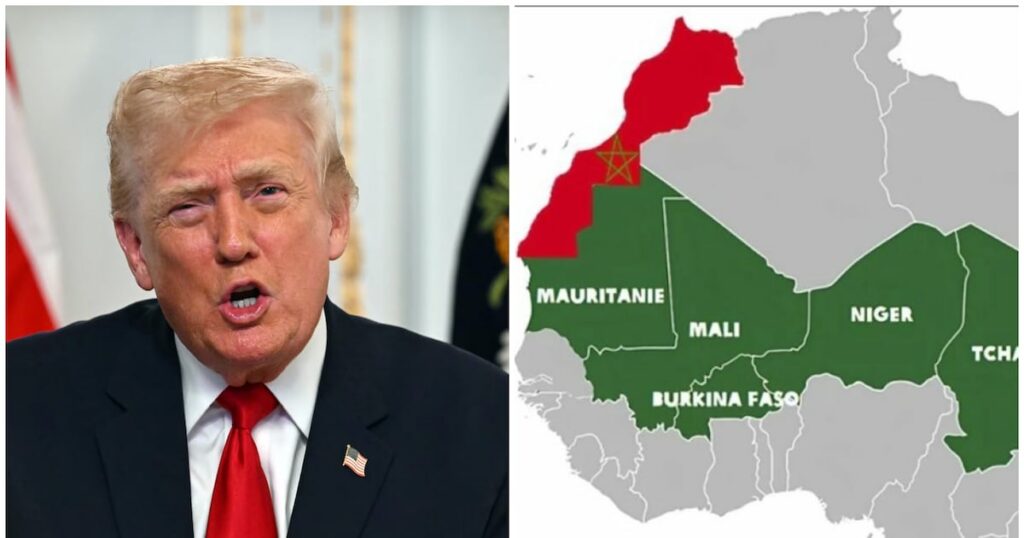
Geopolitical shifts in the Sahel are unfolding quietly. While European forces have gradually withdrawn from Mali, Burkina Faso, and Niger, and Russia has expanded its footprint through proxy structures, the United States appears to be reviving its engagement in the region. However, experts argue this isn’t a simple return to prominence—rather, a calculated repositioning after observing the decline of other actors.
According to Emmanuel Dupuy, president of the Institute for Prospective and Security in Europe (IPSE), Washington has not abandoned the Sahel; it has merely delayed its direct involvement to allow internal dynamics and alliances to realign. This pragmatic approach reflects a long-standing U.S. strategy of adapting to shifting power vacuums in ways that prioritize security and economic interests over ideological alignment.
Dupuy emphasizes that the U.S. engages with local authorities regardless of how they came to power, a stance that contrasts sharply with Europe’s refusal to recognize military-led governments. «The Americans negotiate with whoever holds power, just as they did in Afghanistan, ultimately leading to dialogue with the Taliban,» he explains. This transactional diplomacy allows Washington to maintain influence even amid political turbulence.
Russia’s growing presence in the Sahel, often through private military companies (PMCs), has raised questions about potential confrontation with the U.S. However, Dupuy dismisses this idea, noting that both powers operate indirectly. «This model works because neither the U.S. nor Russia will deploy regular forces. Instead, private contractors like those from Blackwater will fill the gaps,» he asserts. A recent U.S.-facilitated deal between the Democratic Republic of the Congo (DRC) and Rwanda exemplifies this outsourcing strategy.
economic leverage and regional partnerships
The U.S. is also leveraging economic tools to strengthen its position in the Sahel. The African Growth and Opportunity Act (AGOA), which grants duty-free access to American markets for 30 African countries, remains a key component of this strategy. By fostering trade ties, Washington aims to anchor Sahelian economies within its sphere of influence while complementing its security objectives.
Dupuy highlights the Morocco-U.S. partnership as a critical enabler of American influence in the region. Rabat’s diplomatic flexibility—maintaining dialogue with military governments in Mali, Niger, and Burkina Faso—makes it an ideal intermediary. «The U.S. cannot intervene openly, but Morocco’s strong regional image allows it to engage with these governments while advancing American interests,» he notes.
Beyond diplomacy, Morocco serves as a gateway for broader economic integration. Projects such as the Atlantic Initiative, which aims to connect Sahelian nations to Atlantic trade routes via Mauritania and Morocco, are framed as long-term investments. Dupuy describes this as a «10-year vision, not an immediate reality», with infrastructure like the proposed Burkina Faso–Niger–Mali corridor still in early stages.
soft power and religious diplomacy
Morocco’s influence extends beyond economics. Since 2015, the Mohammed VI Institute for the Training of Imams has exported a moderate, Malikite-Sufi Islamic model to Sahelian countries, positioning itself as a stabilizing force. «This religious diplomacy is an extremely effective tool for shaping regional norms without direct coercion,» Dupuy observes. Such initiatives reinforce Morocco’s role as a trusted partner capable of bridging divides in a fragmented Sahel.
The kingdom’s strategic positioning is further solidified by its non-NATO ally status with the U.S. (granted in 2016), which underscores its role in a broader transatlantic and Mediterranean framework. Dupuy notes that Morocco has consistently advocated for Euro-Mediterranean integration, from the 1995 Barcelona Declaration to the Union for the Mediterranean, reinforcing its credibility as a stable interlocutor.
Algeria’s declining influence
While Algeria once wielded significant soft power in the Sahel, its regional leverage has diminished. Dupuy suggests that Algeria’s efforts to maintain influence—particularly on the Sahara issue—are increasingly ineffective. The U.S. has reaffirmed its support for Morocco’s autonomy plan, sidelining Algeria’s attempts to shape the narrative. «The conversation is no longer ideological; it’s about practical implementation—governance, economic zones, and maritime rights,» he explains. Algeria’s limited options stem from shifting alliances and the prioritization of other geopolitical hotspots.
As the Sahel becomes a chessboard of competing interests—security outsourcing, resource extraction, and infrastructure projects—the U.S. is recalibrating its approach, and Morocco is emerging as a pivotal player. This evolving dynamic suggests a future where economic leverage and diplomatic agility may outweigh traditional military presence in shaping the region’s trajectory.