The United States has unveiled a decisive pivot in its foreign policy toward three West African nations where military juntas have severed military ties with France and pivoted toward Russia. Washington’s latest diplomatic overture signals a willingness to engage with Bamako, Ouagadougou, and Niamey despite their authoritarian governance and strategic realignment.
In a landmark announcement, the U.S. State Department confirmed that Nick Checker, Assistant Secretary for African Affairs, will travel to Mali to affirm America’s respect for Malian sovereignty and explore a new partnership framework that moves beyond past political disagreements. The initiative also extends an olive branch to neighboring Burkina Faso and Niger, emphasizing shared security and economic interests.
Notably absent from the agenda is any mention of democracy or human rights concerns—topics that dominated U.S. policy under the Biden administration. After successive coups in all three countries between 2020 and 2023, Washington suspended military cooperation. Yet the new approach reflects a sharp departure from previous stances, particularly following Donald Trump’s return to the White House.
from development to defense: a strategic recalibration
The shift became evident shortly after Trump’s inauguration, when the U.S. Agency for International Development (USAID) was abruptly shuttered in the region—just days after the president’s reelection. This move signaled a broader shift in priorities, with Washington now prioritizing security collaboration and access to critical mineral resources over governance and development initiatives.
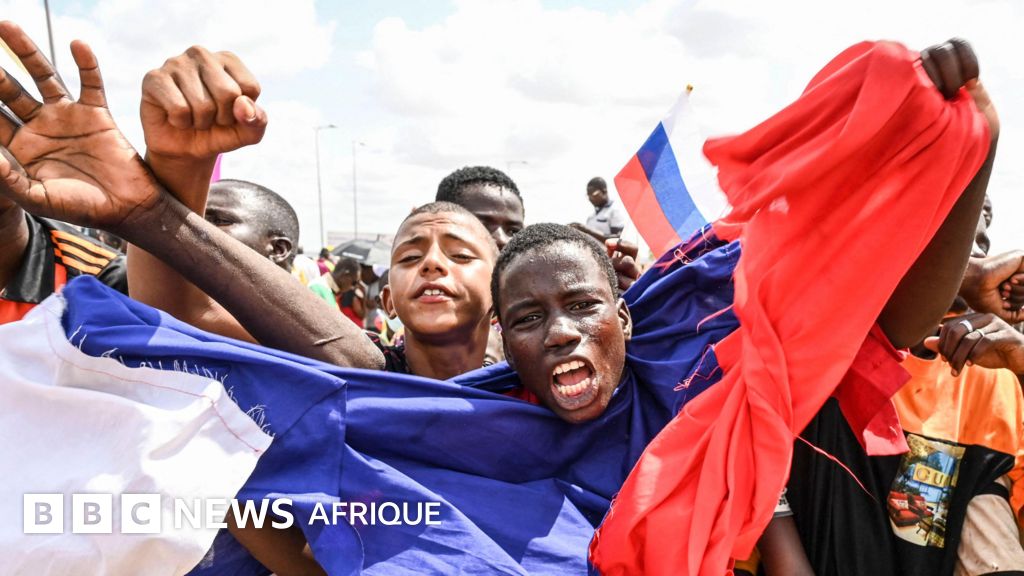
Checker’s upcoming visit to Bamako carries a symbolic message: the U.S. now openly acknowledges the sovereignty of Mali’s military leadership, a stance likely to resonate in capitals where junta leaders have cultivated nationalist appeal by rejecting former colonial power France and embracing pan-African rhetoric.
Russia’s growing influence in the Sahel
The junta in Burkina Faso, led by Captain Ibrahim Traoré, has positioned itself as a champion of resistance against “imperialism” and “neocolonialism.” Through aggressive social media campaigns, Traoré has amassed widespread support, particularly among African youth. The U.S. administration’s new policy shows little concern for the junta’s rejection of elected civilian rule—a stark contrast to earlier democratic standards.
Massad Boulos, Senior Advisor for African Affairs at the U.S. State Department and a close Trump ally, previously stated: “While democracy is valued, our policy is not to interfere in the internal affairs of other nations. Peoples are free to choose the system that suits them.” This non-interventionist stance marks a radical departure from decades of U.S. foreign policy in the region.
countering terrorism and securing strategic minerals
The Trump administration’s reorientation is driven by three core concerns. First, the escalating threat posed by Islamist insurgencies across the Sahel—where militant groups now account for nearly half of all terrorism-related deaths globally. The region’s porous borders and vast ungoverned spaces risk creating new safe havens for extremists, including the Islamic State’s West African affiliate, active in the tri-border zone of Mali, Burkina Faso, and Niger.
Second, the region’s mineral wealth—particularly gold in all three countries, lithium in Mali, and uranium in Niger—has drawn global interest. The junta in Niger has already nationalized a major uranium mine previously operated by French firm Orano and is now exploring partnerships with Russia in the sector.
Third, the U.S. seeks to prevent Russia from becoming the sole external power supporting these regimes. While Washington acknowledges reports of human rights abuses by Russian Wagner Group operatives—especially in Mali—it appears willing to overlook them in the interest of countering terrorism and maintaining influence.
Rudolph Attalah, a senior U.S. counterterrorism official, recently reassured Bamako that Washington remains unconcerned by Moscow’s military presence. Instead, the U.S. aims to balance Russia’s influence by offering its own security partnership—one that avoids large-scale troop deployments or “endless wars.”
intelligence, weapons, and limited engagement
According to General John Brennan, Deputy Commander of U.S. Africa Command (Africom), Washington is now providing intelligence support and may supply additional arms to the three juntas. However, the U.S. has no plans to reopen its drone base in Agadez, Niger—which once housed 800 troops—nor deploy new combat forces. The base was closed after the Biden administration pressured Niamey to restore democratic rule.
The juntas’ recent withdrawal from the Economic Community of West African States (ECOWAS) has removed regional pressure for democratic transitions. The three nations are now forming the Alliance of Sahel States (AES), effectively isolating themselves from ECOWAS governance standards. This shift has prompted neighboring countries—including Benin, Nigeria, Togo, Ghana, and Côte d’Ivoire—to seek pragmatic security cooperation with the juntas to combat cross-border militant threats.
While enhanced U.S. intelligence and potential arms transfers could deliver quick tactical gains against jihadist groups, long-term stability in the Sahel will require addressing deep-rooted social and economic challenges. As France’s decade-long military intervention demonstrated, military solutions alone cannot resolve the region’s complex crises.