The United Nations Educational, Scientific and Cultural Organization (UNESCO) joined forces with Cameroon to mark the International Mother Language Day, celebrating its 27th edition under the theme “Voices of Youth on Multilingual Education.”
Celebrating linguistic diversity in Nanga Eboko
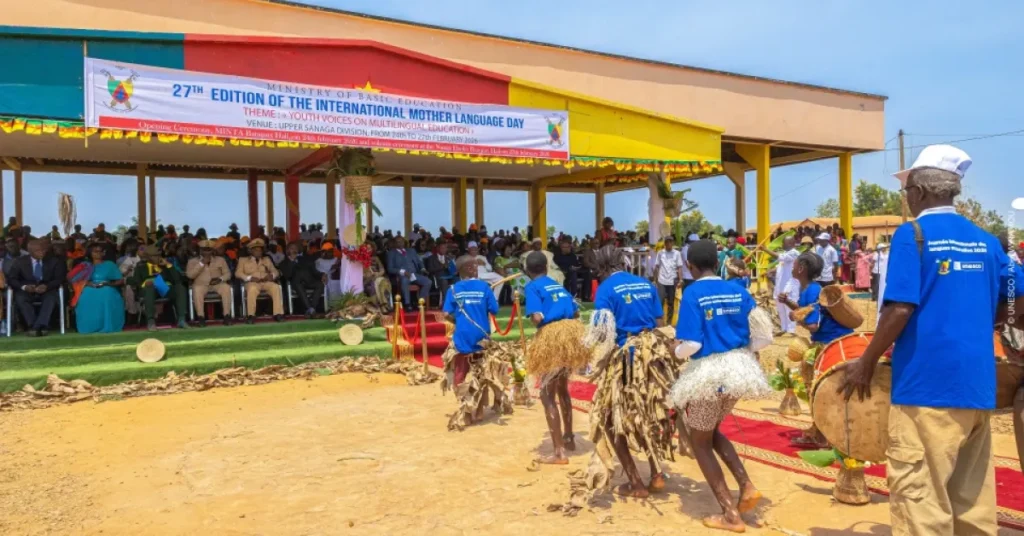
The closing ceremony took place on February 27, 2026, in Nanga Eboko, following a week-long series of events across Cameroon dedicated to promoting linguistic diversity and multilingual education. The event highlighted the critical role of mother tongues in early childhood learning, emphasizing their importance as pillars of cultural heritage and academic success.
Key figures and commitments
The ceremony was led by Cameroon’s Minister of Basic Education, Professor Laurent Serge Etoundi Ngoa, alongside Hilaire Mputu, Director of UNESCO’s Central Africa Regional Office. Both emphasized the transformative power of mother tongue-based education in enhancing learning outcomes and fostering social cohesion.
UNESCO’s advocacy for multilingual education stems from extensive research showing that children learn more effectively when instruction begins in their native language. This approach not only improves literacy rates but also strengthens cultural identity and inclusivity in classrooms.
Youth engagement and cultural showcases
Students from primary schools across Cameroon delivered captivating performances, showcasing the country’s rich linguistic and cultural tapestry. These presentations underscored the vital role of young people in preserving and promoting indigenous languages as vehicles of knowledge and heritage.
UNESCO’s participation in the event reaffirmed its dedication to supporting member states in advancing multilingual education and safeguarding linguistic diversity. The International Mother Language Day serves as a global reminder of the urgent need to integrate mother tongues into educational systems worldwide.
Building a multilingual future
By prioritizing mother tongue education, Cameroon and UNESCO are taking concrete steps toward achieving Sustainable Development Goal 4: ensuring inclusive and equitable quality education for all. This initiative aligns with broader efforts to create learning environments that respect and celebrate cultural pluralism while equipping students with the skills needed for the future.