Has France found a new route to Sahel stability through N’Djamena?
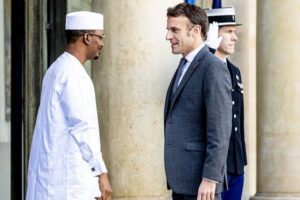
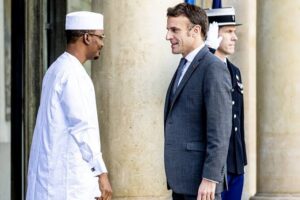
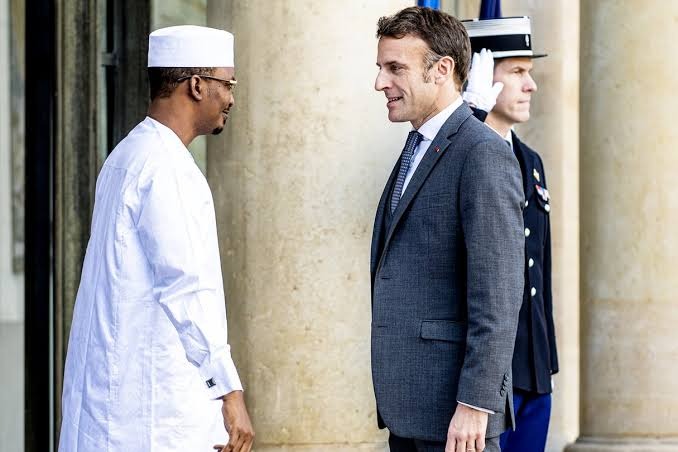
On October 13, 2026, Emmanuel Macron and Mahamat Idriss Déby signed a landmark defence cooperation declaration in Paris, resetting a relationship strained by years of military disengagement and regional criticism. This agreement, reached nearly two years after Chad terminated its military cooperation with France in November 2024, signals a deliberate shift from permanent bases to a partnership rooted in training, technology, and mutual interest.
From withdrawal to strategic renewal: how the October 13 pact redefines Sahel security
The 2024 decision to end France’s military presence in Chad marked the end of an era. By early 2025, French troops had withdrawn and facilities returned, closing the era of permanent deployments that once anchored French operations in Africa. The October 13 declaration replaces boots on the ground with a new model: targeted support focused on building Chad’s operational capacity while restoring trust through bilateral cooperation.
This strategic pivot comes as France redraws its Sahel policy following exits from Mali, Burkina Faso, and Niger — countries where local governments rejected military cooperation frameworks. Chad remains a critical exception: its geographic position bordering war-torn Sudan, Libya, and the Lake Chad Basin makes it a linchpin for regional security, particularly in border surveillance, counter-terrorism, and stabilizing fragile zones.
Why N’Djamena matters now: Chad’s regional role and security calculus
The renewed pact aligns with Chad’s evolving security priorities. With internal threats and spillover from neighboring conflicts, N’Djamena seeks enhanced capabilities without compromising sovereignty. The declaration emphasizes custom-built support: joint training, intelligence sharing, and technical assistance designed to empower Chad’s armed forces, not replace them.
This approach reflects a broader regional shift. Unlike traditional military alliances, the new model prioritizes adaptability and local ownership. Chad’s military leadership, now free from foreign bases, gains access to French expertise in logistics, cybersecurity, and counter-insurgency — all delivered under strict bilateral governance and without permanent foreign presence.
Key components of the renewed defence partnership
- Operational training: French advisors will conduct joint exercises and advanced training tailored to Chad’s operational needs, focusing on mobility, intelligence, and rapid response.
- Technological transfer: Access to secure communications, satellite monitoring, and maintenance support for heavy equipment, enabling self-sufficiency in critical areas.
- Shared intelligence: Real-time data sharing on cross-border threats, particularly in the Sahel, Lake Chad, and Sahara regions.
- Defence industry collaboration: Joint investments in local defence manufacturing and maintenance hubs to reduce reliance on external suppliers.
Diplomatic tightrope: navigating tensions with Niamey
The timing of the Paris agreement is delicate. On August 28–29, 2026, Niger accused foreign actors — including Chad — of orchestrating an attempted coup at Niamey’s Air Base 101. Niger’s government pointed fingers at regional actors, sparking a diplomatic standoff with both France and Chad.
Paris firmly rejected the allegations, but the incident underscored regional fragmentation. While Chad and Niger share security concerns, their diplomatic alignments differ sharply. Chad’s renewed alliance with France, therefore, walks a fine line: reinforcing cooperation with Paris while avoiding entanglement in Niamey’s political rivalries.
The October 13 declaration explicitly limits its scope to bilateral relations, avoiding any language that could inflame tensions. It signals a clear message: Chad will pursue its own strategic path, but with enhanced capacity to protect its borders and people.
Beyond guns and bases: the economic and social dimension of the new pact
This partnership is not just about defence. It marks a deliberate turn toward economic and social cooperation, addressing Chad’s longstanding development gaps. Sectors such as energy, transport, health, and education are now central to the agenda, aiming to connect Chad’s growth with French investment and expertise.
The two leaders emphasized job creation, infrastructure development, and access to basic services — priorities for a nation grappling with poverty, unemployment, and the strain of regional conflicts. By decoupling security from dominance, France and Chad are building a relationship that balances interests with dignity.
What this means for Sahel stability
The renewed alliance offers a new model for French engagement in Africa: less about permanence, more about partnership. Chad’s role as a stabilizing force in Central Africa and the Sahel could grow, especially as France recalibrates its footprint across the region.
But success hinges on execution. Will the training and technology transfers translate into tangible gains for Chad’s military and people? Can Paris navigate regional sensitivities without reigniting old grievances? Most importantly, can this model be replicated elsewhere — in Niger, Mali, or Burkina Faso — as France seeks to rebuild influence without bases?
The October 13 declaration is a gamble. But in a Sahel where trust is scarce and threats are growing, it may be the only viable move left.
What’s next: turning the declaration into lasting impact
Implementation begins immediately. Over the coming months, joint military commissions will define training schedules, technology transfer milestones, and joint operations protocols. Economic working groups will identify flagship projects in energy, transport corridors, and digital infrastructure.
For Macron, the stakes are clear: to prove that France can remain a security partner in Africa without a single permanent base. For Déby, the challenge is to assert Chad’s leadership in a volatile neighborhood while leveraging international support to fortify its institutions.
The world is watching. If this model works, it could redefine French-African relations for decades. If it fails, Chad risks becoming another cautionary tale in the Sahel’s turbulent security landscape.