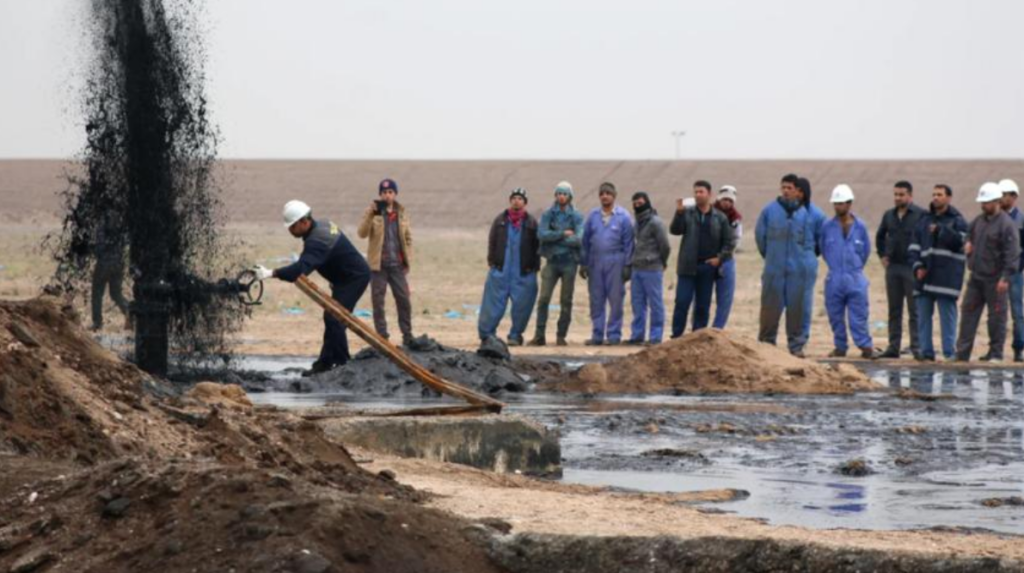
In the corridors of power in Niamey, the management of Niger’s oil crisis has spiraled into a financial showdown. Confidential revelations from an exclusive October 12, 2026, closed-door meeting at the Prime Minister’s office expose deep-seated dysfunction within the SONIDEP, the questionable inflation of penalties against SORAZ, and a high-stakes financial standoff threatening to derail the nation’s energy sector.
What really happened at the October 12 committee meeting?
The session, chaired by Prime Minister Ali Mahaman Lamine Zeine, was officially convened to address the country’s oil supply and production bottlenecks. However, behind closed doors, it devolved into chaos. A senior insider, deeply embedded in the crisis management process, shared damning details—on condition of anonymity due to mounting pressure within the industry.
The insider described a system on the brink, where financial interests have hijacked public governance. ‘Eight meetings, zero results,’ was the biting assessment from SORAZ representatives, who refused to foot the bill for yet another round of what they perceived as a financial drain.
The cost of inaction: SORAZ’s refusal to fund the committee
For the third time in recent months, the government demanded SORAZ cover 12 million FCFA in session allowances for the meeting. This time, the raffinery’s leadership pushed back forcefully. According to our source, SORAZ has already poured tens of millions into financing a committee that has delivered no technical or financial solutions—only empty promises.
Worse, internal documents allegedly grant the committee the power to extend its mandate indefinitely, citing persistent sector instability as justification. ‘It’s no longer a committee—it’s a rent-seeking machine,’ the insider remarked.
The $680 million question: where did the money go?
The explosive core of the controversy is a 418 billion FCFA ($680 million) debt owed by SONIDEP to SORAZ. Yet, during the October 12 meeting, government representatives arrived unprepared, citing media reports instead of presenting audited financial statements.
Our source provided a breakdown of the missing funds:
- 12%: Intercompany debts with NIGELEC, Niger’s state electricity provider
- 18%: Authorized withdrawals diverted to the military budget
- 70%: Direct cash outflows from SONIDEP, some routed to the presidential palace
With no credible accounting to justify the hemorrhage, whispers of a coordinated debt-erasure strategy have begun to circulate. The question lingers: was this a financial miscalculation—or a deliberate diversion?
Fabricating debt: the committee’s desperate playbook
Unable to recoup the 418 billion FCFA from SONIDEP, insiders allege the committee manufactured counterfeit liabilities to offset the debt. Penalties against SORAZ, initially set at 6 billion FCFA, were inflated to 76 billion FCFA in a single session. The strategy goes further: cross-debt settlements with China’s CNPC and NIGELEC are being weaponized to saddle SORAZ with an additional 200 to 400 billion FCFA in fabricated penalties.
‘The playbook is simple: create fake debts to erase real ones. SORAZ is being squeezed dry to mask the disappearance of 418 billion,’ the insider stated.
Industrial sabotage: how production collapsed to 12,000 barrels
The financial fallout has spilled into the operational chaos at the Zinder refinery. Despite official claims of a planned production surge to 20,000 barrels per day, output has plummeted to just 12,000 barrels. A senior technician, speaking under condition of anonymity, revealed an alarming cause: unauthorized tampering with refinery valves by foreign contractors acting on direct orders from Nigerien authorities.
These interventions triggered dangerous overheating episodes, endangering both equipment and personnel. A critical maintenance shutdown, originally scheduled for October, has been postponed until May—a delay that risks catastrophic equipment failure.
The fuel shortage paradox: 1,000 barrels vanished daily
While Nigerians grapple with severe fuel shortages, the numbers tell a contradictory story. At 12,000 barrels produced daily and a national consumption of 11,000 barrels, the market should theoretically yield a surplus of 1,000 barrels per day. So where is it going?
The opacity deepens around shipment records from Zinder, shadowy cross-border trade via Algeria, and murky agreements with the Ader refinery. Without transparency, speculation about parallel distribution networks grows unchecked.
Officials from the Prime Minister’s office and SONIDEP declined all comment when confronted with these allegations. One thing is clear: behind the empty fuel pumps, Niger’s oil sector is drowning in a governance crisis of its own making.
What’s next for Niger’s oil future?
The revelations paint a grim picture: a debt black hole, manufactured penalties, and industrial sabotage threatening the nation’s energy security. As public frustration mounts, the government faces a defining choice—restore accountability or risk total collapse of the sector. The clock is ticking, and Niger’s oil future hangs in the balance.