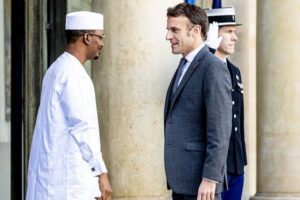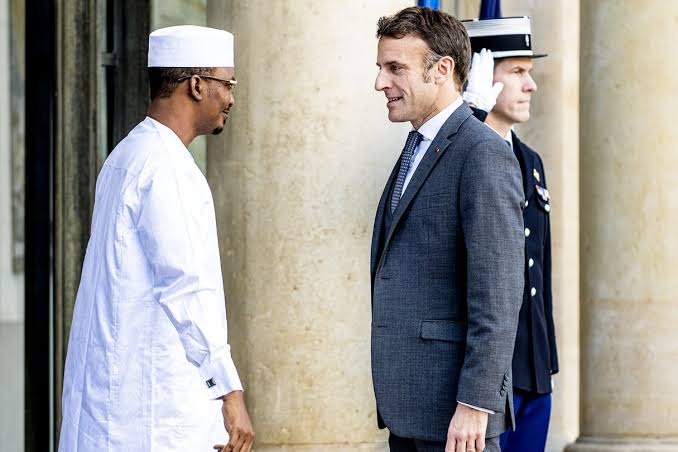
On October 13, 2026, Paris and N’Djamena took a decisive step to rebuild their defense partnership, signing a landmark intention declaration aimed at reshaping bilateral cooperation. The move comes after years of strained relations, including the withdrawal of French troops from Chad in early 2025—a strategic setback for France’s Sahel operations. But now, with geopolitical tensions escalating across the region, could this renewed alliance be the key to stabilizing a fragile security landscape?
Paris and N’Djamena rewrite their defense playbook
The signing of the intention declaration marks a formal restoration of ties between France and Chad, nearly two years after N’Djamena terminated its military cooperation agreement with Paris. The collapse of the previous arrangement, which saw French forces withdraw and key installations returned, left a void in France’s regional footprint. Now, the two nations are redefining their defense relationship around a new model—one centered on joint training, expertise-sharing, industrial collaboration, and technology transfer.
This shift reflects Paris’s broader pivot in Africa, where the traditional model of permanent military presence has given way to flexible, needs-based partnerships. For Chad, a nation sandwiched between Sudan’s war, Libya’s instability, and the Lake Chad Basin’s militant threats, this cooperation is more than strategic—it’s existential.
Why Chad remains Paris’s anchor in the Sahel
Chad’s geographic importance cannot be overstated. Its borders with Sudan and Libya, coupled with its role in the fight against Boko Haram and other armed groups, make it a linchpin for regional security. The new defense framework focuses on:
- Border surveillance and counterinsurgency: Strengthening Chad’s operational capabilities to monitor and secure its frontiers.
- Military training and doctrine: French expertise in counterterrorism and asymmetric warfare to bolster Chad’s armed forces.
- Defense industrial partnerships: Joint development of defense technologies to reduce dependence on foreign imports.
The agreement avoids the pitfalls of past arrangements by prioritizing Chad’s autonomy—letting N’Djamena lead its own security agenda while benefiting from French support.
Niger’s shadow over the France-Chad rapprochement
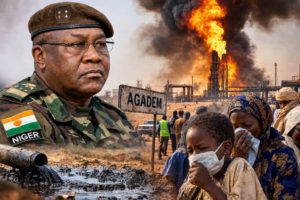
The timing of this defense reset is fraught with regional sensitivities. Just weeks before the Paris talks, Niger accused Chad—and France—of orchestrating a failed coup attempt in Niamey. Paris swiftly denied the allegations, but the episode underscored the fragility of alliances in the Sahel.
Chad and Niger share deep security concerns, from jihadist insurgencies to cross-border smuggling. Yet their diplomatic approaches diverge sharply. While Niger has embraced a more confrontational stance toward Western partners, Chad is seeking a pragmatic middle ground—balancing cooperation with sovereignty. This divergence complicates efforts to forge a unified regional security strategy.
The France-Chad declaration explicitly avoids entangling Niger, framing the partnership as a strictly bilateral affair. But in a region where alliances shift like desert sands, can such compartmentalization hold?
Beyond guns and bases: the broader pact for economic revival
This isn’t just about defense. The October 13 meeting also laid the groundwork for economic and cultural ties, signaling a broader thaw between Paris and N’Djamena. Leaders from both nations are prioritizing investments in:
- Infrastructure: Roads, energy grids, and digital networks to connect Chad’s remote regions.
- Healthcare and education: Expanding access to critical services amid chronic underinvestment.
- Trade and industry: French firms are eyeing opportunities in agriculture, mining, and renewable energy.
The goal? To move beyond a relationship historically dominated by military logistics and toward a partnership built on mutual economic benefit. For Chad, this is a lifeline—its stability hinges on reducing reliance on foreign aid while attracting foreign investment.
The test for France’s Sahel strategy
For Emmanuel Macron, the Chad reset is a litmus test for France’s post-withdrawal Africa policy. With Mali, Burkina Faso, and Niger severing military ties, Paris is betting big on Chad as its new regional partner. The stakes are high:
- Legitimacy: Can France rebuild trust without repeating past mistakes?
- Security: Will the new framework help contain jihadist expansion in the Lake Chad Basin?
- Diplomacy: Can Paris navigate the minefield of regional rivalries without alienating other Sahel states?
Mahamat Idriss Déby, for his part, faces a dual challenge: leveraging French support to strengthen Chad’s defenses while avoiding the appearance of surrendering sovereignty. The new agreement walks this tightrope by emphasizing tailored cooperation—no foreign boots on the ground, but French expertise on tap.
What’s next for the Sahel?
The October 13 declaration is just the first act. Over the coming months, expect to see:
- Pilot programs for joint military exercises and counterterrorism drills.
- Fast-tracked negotiations on defense technology transfers and industrial cooperation.
- High-level economic delegations to finalize investment deals in key sectors.
But the biggest question looms: Can this bilateral partnership withstand the centrifugal forces of the Sahel’s shifting alliances? With Niger’s government simmering over the rapprochement, and other regional players watching closely, the answer may hinge on one factor—results. If Chad sees tangible security and economic gains, others may take note. If not, Paris’s Sahel strategy could once again find itself adrift.
One thing is certain: the era of military dominance in Sahel diplomacy is over. The future belongs to those who can adapt—and France and Chad are making their bet.