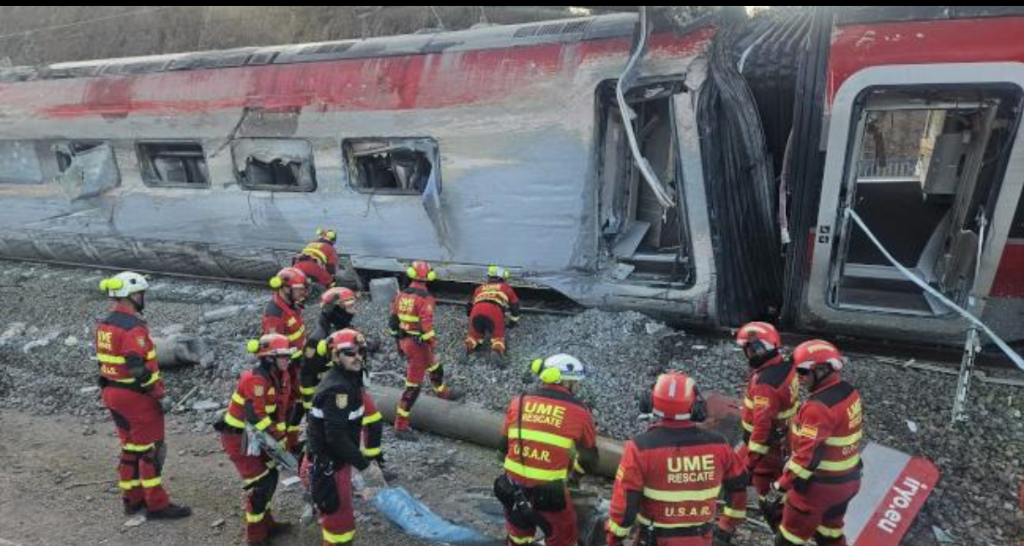
The heart of Spain is reeling today after one of its worst rail disasters in recent history. A catastrophic collision between two high-speed trains near Urda in Toledo province claimed at least 46 lives and left 179 others injured. Emergency responders worked through the night as authorities scrambled to understand how such a tragedy could unfold on a modern, high-capacity railway network.
The human toll of Spain’s catastrophic train crash
The accident occurred on a critical rail link connecting Madrid to Andalusia, a route traveled by thousands daily. Investigators now face the grim task of establishing precise circumstances while grieving families await confirmation. The provisional death toll stands at 46, though authorities caution this number may rise as rescue operations continue and medical assessments are finalized.
The collision involved a Renfe high-speed train and a stationary Iryo train, with multiple carriages derailing and some tumbling down an embankment. Rescue teams worked against time to extract passengers trapped in severely damaged compartments, while medical personnel prioritized stabilization of the most critical cases.
Emergency response reveals scale of disaster
Within minutes of the crash, emergency services deployed massive rescue efforts. Firefighters, medical teams, civil protection personnel, and security forces converged on the scene to provide care to the injured and secure the area. Hospitals across the region prepared emergency protocols to receive the wounded as the full scope of injuries became clear.
The rail network immediately suspended services on affected lines, causing widespread travel disruptions. Thousands of passengers found themselves stranded as authorities assessed the damage and implemented alternative transportation arrangements.
Families face agonizing uncertainty
For relatives of passengers aboard either train, the hours since the collision have been filled with unbearable tension. Many remain at local command centers waiting for news, while others rush toward medical facilities only to receive devastating updates. The emotional strain compounds the physical injuries sustained by survivors.
Investigating Spain’s worst rail disaster in decades
As rescue operations wind down, attention turns to understanding how two modern trains operating on a sophisticated high-speed network could collide with such devastating consequences. Initial reports point to potential issues with signaling systems, traffic management, or communication between drivers and control centers.
Investigators will examine train recordings, signal equipment functionality, communication logs, and infrastructure integrity. The focus will be on reconstructing the final moments before impact to determine whether technical failures, human error, or a combination of factors contributed to the tragedy.
Could this disaster have been prevented by existing safety protocols?
The accident raises urgent questions about the effectiveness of current safety measures on Spain’s high-speed rail network. While each incident requires separate investigation, this collision follows several recent rail accidents that have already raised public concerns about infrastructure maintenance and system reliability.
The findings will determine whether current protocols were adequate or whether fundamental changes are needed to prevent future tragedies.
Spain’s rail safety debate enters a critical phase
This disaster arrives at a pivotal moment for Spain’s rail transportation system. Coming on the heels of other significant rail incidents, it threatens to reignite national debates about infrastructure investments, equipment reliability, and traffic management protocols.
Transportation authorities now face dual pressure: conducting a thorough investigation while addressing public anxiety about rail safety. The conclusions will not only identify potential responsibilities but also guide future safety enhancements across the entire network.
What happens next: the path to recovery and accountability
In the coming days, Spanish authorities must navigate a delicate balance between emergency response, victim support, and the investigation process. Families will need clear communication about recovery efforts, while investigators require uninterrupted access to determine precise causes.
The country’s rail operators face immediate scrutiny over their safety practices, while the government must address whether current regulations provide sufficient protection for passengers. For Spain’s transportation network, the lessons learned from this tragedy will shape rail safety for generations to come.
The human cost is already tragically clear: shattered families, permanently altered lives, and a nation united in mourning. Before any conclusions can be drawn about technical or procedural failures, the priority remains the victims’ recovery and the delivery of truth to those affected.