Moscow summit fallout: Burkina Faso’s Ouédraogo faces tough questions on Russia ties
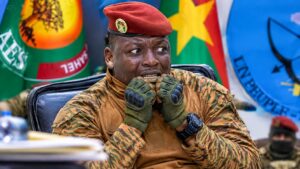
The diplomatic dust is still settling after Burkina Faso’s prime minister arrived in Moscow this week, sparking intense public debate about what his presence at the Russia-Africa Summit truly means for the West African nation’s future. Rimtalba Jean Emmanuel Ouédraogo, representing President Ibrahim Traoré, has taken center stage at the high-profile gathering where global powers are recalibrating alliances and economic partnerships across the continent.
What Ouédraogo’s Moscow mission revealed about Burkina Faso’s shifting priorities
The two-day summit, which concludes on October 29, has become a lightning rod for international observers scrutinizing whether Ouédraogo’s attendance signals a definitive pivot away from traditional partners. While Ouagadougou frames the visit as an opportunity to secure investment in local resource processing, youth training, and technological sovereignty, critics argue the move risks isolating Burkina Faso further from regional stability frameworks.
Key figures in the delegation have emphasized that the trip is not about abandoning current alliances but about diversifying partnerships to meet pressing development needs. Speaking on condition of anonymity, a senior official noted, “Our goal is not exclusion but expansion—we cannot afford to leave critical resources and technologies untapped.”
From Sotchi to Moscow: Burkina Faso’s evolving role in the Russia-Africa agenda
This summit marks the third iteration of the Russia-Africa conference, following gatherings in 2019 and 2023. For Ouagadougou, the timing could not be more strategic—or more controversial. Just eight months ago, Burkina Faso signed a foundational cooperation agreement with Moscow, replacing a decades-old framework and signaling a new chapter in bilateral relations.
Yet the agreement’s immediate impact remains under scrutiny. While it promises enhanced security cooperation and resource development, analysts question how quickly tangible benefits will materialize for Burkina Faso’s civilian population. The absence of concrete project timelines or funding commitments during preliminary discussions has fueled skepticism about the real dividends of the partnership.
Beyond geopolitics: what’s really on the Moscow agenda for Burkina Faso?
Ouédraogo’s itinerary extends beyond ceremonial speeches. The delegation is pushing for bilateral talks focused on food security, energy infrastructure, and industrialization—areas where Burkina Faso faces urgent challenges. A draft plan circulating among delegates includes commitments to support local grain processing facilities, solar energy microgrids in rural communities, and vocational training centers aligned with Russian technical standards.
However, the most contentious topic remains security. With Russia already engaged in multiple African security initiatives, Ouagadougou’s interest in enhanced defense collaboration has drawn both cautious approval and sharp criticism. Opponents warn that deeper military ties could undermine Burkina Faso’s neutrality and complicate its already strained relations with neighboring ECOWAS states.
Public reaction: enthusiasm meets deep reservations
Social media platforms are ablaze with mixed reactions. Supporters of the government’s pivot toward Moscow hail the summit as a long-overdue step toward self-reliance, pointing to Burkina Faso’s abundant mineral wealth and youthful population as assets in negotiating better terms. “We need partners who understand our sovereignty,” declared one commentator on a popular Burkinabé forum. “If Western nations won’t invest responsibly, we must look elsewhere.”
Critics, however, warn of repeating historical patterns where resource-rich African nations become pawns in larger geopolitical games. “Moscow’s playbook is clear,” argued a political analyst based in Ouagadougou. “They offer quick fixes in exchange for long-term control over our strategic sectors. Burkina Faso cannot afford to mortgage its future to another foreign power.”
What comes next: testing the promises made in Moscow
The summit concludes with a joint declaration outlining a new Russia-Africa action plan for 2027–2029. For Burkina Faso, the real test begins now: translating diplomatic goodwill into visible progress on the ground. Early indicators suggest that the signing of formal cooperation protocols is imminent, but implementation will require sustained political will and transparent oversight to prevent misallocation or corruption.
Observers are particularly watching whether Moscow delivers on pledges related to technology transfer and vocational education—areas where previous agreements with other partners have underdelivered. The prime minister’s team insists that this time, concrete deliverables are non-negotiable. “No more empty declarations,” emphasized a delegation spokesperson. “Burkina Faso deserves partnerships that deliver measurable results.”

Ouédraogo’s mission to Moscow arrives at a pivotal moment for Burkina Faso. As global powers recalibrate their African strategies, Ouagadougou’s choices will shape the nation’s trajectory for decades. Whether this summit marks a bold leap forward or a miscalculated gamble remains the most urgent question facing both the government and the people of Burkina Faso.