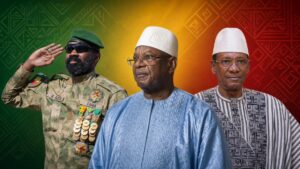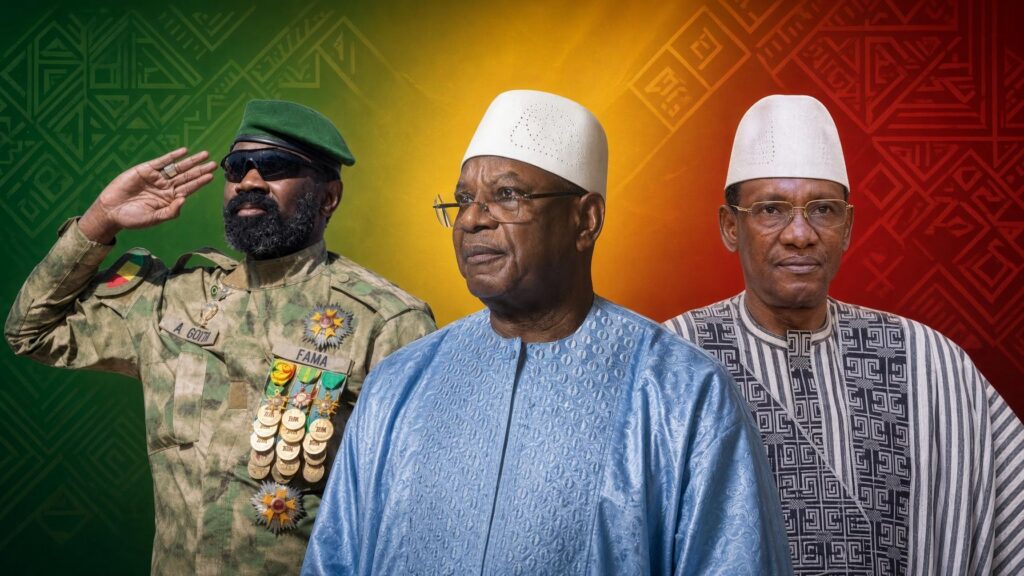
Once the architects of Mali’s democratic experiment, the country’s leading political figures now find themselves erased from public life. Under the iron grip of military rule, the halls of power once filled by party bosses and elected officials now echo with silence. The junta’s systematic dismantling of the political elite has left a trail of broken careers, shattered reputations, and a nation adrift without its traditional voice of opposition.
From dominance to disappearance: the unraveling of Mali’s political class
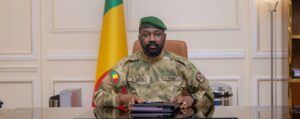
For three decades, Mali’s political landscape thrived under a multiparty system where influential figures shaped governance, media narratives, and national discourse. That era has vanished. Since General Assimi Goïta’s military junta solidified control, the old guard has not merely stepped aside—they have been systematically erased. Prisons, exile, and self-imposed silence now define their fate, as the junta consolidates power by dismantling the very institutions that once defined Malian democracy.
The three pillars of political neutralization
The junta’s strategy rests on three relentless approaches to neutralize opposition and dissident voices:
- Legal weaponization: Prominent politicians, once untouchable, now face prolonged detentions or politically motivated prosecutions. Charges ranging from ‘undermining state security’ to ‘financial impropriety’ have become tools to silence critics. Recent cases, including that of former Prime Minister Choguel Maïga—once a key regime architect—demonstrate that no background offers protection from incarceration.
- Forced displacement: Facing arrest warrants or escalating repression, dozens of party leaders, former ministers, and civil society figures have fled to neighboring countries like Senegal or Ivory Coast, and beyond to Europe. Their influence, however, is muted by a tightly controlled national narrative emanating from Bamako.
- Cultural strangulation: Those who remain in Mali operate under a climate of fear. Political parties have been suspended, civic associations dissolved, and dissent rebranded as treason. Criticism is swiftly labeled a threat to national stability, forcing even mild reformers into silence.
The junta’s hidden cost: eroding democracy for a facade of stability
The junta did not rely solely on repression to dismantle Mali’s political elite. It capitalized on widespread public disillusionment with decades of perceived corruption, political infighting, and chronic insecurity. By framing the traditional political class as the root cause of Mali’s decline, the military offered itself as the sole savior of the nation—positioning Goïta as the unchallenged leader in a narrative of renewal.
Yet what began as a populist purge has evolved into a permanent institutional freeze. Elections postponed indefinitely, democratic processes sidelined, and tailor-made transitional bodies installed—all have ensured that the political opposition remains permanently on the margins. Parties that once dominated the political chessboard now watch from the sidelines as a new national order is built without them.
The danger of a power vacuum: a nation without its political compass
The junta’s success in fragmenting major parties and isolating their leaders has created a paradox. While the silencing of the old elite may provide short-term stability, it eliminates any structured space for debate, mediation, or accountability. Without a functioning opposition, Mali risks losing its last safeguard against authoritarian drift—exchanging a flawed democracy for a regime isolated by its own choices.
By relegating former powerbrokers to imprisonment, exile, or enforced silence, Bamako may have extinguished immediate dissent. But in doing so, it has also extinguished the possibility of renewal. A nation needs voices of dissent to challenge power, to propose alternatives, and to demand accountability. With those voices gone, Mali’s political future drifts toward an uncertain horizon—one shaped more by guns than by ideas.