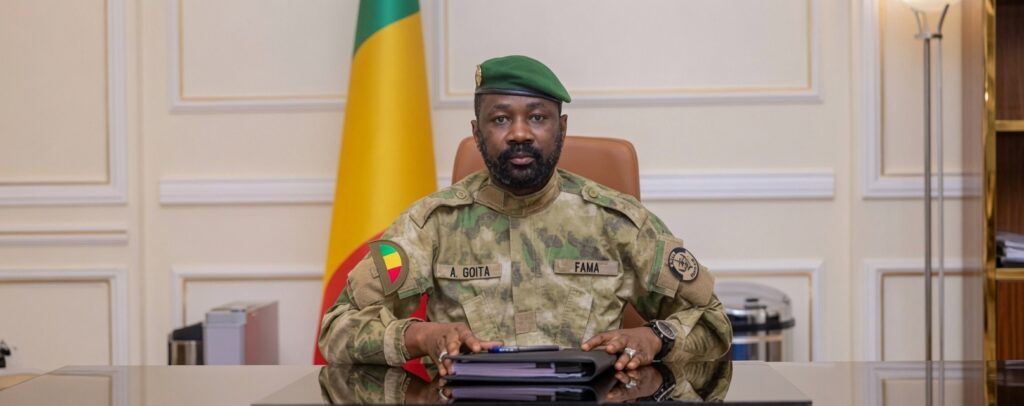
Amidst Mali’s declared mission to reclaim its territory from armed groups, a harsh reality looms: the very tactics meant to restore security are deepening instability. Reports confirm that the Malian Armed Forces (FAMa) and their Russian-backed Wagner Group allies have systematically violated international humanitarian law, turning counterterrorism operations into a cycle of violence that disproportionately targets civilians. This approach, cloaked in the name of sovereignty, is not just undermining human rights—it is fueling the very insurgency it seeks to extinguish.
From signed treaties to broken promises: Mali’s humanitarian law violations
The Malian government has long pledged adherence to global standards, including the Geneva Conventions ratified in 1965 and Additional Protocols finalized in 1989. These agreements demand strict separation between combatants and civilians, prohibit torture and degrading treatment, and mandate humane treatment of detainees. Military training programs, in the past, included mandatory instruction on conflict law. Yet, in practice, the disconnect between official doctrine and ground operations has widened into a chasm. What were once sporadic abuses have evolved into a calculated strategy where brute force replaces reasoned counterterrorism.
The human cost: a documented trail of suffering
Independent investigations reveal a grim pattern of violations across central and northern Mali. Villages have been razed, families displaced, and civilians subjected to summary executions, torture, and enforced disappearances. Credible accounts detail methods such as waterboarding and electric shocks—practices that meet the threshold of war crimes. These atrocities are not isolated incidents; they reflect a systemic pattern involving both national forces and their allied mercenary units.
Among the hardest-hit groups are the Fulani communities, caught between the violence of jihadist factions and the retaliatory brutality of state forces. Their plight underscores a paradox: in the name of security, the state is eroding the trust of the very people it claims to protect.
The shadow war: how the UN’s exit left Mali in the dark
In late 2023, Mali expelled the UN peacekeeping mission (MINUSMA), a move framed as an assertion of national sovereignty. However, the withdrawal also removed international oversight, plunging conflict zones into darkness. Without boots on the ground to monitor abuses, documented violations surged the following year. Remote monitoring by NGOs cannot match the impact of real-time, independent verification. The absence of accountability mechanisms has effectively granted impunity to those responsible for atrocities.
Where justice fails: the collapse of legal and diplomatic avenues
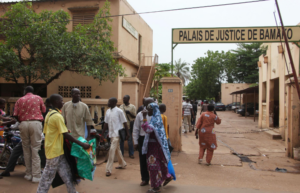
With the International Criminal Court (ICC) sidelined and Mali’s judiciary under political control, avenues for redress have vanished. Regional bodies like the African Union and ECOWAS have issued muted statements but wield little influence over Bamako’s military-led strategy. The silence from diplomatic channels speaks volumes: a failure to confront human rights abuses reinforces the cycle of violence. When perpetrators operate without consequence, the message to civilians is clear—their rights are dispensable.
The long-term reckoning: sacrificing legitimacy for short-term gains
Mali’s counterterrorism strategy rests on a flawed premise: that overwhelming force can crush insurgency without addressing its roots. Instead, the heavy-handed approach is radicalizing communities, pushing survivors toward armed groups out of desperation. Each civilian death, each burned village, becomes a recruiting poster for extremists. The state’s loss of moral authority is not just a humanitarian tragedy—it is a strategic miscalculation. A government that turns its back on its people cannot credibly claim to defend them.
As Mali doubles down on repression, the question is no longer whether the approach will fail, but how many more lives—and how much more stability—will be lost before the cycle is broken.