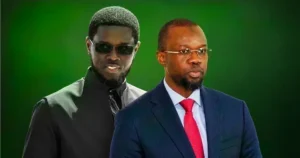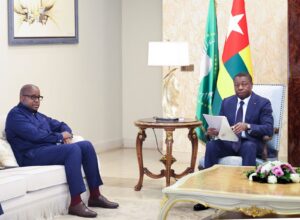
The political alliance between President Bassirou Diomaye Faye and Ousmane Sonko, once seen as a united front, now faces scrutiny over a series of unfulfilled pledges and questionable decisions. Many observers argue that their apparent political divergence should not serve as a convenient excuse to whitewash past actions or absolve them of shared accountability.
During their period of close collaboration, several key commitments made to the public remained unaddressed. For instance, they collectively resisted calls for the President to step down from the Superior Council of Magistracy, despite a clear promise for such a reform. Furthermore, their administration notably overlooked numerous calls for applications to crucial leadership positions, a practice explicitly outlined in their own political agenda.
A significant point of contention revolves around the amnesty law. Despite earlier vows to repeal this legislation, it has ultimately been maintained in its original form, leading to public disappointment. Moreover, the allocation of political funds occurred without public disclosure or debate, even though establishing a framework for these funds would have only required a simple majority in the National Assembly—a majority they successfully secured mere months after assuming power.
Interestingly, some political figures who remained inactive regarding reforms during the joint tenure of Sonko and Diomaye are now displaying a remarkable urgency to implement changes. These are reforms they had ample opportunity to initiate and complete much earlier.
The National Assembly, as a vital institution of the Republic, deserves to transcend mere political infighting, posturing, and the theatrical display of a supposed rift. Such maneuvers cannot and should not erase the undeniable shared responsibilities accumulated over their time in power.