Algeria is actively reasserting its regional standing in the Sahel, engaging in a series of strategic moves to reclaim influence, particularly with Mali and Niger. This diplomatic and economic offensive comes after fifteen months of strained relations with Bamako, now marked by restored ties and reopened airspace for Malian aircraft. With Niger, the rapprochement has been even more pronounced, involving the delivery of military helicopters, the revival of oil projects, and joint commercialization of Nigerien crude. These concerted efforts are unfolding as Morocco strengthens its own positions with countries in the Alliance of Sahel States (AES), revealing Algeria’s core objective: to regain lost ground south of its borders before Rabat converts its economic and diplomatic presence into a lasting political advantage.
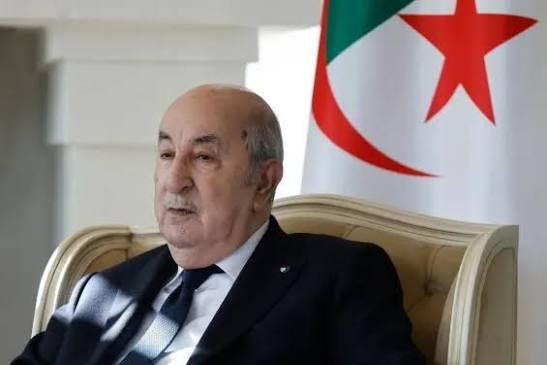
This strategic shift has become increasingly apparent in recent weeks. Following an unprecedented period of confrontation with Bamako, Algeria has moved to normalize its relationship with Mali. On July 10, President Abdelmadjid Tebboune ordered the return of Algerian Ambassador Kamal Retieb to Bamako. The Malian government reciprocated the same day, announcing the return of its own ambassador to Algiers and reopening its airspace to Algerian civilian and military aircraft. This normalization, after a fifteen-month crisis, deepened in early August when Malian Prime Minister Abdoulaye Maïga spoke of a “total convergence of views” between President Assimi Goïta and President Abdelmadjid Tebboune, notably concerning “respect for state sovereignty and non-interference in internal affairs.” For Algiers, this reconciliation transcends mere bilateral restoration; Mali is its primary Sahelian neighbor, the political heart of the Alliance of Sahel States (AES), and critically, the country where the rupture most starkly illustrated the erosion of Algerian diplomacy in the region. The resumption of dialogue with Bamako signals Algeria’s determination to meticulously rebuild its lost standing.
The engagement with Niger appears even more significant. On August 9, Algeria supplied Nigerien forces with four military helicopters—two Mi-24V combat aircraft and two Mi-171 transport helicopters—along with spare parts, maintenance equipment, and ammunition. Days later, the Algerian Prime Minister visited Niamey to oversee the launch of drilling operations for the Kafra Sud-Est 1 exploration well. Concurrently, Sonatrach and the Société Nigérienne des Produits Pétroliers (Sonidep) announced their inaugural joint commercialization of Nigerien oil. Within a short span, Algiers effectively combined security, hydrocarbon resources, and economic cooperation—three key levers to reconnect with an AES member state vital for regaining strategic depth south of its territory. This renewed partnership with Niamey now manifests through tangible material, military, and energy commitments, designed to give Algeria a more concrete presence in the Sahel.
The Sahel: a battleground for influence in Mali, Niger, and Burkina Faso
This intensified activity occurs within a profoundly transformed regional environment. The three AES member states—Mali, Burkina Faso, and Niger—have severed ties with several Western partners, increased cooperation with Russia, and begun developing their own diplomatic, economic, and military frameworks. In June, the foreign ministers of these three nations convened in Bamako to implement the “Diplomacy Pillar” of their Confederation and forge a common approach. For Algiers, this new configuration presents both a threat to its historical influence and an opportunity to re-engage with governments seeking new alliances after distancing themselves from Paris and other Western capitals. However, the presence of a third significant actor makes this regional realignment even more complex for Algerian authorities: Morocco, which has cultivated its presence through a distinct strategy combining political diplomacy, religious training, investments, infrastructure, and an opening towards the Atlantic.
The rivalry with Rabat underscores the true scope of Algeria’s re-engagement, revealing its fundamentally reactive nature. The Institute for Security Studies (ISS) noted in March that Algiers’ economic diplomacy aimed “to preserve Algiers’ regional influence in the face of Moroccan initiatives.” Similarly, the International Crisis Group observed in November 2024 that “Morocco has benefited from the decline of Algeria’s influence in the Sahel.” This highlights Algeria’s central challenge: despite considerable military power and substantial financial capacity from energy revenues, these resources have not translated into commensurate political influence. Morocco, in contrast, has patiently built a comprehensive network of interests encompassing banking, telecommunications, fertilizers, religious education, and infrastructure. While Rabat seeks to foster lasting interdependencies, Algiers appears primarily focused on preventing its neighbor from transforming Algeria’s past setbacks into diplomatic gains. Observers characterize Algerian policy as a counter-offensive, with the immediate goal of recovering lost positions and containing Moroccan influence.
The complex reconciliation with Bamako
From this perspective, the normalization with Mali represents the most crucial development of the year for Algiers. For fifteen months, the two nations endured a confrontation that seemed to have irrevocably damaged their fraught relationship, leading to the collapse of Algeria’s mediation efforts. The crisis initially erupted after Bamako denounced the 2015 peace accord, escalating further following the Algerian army’s destruction of a Malian drone near Tinzaouaten in April 2025. Mali accused Algiers of aggression, to which Algeria responded by asserting the aircraft had violated its airspace. All three AES members subsequently recalled their ambassadors. The rift appeared particularly deep when Bamako referred the matter to the International Court of Justice, a jurisdiction Algeria refused to acknowledge.
The decision on July 10 to restore diplomatic relations thus marked a significant turnaround. The Malian government announced the return of its ambassador to Algiers and the reopening of its airspace, while Algiers reciprocated by returning its ambassador to Bamako. Weeks later, the tone shifted further, with Mali’s reference to a “total convergence of views” with Algiers suggesting that the normalization extends beyond mere administrative adjustments. Crucially, it offers Algeria the opportunity to rejoin discussions concerning security and the political future of the Western Sahel. The fact that this rapprochement was reportedly facilitated by Niger, itself engaged in a close relationship with Algiers, lends additional regional significance to the episode. Reports in July also highlighted the role of Moscow and Niamey in bridging the gap between Algiers and Bamako, impacting Mali latest news and regional stability.
The Nigerien case more clearly illustrates the method chosen by Algiers. As early as March, the second session of the Algerian-Nigerien joint commission focused on energy, security, transport, health, finance, and infrastructure. Both governments then described their relations as “strategic and irreversible,” announcing a “totally renewed partnership.” Since then, commitments have multiplied: the donation of four military helicopters constitutes the most notable security component, while the drilling of Kafra Sud-Est 1 and the first joint commercialization of Nigerien oil provide the partnership with a tangible economic dimension. These projects, however, still face the test of real-world implementation.
This strategy responds to both a geographical imperative and a political necessity. Algeria shares over 1,300 kilometers of border with Mali and a long frontier with Niger, two countries directly exposed to armed groups operating in the Sahel. Consequently, the deterioration of their security poses an internal problem for Algiers as much as a diplomatic challenge. However, a security-centric doctrine alone is no longer sufficient to maintain lasting influence; Algeria must now possess economic and energy instruments capable of competing with those deployed by Morocco. The Trans-Saharan gas pipeline, hydrocarbon ventures, infrastructure development, and now, military equipment, collectively form the various elements of this renewed engagement, shaping Mali security news and regional dynamics.
Rabat’s lead: a challenge for Algeria’s resurgence
The challenge for Algiers lies in the fact that Morocco did not await its return, and several of Rabat’s advancements are precisely those that Algerian diplomacy failed to prevent. On April 10, Mali withdrew its recognition of the Sahrawi Arab Democratic Republic (SADR) and declared support for “the autonomy plan proposed by Morocco as the only serious and credible basis.” Simultaneously, the three AES countries have progressively strengthened their relations with the kingdom. For Algiers, this evolution strikes at the heart of its rivalry with Rabat: beyond influence in the Sahel, the competition now revolves around each country’s ability to rally African capitals to its perspective on the Western Sahara issue. Cornered, Algiers appears to be seeking to regain ground where Rabat has advanced, to re-establish lost positions, and to prevent its rival from deriving political benefit. The impetus for this policy is less the conquest of new territory than the frustration of seeing a neighbor exploit the consequences of its own errors, a key aspect of Bamako current affairs.
Algeria’s fragile regional reassertion
The current phase reveals a catch-up policy dictated by a perceived loss of influence. After losing its role as a mediator in Mali, Algiers is attempting to re-engage through bilateral relations, hydrocarbons, infrastructure, and security. Niger has become the most advanced laboratory for this policy, and Mali, with the restoration of ambassadors and air links, now represents the major diplomatic test. Burkina Faso also complements this strategy, though the relationship with Ouagadougou remains less prominent. This reassertion primarily aims to recover positions Algeria once held and to prevent Rabat from benefiting from their absence. The obsession with Moroccan competition gives Algerian Sahelian policy a somewhat narrow character: influence is often assessed through the neighbor’s gains rather than through the benefits provided to the states concerned. A power aspiring to exert lasting influence in a region should present its own distinct offerings; Algiers still appears constrained by a reactive logic, where Morocco’s presence serves as the primary catalyst for its return, impacting Bamako news and regional stability.