Senegal’s special funds reform: what the assembly’s defiance means for households and businesses
Bill No. 38/2026, an organic law that would amend the organic law on finance laws (LOLF), was on the agenda of Thursday’s plenary session.
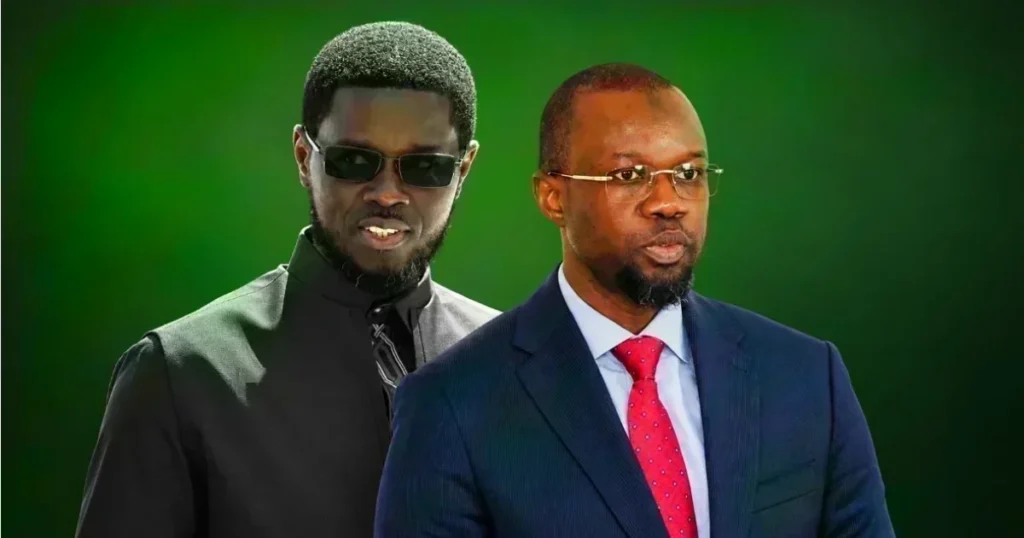
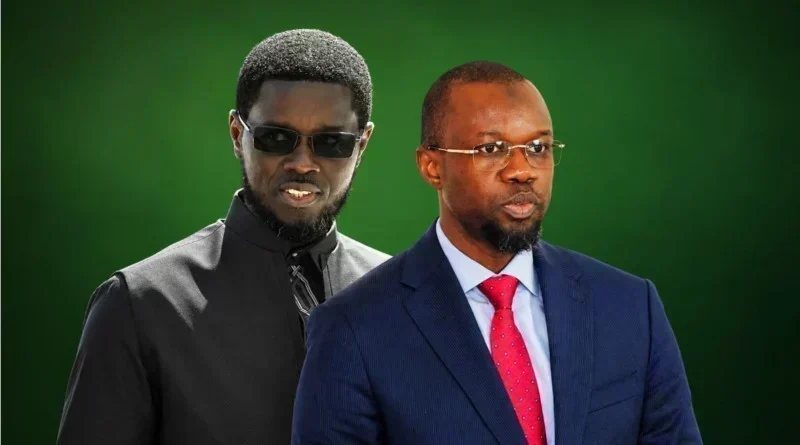
A fresh showdown between the executive and the parliamentary majority. On Thursday, October 1, 2026, the National Assembly led by Ousmane Sonko brushed aside the government’s amendments to the special funds reform, despite the use of a blocked vote. The text, an organic law, is now headed to the Constitutional Council, where President Bassirou Diomaye Faye’s camp could once again prevail. But beyond the institutional jousting, the outcome will shape how public money is spent on social programs, security, and diplomacy—with direct consequences for Senegalese households and businesses.
Bill No. 38/2026, an organic law that would amend the organic law on finance laws (LOLF), was on the agenda of Thursday’s plenary session. Its stated goal is to strengthen budget transparency and regulate the management of special funds—credits often described as the presidency’s “slush fund.” The proposed law would create a separate category for special funds, restricting them to defense, security, and diplomacy missions.
This is a second attempt. A first initiative was struck down by the Constitutional Council on August 25, 2026, in decision No. 7/C/2026. The councilors reminded lawmakers that the status of public credits falls exclusively under organic law. The Pastef deputies therefore returned with the correct legal vehicle, but on the substance, the disagreement with the executive remains complete.
The government defends the president’s “social role”
Speaking to the deputies, Minister of Justice and Keeper of the Seals Me Moussa Sarr carried the government’s position. While saying he shared the goal of transparency, the executive proposed deep adjustments.
The first disagreement concerns the nature of special funds. The bill sought to make them a distinct category, reserved for defense, security, and diplomacy missions. The government opposes this. According to the executive, such a restriction would ignore the social character of the Republic enshrined in Article 1 of the Constitution. In its view, the head of state must be able to mobilize these resources for national solidarity actions in the face of humanitarian emergencies.
Through Amendment No. 2, the executive proposed reintegrating these expenses into the overall endowment of constitutional institutions, provided for in Article 14 of the LOLF. Me Moussa Sarr invoked Directive No. 06/2009/CM/UEMOA, which sets a limiting list of budget endowments. Isolating special funds would, according to him, create a legal vacuum, since no authorizing officer would be designated.
The second point of friction concerns the oversight powers of deputies, provided for in Article 70. Through Amendment No. 3, the government wanted to limit the Finance Committee’s monitoring to the current annual management. It thus removed the possibility for the Assembly to control the use of credits at the end of each budget year. For the Keeper of the Seals, such a prerogative would encroach on the exclusive competences of the Court of Auditors.
The executive also wanted any request for a hearing of a minister by deputies to be automatically transmitted to the President of the Republic, in accordance with the Assembly’s Rules of Procedure.
Heading to the Constitutional Council
To lock down the text, the government deployed the blocked vote. Me Moussa Sarr requested the application of Article 82, paragraph 4, of the Constitution and Article 87 of the Rules of Procedure, which impose a single vote on the text with only the amendments retained by the government. “The government does not see transparency as a constraint, but as a lever for consolidating the rule of law,” he argued, presenting the blocked vote as a tool provided by the Constitution to ensure the coherence of texts.
The Pastef majority did not follow. The deputies rejected all of the executive’s proposals to maintain their own version of the text. The disagreement between the Palace and the Hemicycle is now complete.
The outcome of this showdown will be decided before the councilors. An organic law can only be promulgated after being declared constitutional by the Constitutional Council, seized by the President of the Republic. The text voted by the majority must therefore pass through this filter.
The government will then have several arguments: compliance with UEMOA directives, the competences of the Court of Auditors, and the regularity of the procedure, after the rejection of a blocked vote that is nonetheless provided for by the Constitution. All points on which the councilors will have to rule. Should the reform be struck down, the current opaque system would persist, leaving citizens and businesses without the transparency they were promised.
- Libération
- Le Dakarois
- La Voix +
- L’As
- Le Témoin
- Dakar Times
- Le Dakarois Sport
- Source A
La rédaction vous conseille
Pour comprendre le contexte
- Duel institutionnel : Pourquoi ce mardi est un jour fatidique entre Ousmane Sonko et Bassirou Diomaye Faye
- Bassirou Diomaye Faye répond enfin à ceux qui l’accusent d’avoir trahi Ousmane Sonko
- Bassirou Diomaye Faye s’explique enfin : « Pourquoi j’ai décidé de limoger Ousmane Sonko »
- Officiel : Bassirou Diomaye Faye décroche le trophée spécial du Prix de l’Eau de l’Afrique de l’Ouest