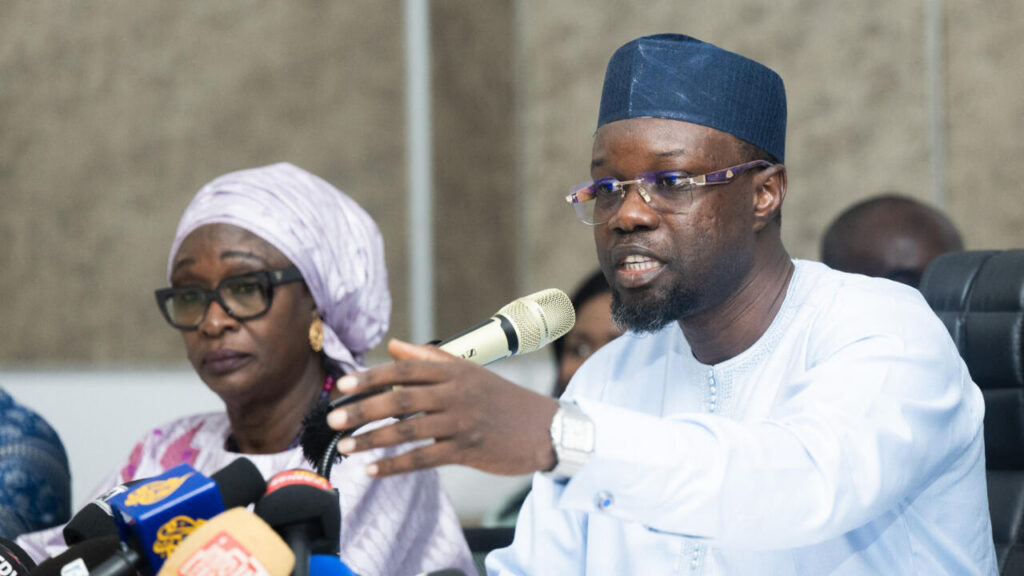
A week after his dismissal by President Bassirou Diomaye Faye, Ousmane Sonko, former Prime Minister and leader of the Pastef party, has launched a fierce political offensive. Speaking at a Dakar press conference, Sonko did not mince his words in criticizing the newly formed government led by Prime Minister Al Amine Lô. The opposition figure argued that the executive lacks fundamental political legitimacy, dismissing the coalition backing it as insignificant.
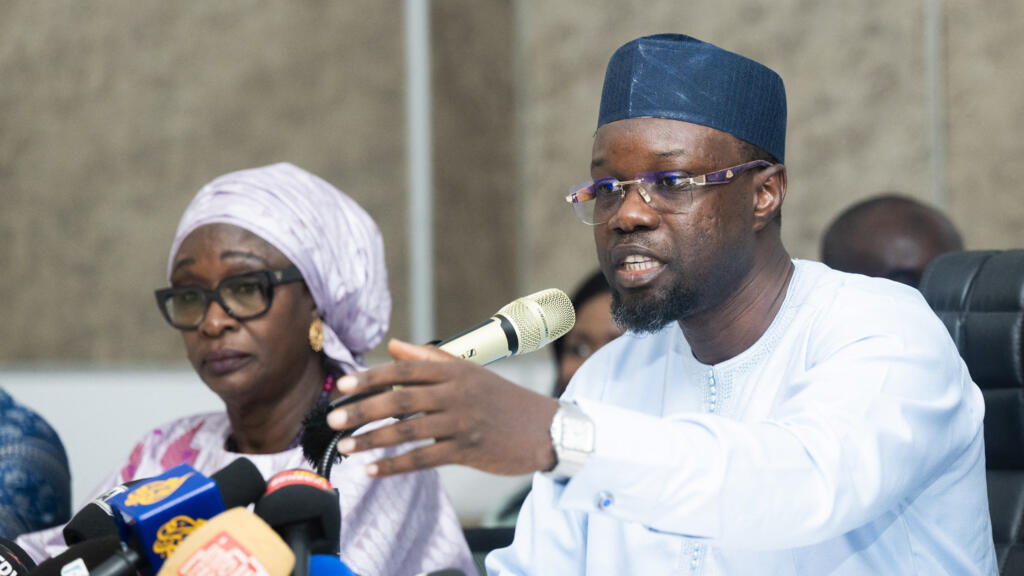
Sonko emphasized that Pastef’s parliamentary majority gives it the power to topple the government through a motion of censure, framing the current situation as a form of political cohabitation. He claimed to have warned President Diomaye Faye about this possibility for months, asserting his warnings went unheeded. “We have a government with no political foundation,” Sonko declared. “The coalition they tout means nothing. Calling it a ‘government of technocrats’ is just an admission of political isolation.”
His remarks underscore a growing rift within the ruling coalition, as Pastef—a party born from grassroots mobilization—contends it holds the legitimate popular mandate.
Government stability under threat
The absence of Pastef from the executive branch poses a significant political challenge for President Faye’s camp. Despite his constitutional authority, implementing the government’s program will hinge on maintaining trust with Pastef’s 130 parliamentary deputies. Observers warn this could lead to legislative gridlock, complicating the passage of key reforms.
Analysts argue that Diomaye Faye risks erasing the very foundation of his political rise. “He governs today in a void,” noted one political commentator. “His power is constitutional but narratively orphaned—cut off from the story that once gave it purpose beyond state management.”
In contrast, Sonko stands as the guardian of Pastef’s original narrative. With 130 deputies, his party remains the dominant force in the National Assembly, a position it secured at the ballot box. “Pastef was here before, and we will be here after,” Sonko asserted, framing himself as the defender of the party’s enduring legitimacy.
A political rupture, not cohabitation
Political analysts describe the unfolding scenario in Senegal as unprecedented. Unlike traditional cohabitation—where the president and opposition-led parliament clash—this situation represents a deeper rupture within the same movement. The refusal of Pastef, which controls an absolute majority of 130 out of 165 parliamentary seats, to participate in government creates a dangerous stalemate.
Questions loom over how a technocratic government, devoid of its own parliamentary base, can function while Pastef mobilizes a million-strong membership nationwide. The answer may unfold in the coming weeks and months, through street protests, institutional battles, and behind-the-scenes negotiations in the corridors of power.