In the heart of Cameroon’s Far North Region, the Mayo-Tsanaga department bears the scars of a relentless conflict that has reshaped lives, erased communities, and left an entire region in despair. What began as a distant threat from across the border has become a daily reality, with Boko Haram’s presence carving a path of destruction through villages, fields, and livelihoods.
The slow burn of terror: a timeline of abandonment
Boko Haram’s incursions into Cameroon trace back to 2014, when the militant group crossed from Nigeria’s Borno State and planted its flag on Mount Gossi near Tourou, just 35 kilometers from Mokolo. What started as sporadic clashes has evolved into a grim routine: villages burned, markets looted, schools and health centers targeted, and lives shattered. Over the years, the attacks have intensified, forcing residents to flee under the cover of darkness, leaving behind homes and hope.
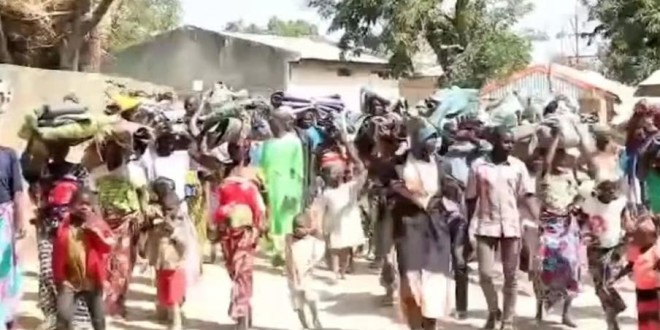
The human toll is staggering. More than 50 villages in Mayo-Tsanaga have been partially or entirely abandoned, their populations scattered like embers in the wind. Names like Gossi, Tourou, Vizik, and Koza have become symbols of a region left to fend for itself. In May 2022, local authorities reported that ten villages were completely deserted, two were under militant control, and seven faced regular assaults. Today, the situation has worsened, with families clinging to survival in caves and mountains, emerging only at dawn to tend to their fields.
An absent state: promises unkept, lives unprotected
The response from Cameroon’s government has been woefully inadequate. Military deployments are sparse—just two soldiers in some areas—leaving civilians to face heavily armed militants alone. Locals, armed with machetes and sticks as part of vigilance committees, have become the first line of defense, a desperate measure in a conflict where the odds are stacked against them.
Political elites, quick to make promises during election seasons, have remained conspicuously silent in the face of devastation. Visits from ministers yield temporary media attention, but the attacks persist, and the displaced remain in limbo. Over 9,000 people have been uprooted, with numbers climbing as new waves of violence force families to trek hundreds of kilometers in search of safety. In Kalfou, a commune in Mayo-Danay, nearly 300 displaced individuals arrived in early July 2026, fleeing the same terror that has hollowed out Mayo-Tsanaga.
The cost of survival: lost futures and shattered communities
The crisis extends far beyond displacement. Abandoned fields and shuttered schools signal the collapse of local agriculture and education. Families have lost not only their homes but also critical documents—birth certificates, national IDs—reduced to ashes in the wake of attacks. The most heartbreaking consequence? The fracturing of families. Children and adolescents, separated in the chaos of escape, face futures stripped of protection, schooling, and stability. Many drop out of school, some turn to crime, and countless young girls see their dreams of a better life evaporate.
A plea for action: who will answer?
The Mayo-Tsanaga is not a distant footnote in Cameroon’s history—it is a living tragedy demanding urgent attention. With each abandoned village, the region’s slow death accelerates. The question lingers: how many more communities must be erased before this crisis is treated as a national priority? For the people of Mayo-Tsanaga, time is running out, and the silence from those in power grows louder with every passing day.