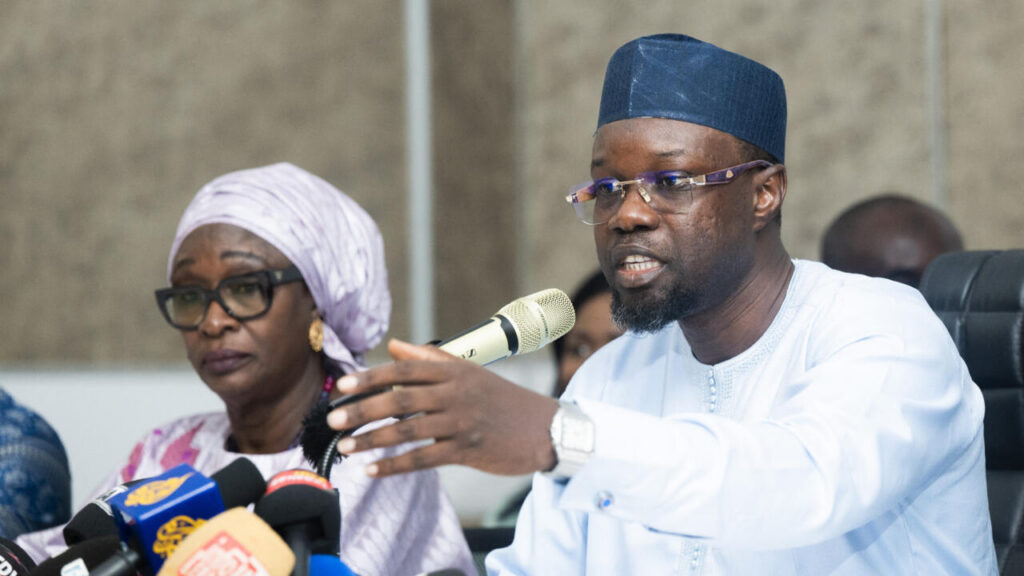
A mere seven days following his removal from office by President Bassirou Diomaye Faye, Ousmane Sonko, former Prime Minister and leader of the Pastef party, has launched a scathing counterattack. Speaking at a press conference in Dakar, the opposition figure did not mince his words when addressing the government’s legitimacy—or the lack thereof.
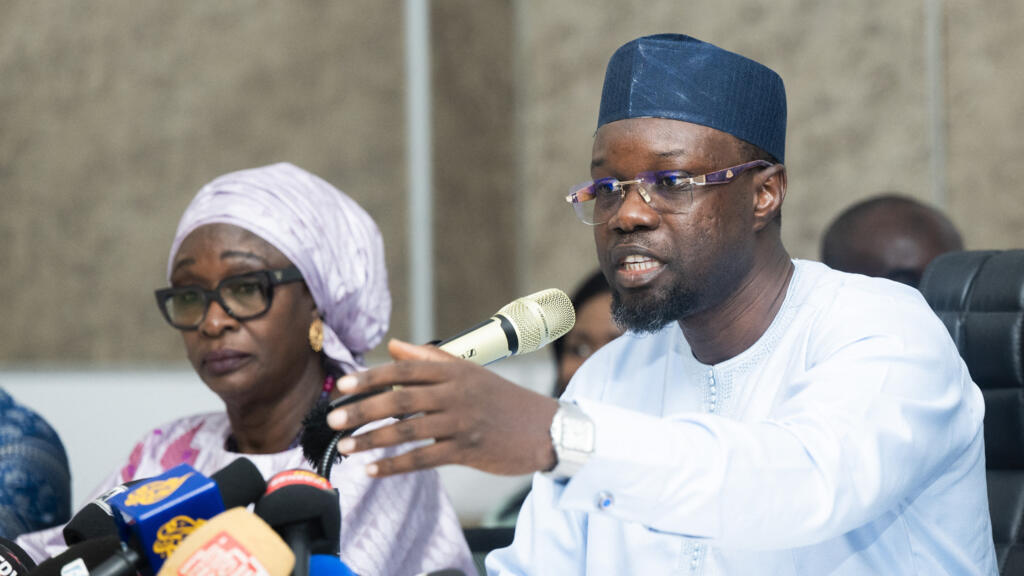
Sonko’s blunt critique of the new government
With unfiltered candor, Ousmane Sonko dismissed the administration of Prime Minister Al Amine Lô as fundamentally lacking in political legitimacy. «We have a government with no political foundation», he declared, dismissing the coalition touted by the presidency as inconsequential. «That so-called coalition means nothing», he asserted, arguing that labeling the cabinet a «technocratic government» was merely a thinly veiled admission of political isolation.
Sonko emphasized that Pastef, as the country’s leading political force born from the ballot box, holds the exclusive mandate of legitimacy within the ruling majority. «To govern without us is to govern without the people», he warned, highlighting the party’s 130-seat majority in the 165-seat National Assembly.
A looming political fracture
The dismissal of Sonko has plunged the executive into uncharted waters. Analysts warn that the absence of Pastef from the government creates a precarious scenario where the party’s parliamentary dominance could severely constrain the president’s ability to implement reforms. The crux of the issue? A president constitutionally empowered but politically disconnected from the very majority that secured his victory.
«This is not a classic cohabitation», observed political observers. «It is a rupture within the same movement—a dangerous divide between a head of state and a party that commands an absolute majority in parliament while refusing to participate in the government».
The implications are stark: a technocratic cabinet devoid of its own parliamentary base must now navigate a legislature where the opposition controls the agenda. The question looms large: how can governance proceed under such conditions? The answer may unfold in the streets, institutions, and corridors of power in the coming weeks.
Legitimacy vs. governance: a high-stakes standoff
Sonko’s defiance underscores a deeper crisis. While President Bassirou Diomaye Faye’s administration is constitutionally valid, it is narratively adrift—cut off from the historical momentum that propelled it to office. In contrast, Sonko stands as the guardian of that very narrative, wielding the unassailable legitimacy of a movement that delivered both the presidency and the parliamentary majority.
«We were here before, and we will remain here after», Sonko declared, positioning himself not merely as an opponent but as the custodian of the movement’s soul. With 130 deputies at his command, his influence is undeniable—and his patience, it seems, is wearing thin.
The coming months will test whether Senegal’s institutions can bridge this divide or if the political rupture will deepen into an unbridgeable chasm.