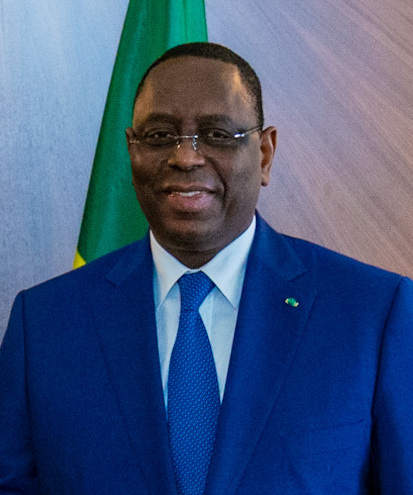
The Senegalese government has formally endorsed Macky Sall‘s candidacy for United Nations Secretary-General, marking a significant diplomatic turnaround just days after the former president was received at the Palais de la République. President Bassirou Diomaye Faye announced the full backing of Dakar, framing it as a strategic move for Senegal’s national interests rather than a personal reconciliation.
From political rivals to diplomatic allies
The decision follows years of strained relations between the two leaders. Bassirou Diomaye Faye rose to power after a dramatic political journey—arrested in April 2023 during a crackdown on opposition figures, including Ousmane Sonko, before securing an unexpected presidential victory in March 2024. His campaign was built on promises to dismantle what he called Macky Sall‘s authoritarian legacy. Yet, in a move that surprised many, the new administration has now embraced Sall’s international ambitions.
This strategic pivot became possible after Bassirou Diomaye Faye distanced himself from Ousmane Sonko, his former ally and mentor, who was removed as Prime Minister in May. Sonko’s hardline opposition to Sall had previously constrained Dakar’s room for maneuver. With Sonko out of the equation, the president could prioritize Senegal‘s diplomatic standing over partisan grievances.
A calculated gamble for Senegal’s future
By rallying behind Sall’s UN bid, Bassirou Diomaye Faye is pursuing multiple objectives. Firstly, it strengthens Senegal’s voice on the global stage—Macky Sall could champion Africa’s long-standing demand for a permanent seat on the UN Security Council, a cause dear to many African nations. Secondly, it signals Dakar’s commitment to multilateralism at a time when African influence in global governance is under scrutiny.
The government has instructed its diplomatic corps to actively promote Sall’s candidacy, emphasizing that this support transcends political cycles. “We engage in dialogue beyond electoral alternations,” stated an official, highlighting the move as a unifying stance for the nation’s long-term interests.
Can Senegal’s backing tilt the scales?
Macky Sall’s campaign had faced an uphill battle. His candidacy, submitted by Burundi on behalf of the African Union’s rotating presidency, lacked the crucial endorsement of his home country—a perceived weakness in UN elections, where regional backing often proves decisive. Senegal’s formal support removes this critical gap, positioning Sall as the first fully endorsed African candidate in decades. Since Boutros Boutros-Ghali left office in the 1990s, no African has held the UN’s top post.
However, success is far from guaranteed. The UN Secretary-General selection process favors regional rotation, and Latin America has held the position since 1991. Four of the five declared candidates hail from the region—Argentina, Chile, Costa Rica, and Ecuador—leaving Sall as the sole non-Latin American contender. While his experience as a former head of state could sway votes, the tradition of regional rotation remains a formidable obstacle.
Diplomatic chess moves ahead
Macky Sall has been shrewdly navigating the geopolitical landscape. His ties to France, where he cultivated relationships during his presidency, could prove advantageous, while his balanced stance on international conflicts—such as Senegal’s abstention in the 2022 UN vote on Ukraine—has kept relations with both Russia and Western powers intact. A recent meeting with Russian Foreign Minister Sergueï Lavrov underscores his efforts to secure broad-based support.
The final decision will rest with the UN Security Council, where Sall’s fate may hinge on the five permanent members’ vetoes. While he lacks declared opponents, the absence of automatic allies means every vote will count. With Senegal’s backing now secured, the race enters its decisive phase, with an outcome expected before the year’s end.