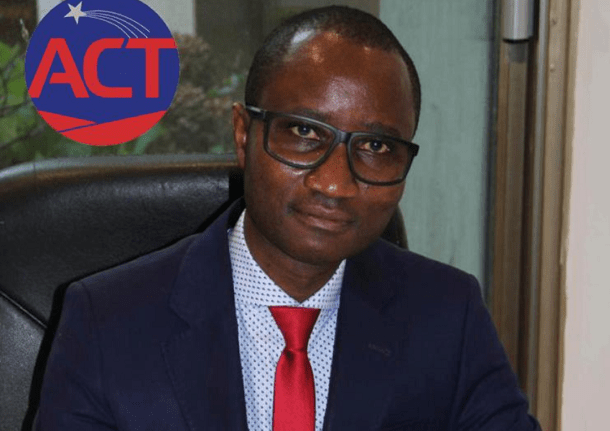
Senegal’s political landscape has been stirred by a sharp critique from Ibrahima Thiam, leader of the ACT party, who has publicly condemned statements made by Ousmane Sonko, head of the PASTEF movement. Thiam’s reproach centers on what he describes as an irresponsible and divisive approach to national discourse.
In a strongly worded opinion piece titled “The Pitfalls of Misrepresentation: Sonko’s Latest Provocation”, Thiam argues that Sonko’s recent remarks were not merely controversial but deliberately framed to cast suspicion on Touba and, by extension, the entire Mouride community. The ACT president contends that such allegations—whether explicit or implied—represent a dangerous departure from constructive political debate, instead relying on shock tactics and polarizing rhetoric.
Thiam emphasizes that in a democratic system, accountability must remain an individual matter, never a collective one. He asserts that Sonko’s strategy deliberately blurs the lines between legitimate criticism and unfounded accusations, thereby fostering harmful generalizations. This, he warns, undermines national unity by targeting an entire city and religious group rather than addressing specific issues.
The ACT leader further accuses Sonko of employing a populist playbook, where sensationalist soundbites replace substantive discussion and media-driven confrontation overshadows rational policy debate. According to Thiam, this approach is designed to energize PASTEF’s base by perpetuating a climate of antagonism rather than fostering meaningful dialogue.
Beyond the political squabble, Thiam underscores the profound significance of Touba to Senegal’s spiritual, economic, and historical identity. He stresses that the Mouride community is a cornerstone of national cohesion, and any public discourse that risks tarring this community with a broad brush must be handled with the utmost care. His warning comes as a reminder of the delicate balance required in public statements to avoid inflaming communal tensions.
In closing, Thiam appeals for a return to measured, fact-based political communication—one that prioritizes respect for all communities and upholds the integrity of democratic debate. His message is clear: national unity depends on leaders who choose words wisely, lest passion and division overshadow reason.