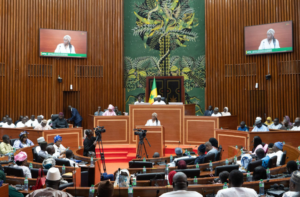
On Saturday, July 25, in Dakar, President Bassirou Diomaye Faye inaugurated his latest political movement, KIIRAAY – Les Patriotes Républicains, signaling a pivotal shift in Senegal’s political landscape following his departure from the PASTEF, once led by his former mentor, Ousmane Sonko.
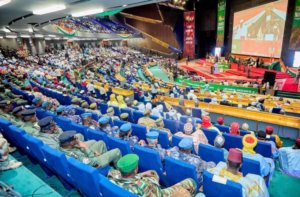
The party’s unveiling took place during a founding general assembly held in a prominent hotel in the capital. Its motto, “La Patrie d’abord” (“The Nation First”), underscores a commitment to prioritizing national interests, strengthening republican institutions, and upholding the rule of law. In Wolof, “Kiiraay” translates to “what protects,” a name chosen to reflect the movement’s mission of advancing the President’s governance agenda and uniting supporters behind his transformative vision for Senegal.
By the assembly’s conclusion, delegates unanimously elected Bassirou Diomaye Faye as the party’s president. This appointment marks a strategic realignment in his political trajectory, following his resignation from PASTEF’s leadership earlier in his presidential term.
A resolution presented by Aminata Touré, former coordinator of the Diomaye Président coalition, outlined that KIIRAAY emerged from the merger of 437 political parties, movements, and associations. These entities share a unified goal: backing the President’s ongoing reforms and Senegal’s long-term development ambitions.
The establishment of KIIRAAY holds significant implications beyond national borders. International partners, investors, and development stakeholders are closely monitoring its implications, particularly as Senegal advances its Vision Sénégal 2050 strategy. Institutional stability and transparent governance are critical to restoring market confidence, attracting foreign investment, and reinforcing international collaborations.
The launch of KIIRAAY introduces a transformative chapter in Senegal’s political narrative, poised to reshape dynamics within both the ruling majority and the opposition ahead of upcoming elections. It also sets the stage for future economic and institutional reforms, defining the framework for the country’s next phase of progress.