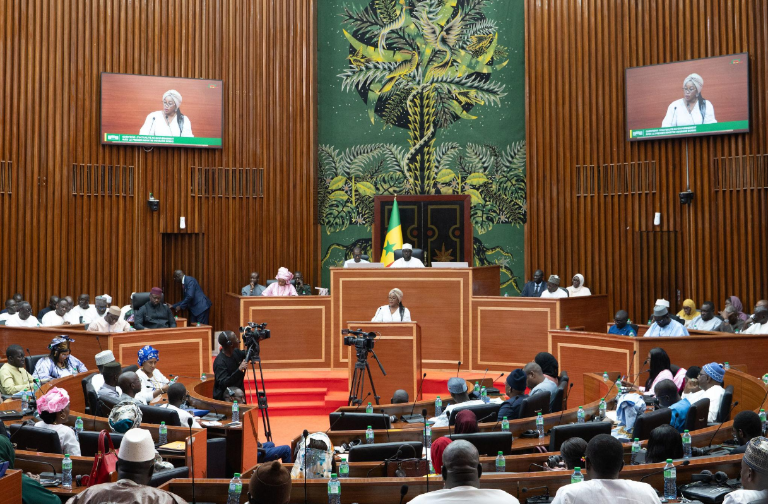
The looming showdown over Senegal’s revised finance bill has placed the government under intense pressure, with deputies from the Pastef bloc challenging the Prime Minister’s financial strategy just days before a critical vote. The rejection of the budget proposal in committee on Friday has raised serious concerns about the legislation’s future—and its potential ripple effects on the nation’s economy.
Political standoff threatens economic momentum
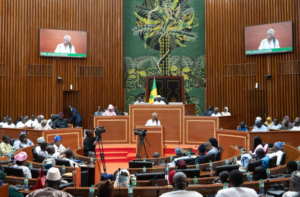
The Prime Minister, Ahmadou Al Aminou Lô, now faces a daunting task: salvaging a revised budget that was overwhelmingly rejected by his own parliamentary allies. The committee vote, where Pastef deputies dominate, sent a clear signal that the government’s financial blueprint is under siege. With the full Assembly set to vote on Tuesday, the stakes could not be higher—both for policymakers and ordinary citizens.
This internal rebellion comes at a time when Senegal is already grappling with economic pressures. The revised budget was designed to realign spending with urgent national priorities, but its rejection exposes deep divides within the ruling coalition. The government must now navigate a fine line between defending its fiscal choices and avoiding a breakdown in legislative support.
Disputed priorities spark legislative rebellion
The conflict centers on a fundamental question: Should the government impose its budget adjustments, or must it first secure the backing of its own majority? The Pastef deputies’ opposition suggests that while they share the government’s broader goals, they are unwilling to rubber-stamp financial decisions without scrutiny. Their stance reflects a broader trend in Senegalese politics—where parliamentary autonomy is increasingly asserting itself, even within traditionally disciplined majorities.
Analysts note that the dispute may stem from differing views on:
- Where budget cuts should fall—public services, infrastructure, or social programs
- Whether proposed tax reforms are fair or overly burdensome
- How to balance austerity measures with economic growth incentives
Budget decisions become a test of governance
The Prime Minister’s challenge is twofold. First, he must justify the budget’s key provisions—explaining why certain sectors receive more funding while others face reductions. Second, he must decide whether to stand firm on the original proposal or open negotiations to salvage its core components.
Senegal’s economy, already strained by global inflation and local demands for public investment, cannot afford prolonged uncertainty. A delayed or rejected budget could disrupt vital services, delay infrastructure projects, and undermine investor confidence. The government’s ability to secure legislative backing will determine whether the country can maintain fiscal stability—or slide toward deeper economic turbulence.
A last-ditch push for compromise
With Tuesday’s vote looming, Ahmadou Al Aminou Lô has turned to dialogue as his primary tool. Emergency meetings with Pastef deputies aim to bridge the gap between the executive and its legislative allies. The Prime Minister’s team is reportedly exploring flexible wording in the budget text—perhaps softening certain clauses or offering additional explanations—to win over skeptics.
Yet time is running out. If negotiations fail, the government may be forced to either:
- Withdraw the bill entirely, risking a budgetary gap that could halt key expenditures
- Push it through unchanged, escalating tensions and reinforcing perceptions of an uncompromising executive
The coming days will reveal whether Senegal’s political institutions can resolve their differences—or if the showdown will deepen the country’s economic and institutional challenges.
What’s at stake for Senegal’s future
Beyond the immediate budget battle, this crisis highlights a critical shift in Senegal’s political landscape. Gone are the days when the ruling party’s parliamentary bloc acted as a monolithic voting bloc. Today, legislators are asserting their independence, demanding greater input into fiscal policy and holding the government to account.
For citizens, the stakes are tangible. A stalled budget could mean delayed salaries for public workers, postponed road repairs, or stalled healthcare improvements. For businesses, it could signal regulatory instability, deterring investment and slowing economic expansion.
The Prime Minister’s next move will shape not only the revised budget’s fate but also the broader trust between Senegal’s government and its people. Can a compromise be reached, or will this be the moment when parliamentary dissent reshapes the country’s political dynamics?
All eyes are now on Tuesday’s vote—and the hours of negotiation that precede it.