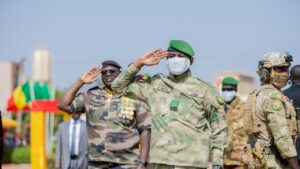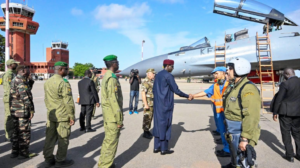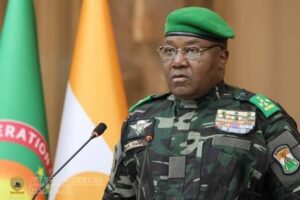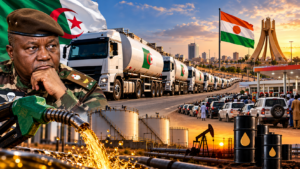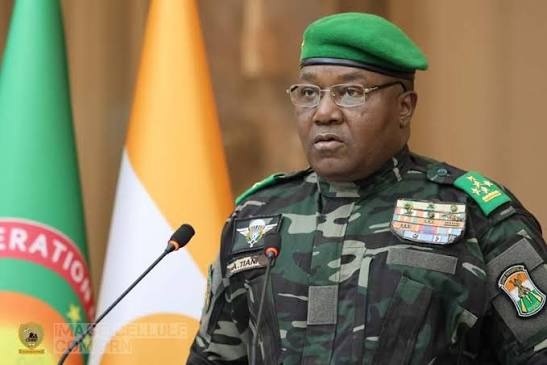
The July 2023 military takeover in Niger was justified as a necessary intervention to restore security, end corruption, and reclaim national sovereignty lost under former President Mohamed Bazoum. Yet, more than a year later, the situation has deteriorated far beyond its already fragile state. Instead of fixing the problems they condemned, the ruling junta—led by General Abdourahamane Tiani—has deepened Niger’s instability, leaving citizens, businesses, and the economy to bear the consequences.
Military leaders trade sovereignty for opaque alliances
The junta’s bold claim of restoring sovereignty through the expulsion of foreign military forces has been undermined by a series of questionable partnerships. While withdrawal of French and U.S. troops was framed as a triumph of self-reliance, Niamey has quietly embraced new, less transparent security arrangements. The recent arrival of Algerian forces at Madama—over 200 kilometers inside Niger’s border—demonstrates a pattern of unilateral decision-making that bypasses democratic oversight. Without parliamentary debate or public consultation, these moves raise serious concerns about who truly holds power in Niger and at what cost to national independence.
Where the CNSP once accused the Bazoum administration of ‘foreign subjugation,’ it now appears to be handing the reins to a different set of foreign actors—this time, with even less scrutiny and accountability. The promise of liberation has given way to a sovereignty paradox: Niger is no longer under one set of outsiders’ control, but under many, with little clarity on the terms or long-term implications.
Security vacuum worsens despite military campaigns
The junta’s primary justification for seizing power was the escalating threat from armed groups like EIGS and JNIM. Yet, military operations have failed to translate into tangible gains. Airstrikes and battlefield announcements have done little to curb insurgent activity. In regions such as Diffa, Maradi, Tahoua, and Tillabéri, communities continue to suffer under prolonged school closures and shuttered health centers. The loss of life and displacement of civilians have not abated—only obscured by official rhetoric and selective reporting.
The military leadership insists on the strength of its armed response, yet the persistent instability tells a different story. Rather than asserting control, the regime seems trapped in a cycle of reaction, with militants adapting tactics faster than government forces can respond. The result is a widening security void where civilians remain the most vulnerable.
Economic stagnation exposes hollow independence claims
Beyond security, the junta’s ability to deliver on economic promises has also faltered. Grand declarations about resource independence now clash with stalled energy initiatives. The Kafra oil permit remains mired in bureaucratic delays, while negotiations for the trans-Saharan gas pipeline have stalled amid shifting political priorities. Foreign investors, once hopeful about reforms, now face heightened uncertainty, deterring long-term commitments.
Meanwhile, public infrastructure projects have ground to a halt, and inflation continues to strain household budgets. The promise of economic revival under military rule has been replaced by stagnation, with ordinary Nigeriens paying the price through rising costs and shrinking opportunities.
A climate of silence masks growing discontent
Public dissent that once fueled protest against Bazoum’s government is now subdued—but not absent. While some civil society leaders and journalists have been co-opted or sidelined, pockets of resistance persist. Critics point to a troubling double standard: the same voices that once condemned mismanagement under civilian rule now remain passive—or worse, complicit—as the junta tightens its grip on power.
The silencing of opposition is explained away as a necessary measure for stability, yet it only fuels deeper skepticism. With each closed newspaper, detained activist, or censored broadcast, the regime weakens its own legitimacy. The mirage of a united front is crumbling, revealing a society divided between those who benefit from the status quo and those who are paying the highest price.
No end in sight for Niger’s painful transition
More than a year after the coup, Niger stands at a crossroads. The junta’s claim to restore order and dignity has dissolved into deeper crises. Sovereignty remains a contested ideal, security remains elusive, and the economy stagnates under uncertainty. While the generals speak of rebuilding the nation, the evidence suggests they are repeating the failures they once condemned—and in the process, sacrificing the future of millions of Nigeriens along the way.