Ouagadougou talks highlight fragility of Sahel alliance without key member
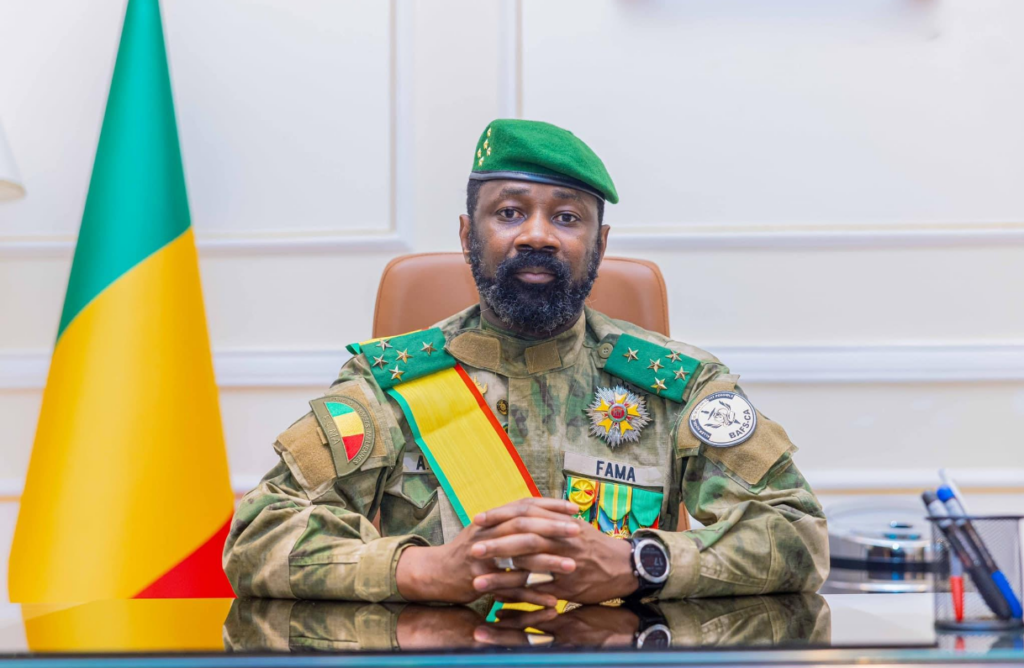
As Mali’s transitional leader, Assimi Goïta, arrives in Ouagadougou for high-level talks with Burkina Faso’s Ibrahim Traoré, the strategic absence of Niger’s Abdourahamane Tiani is raising eyebrows across the Sahel. The rare bilateral summit between Bamako and Ouagadougou—scheduled for November 2026—underscores the growing pains of the Alliance of Sahel States (AES), which has struggled to maintain cohesion amid widening cracks in regional security and diplomacy.
The joint meeting, billed as both a working visit and a gesture of solidarity, signals deepening ties between two of West Africa’s most militarized governments. Yet the glaring omission of Niamey has cast a shadow over what was supposed to be a show of unity among the three-nation confederal bloc formed to counter shared threats. Diplomatic analysts warn that without all three heads of state present, the gathering risks sending mixed signals to allies and adversaries alike about the AES’s long-term stability.
From confederal dream to diplomatic tightrope: why the Niger factor matters
The AES emerged in 2023 as a bold experiment in regional self-reliance, uniting Burkina Faso, Mali, and Niger under a banner of anti-colonial sovereignty and collective security. But with Abdourahamane Tiani notably absent from the Ouagadougou talks, observers are questioning whether the alliance’s vaunted “unity of purpose” can survive the pressures of national priorities and shifting alliances.
While both Goïta and Traoré have framed their meeting as a step toward deeper bilateral cooperation, the optics of a two-state summit in a three-member alliance are stark. After all, the AES’s founding charter explicitly emphasizes trilateral coordination as the cornerstone of its defense, economic, and political strategy. The absence of Niger’s president from this symbolic gathering—just weeks after West African foreign ministers met in the same city to affirm AES principles—only deepens suspicions that cracks are forming in the foundation.
Security and sovereignty: the AES’s unmet promises
In theory, the three Sahel states share a common enemy: transnational jihadist networks that have destabilized vast swaths of the region. In practice, however, the AES has yet to deliver on its promise of pooled military resources and joint counterterrorism operations. Analysts point to logistical hurdles, divergent defense strategies, and—now—what appears to be declining diplomatic synchronization among member capitals.
The Ouagadougou meeting was expected to address these very issues. With cross-border attacks rising in the Liptako-Gourma region and foreign mercenary groups exploiting porous borders, the need for synchronized action has never been more urgent. Yet the absence of Niger’s leadership suggests that the AES may be prioritizing bilateral engagements over multilateral discipline—a risky gamble that could erode trust among members and weaken the bloc’s negotiating power with international partners.
Bilateral momentum vs. trilateral vision: who benefits?
Proponents of the Ouagadougou talks argue that small-scale, targeted cooperation between Mali and Burkina Faso can serve as a building block for broader regional integration. They point to recent joint military exercises and shared intelligence platforms as evidence that bilateral initiatives are bearing fruit. However, skeptics caution that such incremental steps fall short of the systemic changes the AES promised to deliver.
What’s more, the decision to exclude Niger from the summit raises a troubling question: does the AES still operate on the principle of all for one and one for all, or has it quietly morphed into a de facto Mali-Burkina entente with Niger as a junior partner—or worse, an afterthought? The answer could determine whether the alliance survives beyond its third year.
Diplomatic ripple effects: what Ouagadougou’s outcome means for West Africa
The stakes extend beyond the Sahel’s borders. As the AES seeks to redefine its relationship with the Economic Community of West African States (ECOWAS) and traditional partners like France and Russia, its internal coherence is under scrutiny. A weakened or divided AES risks emboldening regional militant factions and accelerating the spread of instability into coastal West African states. Conversely, a revitalized alliance—with all three members fully engaged—could position the bloc as a new geopolitical force capable of reshaping the region’s security architecture.
For now, the ball is in the court of Abdourahamane Tiani. Will he respond to the Ouagadougou overtures with a counter-summit? Or will silence from Niamey signal a broader realignment within the AES? One thing is clear: the future of the three-nation confederation may hinge on whether its leaders can overcome national agendas long enough to honor the alliance’s original vision.
In a region where borders are increasingly porous and threats are borderless, the cost of fractured leadership could be measured in lives lost—and opportunities squandered.