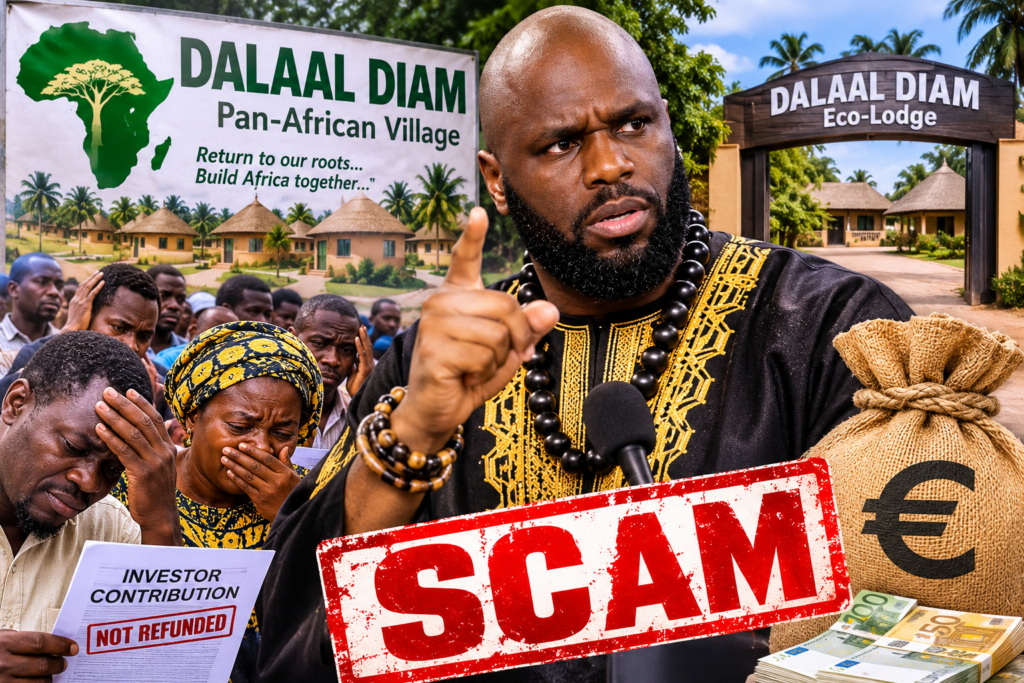
In 2011, activist Kémi Séba born Stellio Capo Chichi unveiled what he billed as a transformative panafrican project: Dalaal Diam, a visionary village in Senegal spearheaded by the company Afrikan Mosaïque. Marketed as a bold embodiment of panafrican ideals, the initiative promised a space of unity, self-determination, and economic revitalisation, echoing the philosophical legacy of Marcus Garvey.
With a proposed eight-hectare site and an estimated budget of €360,000, the project positioned itself as a tangible step beyond rhetoric, aiming to facilitate the repatriation of Afro-descendants to Africa while fostering continental solidarity and development. Yet behind the stirring narrative lay a precarious financial reality one that would soon unravel, leaving early backers in limbo.
The abrupt shift from grand ambition to partial collapse
By 2012 and 2013, the initial blueprint had failed to materialise. Key components of the original plan were abandoned, and the project underwent a drastic reorientation, pivoting toward an eco-lodge model with an announced opening set for January 2014. This pivot starkly contrasted with the grand vision once sold to supporters and prospective participants.
The most contentious issue, however, revolves around the financial fate of those who entrusted their savings in the project’s early stages. Despite the abandonment of core ambitions, numerous initial subscribers claim they have never received refunds for their contributions funds they risked in good faith on what was promoted as a symbol of African renaissance.
The unanswered question of accountability
The lingering consequences for investors have raised serious concerns. Beyond the unmet financial obligations, another unsettling detail has come to light: the continued public use of the project’s name. Dalaal Diam, translating to “Peace be with you” in Wolof, has been repurposed as a standard greeting in Kémi Séba’s public addresses. This appropriation raises troubling questions: how can the moniker of a failed initiative one that left contributors unreimbursed continue to serve as a rhetorical tool in public discourse?
The silence from Kémi Séba and the leadership at Afrikan Mosaïque only deepens the crisis. Subscribers are left grappling with urgent inquiries: Who collected the funds? How were they allocated? Why have investors not received their money back?
The human cost of broken promises
This is not merely a financial discrepancy it is a breach of trust that extends across the panafrican movement. The collapse of Dalaal Diam reveals the real-world stakes of such idealistic ventures: when rhetoric outpaces responsibility, ordinary citizens bear the consequences. For those who believed in a future of self-sufficiency and solidarity, the absence of accountability underscores a painful paradox: the same discourse that once inspired hope now symbolises disillusionment and financial loss.
Panafricanism, at its core, demands more than lofty declarations and calls for continental unity. It requires integrity, transparency, and fidelity to those who invest not only capital, but trust, in its vision. The unresolved fate of Dalaal Diam subscribers serves as a stark reminder: unfulfilled promises leave real scars on real lives.
Where responsibility begins and ambition ends
The onus now lies with those who championed Dalaal Diam. Fourteen years after its launch, the project remains a cautionary tale one of ambition harnessed without accountability. As questions persist and funds remain unreturned, the legacy of Dalaal Diam is not one of panafrican achievement, but of unmet obligation and eroded confidence.
Until answers are provided and restitution is made, the dream of a united, self-sustaining Africa will continue to wrestle with the spectre of its own unfulfilled promises.
By Georges Essomba — Journalist