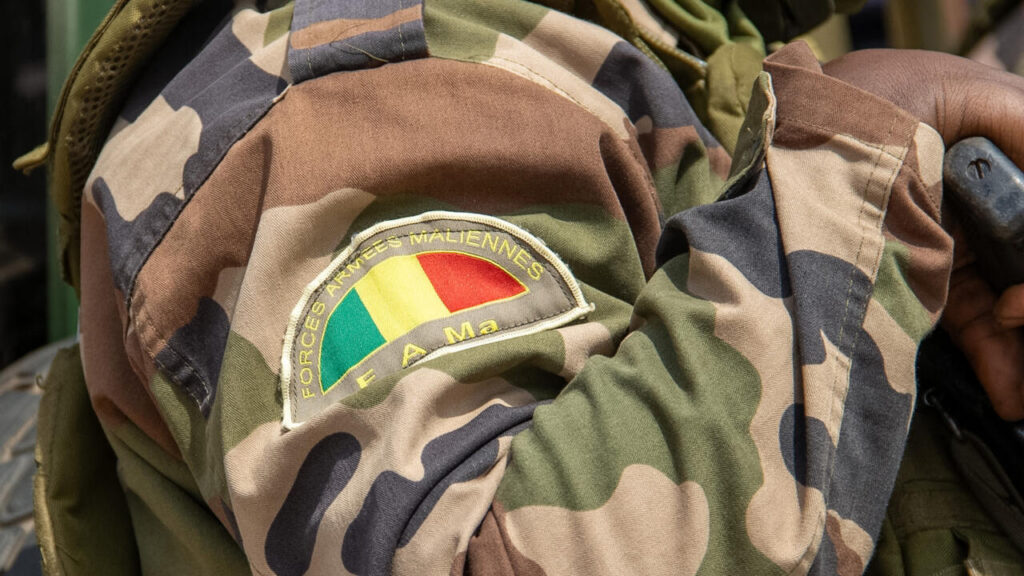
As security crises deepen across Mali, Burkina Faso and Niger, military-led governments face mounting pressure to rethink their strategies against the Group for the Support of Islam and Muslims (JNIM), an al-Qaeda-affiliated insurgency. A landmark report by the International Crisis Group (ICG), released in mid-November, now urges the Alliance of Sahel States (AES) to consider direct talks with the JNIM—despite its declared goal of toppling these very regimes.
The ICG’s urgent call: Why now?
The ICG’s November report argues that four years of intensified military operations in the Sahel have yielded diminishing returns. Despite alliances like the AES—formed by Mali, Burkina Faso and Niger in 2023—jihadist violence has escalated, spreading into previously stable zones. The JNIM’s recent public calls for regime change have intensified skepticism about whether dialogue is even possible.
Yet the ICG insists that conditions are ripe for a strategic shift. After years of failed offensives and growing civilian discontent over insecurity and governance failures, the report suggests that the regimes may now have leverage to extract concessions from the JNIM—provided they act swiftly and decisively.
Public reaction: A divided Sahel
The ICG’s recommendation has ignited fierce debate across the region and beyond:
- Supporters argue:
- Military solutions alone cannot end a conflict fueled by economic marginalization and weak governance.
- Localized truces or limited accords could reduce violence and allow humanitarian access to millions displaced by the crisis.
- Examples from other conflicts (e.g., Colombia, Philippines) show that even partial negotiations can create space for broader peace processes.
- Critics warn:
- Any negotiation with the JNIM—openly committed to overthrowing secular states—would amount to surrendering to terrorism.
- Similar past attempts in the Sahel (e.g., in Mali under former President Ibrahim Boubacar Keïta) ended in failure and emboldened jihadist factions.
- Regional allies, particularly in West Africa, may perceive talks as a betrayal of collective security efforts under the ECOWAS framework.
What comes next? Pathways to dialogue—or escalation
The ICG’s report outlines three potential scenarios for the AES governments:
- Scenario 1: Tactical pauses
Limited ceasefires targeting specific regions or issues (e.g., prisoner exchanges, humanitarian corridors). These could test the JNIM’s willingness to engage without legitimizing the group.
- Scenario 2: Backchannel negotiations
Indirect talks via intermediaries (e.g., religious leaders, civil society) to explore confidence-building measures. This approach minimizes political fallout while probing the JNIM’s flexibility.
- Scenario 3: Conditional engagement
Full-fledged negotiations tied to strict preconditions—such as the JNIM renouncing violence, breaking ties with al-Qaeda, and committing to democratic processes. This would require unprecedented concessions from both sides.
The report cautions that inaction is not an option. With the JNIM’s influence expanding and state authority weakening, the AES governments must weigh the risks of continued confrontation against the uncharted territory of engagement.
Key questions unanswered
While the ICG’s proposal has catalyzed urgent discussion, critical questions remain:
- Can the JNIM be trusted to honor any agreement, given its ideology and fragmented command structure?
- How will regional partners (e.g., Algeria, Chad, or coastal West African states) react to unilateral AES moves?
- What role could international actors (e.g., the UN, EU) play in facilitating or endorsing such talks?
- How will civil society—already skeptical of both the regimes and jihadists—respond to negotiations?
The road ahead: Gamble or necessity?
The ICG’s report arrives at a pivotal moment. The AES governments face a stark choice: double down on a military-first approach, risking further erosion of state control; or embrace dialogue as a high-stakes gamble to reclaim stability. Either path carries profound consequences—not just for the Sahel, but for Africa’s broader counterterrorism landscape.
As the debate intensifies, one thing is clear: the status quo is untenable. The question is no longer whether the AES should consider negotiating with the JNIM, but how—and under what conditions. The answer will shape the Sahel’s trajectory for years to come.