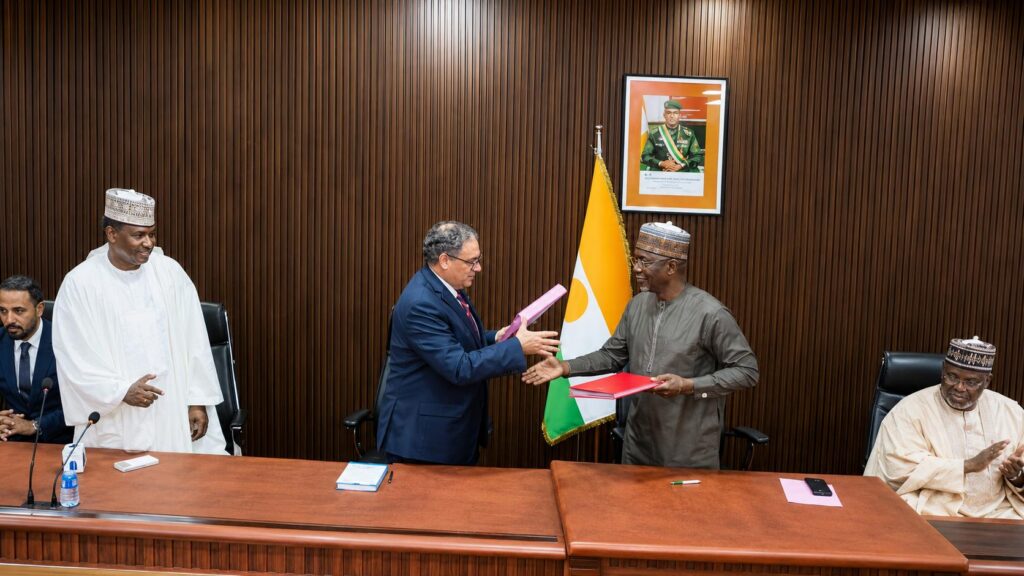
The government of Niger has taken a highly controversial step by signing a staggering $1.9 billion contract with the obscure Canadian-based Zimar Group for the construction of a massive oil refining and petrochemical complex in Dosso. While officials tout this as a landmark achievement for national pride and energy independence, the agreement has sparked intense scrutiny over its feasibility and transparency.
Why a 100,000-barrel-per-day facility is raising alarms
At first glance, the promise of a state-of-the-art refinery capable of processing 100,000 barrels of crude oil daily sounds transformative for a nation eager to harness its natural resources. Yet, beneath the bold rhetoric of self-sufficiency lies a web of unanswered questions. A deep dive into Zimar Group’s background reveals glaring red flags: no verifiable track record in large-scale oil projects, no documented experience in heavy engineering ventures of this magnitude, and a complete lack of clarity regarding its financial backers.
Committing nearly half of Niger’s GDP to a contractor with no proven credentials isn’t just risky—it borders on reckless governance. The absence of technical guarantees, financial safeguards, or industry partnerships raises the specter of a project doomed to stall midway, leaving the nation saddled with debt and abandoned infrastructure.
Empty promises vs. hard operational realities
Oil refineries aren’t built on political slogans or short-term electoral gains—they demand rock-solid financing, cutting-edge technology, and trusted industrial alliances. The $1.9 billion pledge, touted as a game-changer, crumbles under scrutiny when its funding sources and implementation strategy remain shrouded in secrecy.
Without transparent evidence of Zimar Group’s financial muscle or technical expertise, this colossal venture risks becoming a white elephant—a multi-billion-dollar liability with no pathway to completion. The government’s bypassing of conventional financing channels and reputable industry players only deepens concerns about the project’s viability in Niger’s current economic and logistical landscape.
The cost of opaque deals to Niger’s future
Niger’s oil wealth belongs to its people, not to serve as collateral in high-stakes gambles that prioritize political spectacle over sustainable development. The urgency to reduce import dependence is understandable, but the chosen route—a murky contract with an untested firm—threatens to derail the country’s energy ambitions before they even begin.
For this deal to have any credibility, authorities must immediately disclose the full terms of the agreement, provide concrete proof of Zimar Group’s financial and technical capabilities, and release independent feasibility studies. Anything less would reduce this $1.9 billion pledge to just another empty promise in West Africa’s troubled history of natural resource mismanagement.