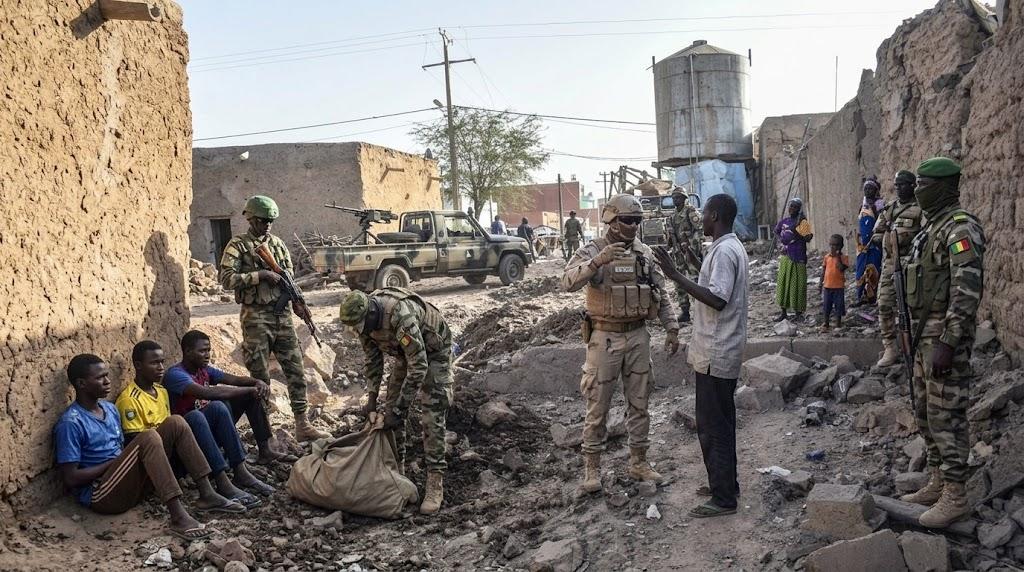
Mali’s military command has acknowledged a tragic incident in a conflict zone that left civilians dead and injured, yet withheld critical details about the attack. In a terse Wednesday statement, the general staff of Mali’s armed forces confirmed receiving reports of a deadly operation resulting in ‘losses of human life and injuries,’ but provided no specifics on location, timing, date, or casualty figures.
Unanswered questions after strikes near Zanakoro
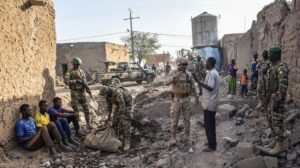
The vague acknowledgment follows reports of deadly airstrikes on October 12 in Zanakoro, a village in the Ségou region, where local sources and community leaders describe a devastating attack during a community celebration. At least eight people, including three girls under ten and a pregnant woman, were killed in the bombardment, with several others sustaining serious injuries. Survivors reported successive strikes destroying homes and forcing families to flee into the surrounding bush.
The military’s October 14 communiqué neither confirms nor denies a link to Zanakoro, leaving families in limbo and fueling suspicions. Without official confirmation or an independent investigation, the public is left to piece together fragmented accounts while authorities remain silent on key details.
Pattern of abuses raises alarm across central Mali
The latest incident is not an isolated case. Human rights organisations have long documented systematic abuses tied to military operations involving Malian troops and Russian-backed forces, raising serious concerns about accountability and civilian protection.
In late September 2026, Amnesty International published a damning report detailing seven incidents between June 2023 and December 2025 along the Mauritanian border. The report cites 34 civilians killed—some executed, others burned or tortured—along with allegations of arbitrary detentions, forced disappearances, looting, and property destruction. Peul, Tuareg, and Arab communities were particularly affected as families were targeted based on unconfirmed suspicions of supporting armed groups.
The organisation warned that several documented cases may constitute war crimes and urged Malian authorities to conduct credible, independent investigations and hold perpetrators accountable. These findings underscore the urgent need for oversight mechanisms capable of monitoring military actions and protecting civilian populations.
Africa Corps inherits Wagner’s legacy of violence
The transition from Wagner Group to Africa Corps has failed to bring relief to civilians caught in military crossfire. Africa Corps, a Russian-backed force operating under Moscow’s command, began replacing Wagner in Mali in 2025, yet the pattern of abuses has persisted largely unchanged.
On July 31, 2026, Human Rights Watch reported that eight civilians, including three children, were killed in airstrikes attributed to Africa Corps in the village of Kyrnia, Mopti region, on June 15. Witnesses described two bombs landing near a village chief’s residence and a livestock market, despite the proximity of militants from the Group for the Support of Islam and Muslims (JNIM). The strikes appeared indiscriminate, raising grave concerns about compliance with international humanitarian law.
These allegations challenge the narrative that Africa Corps represents a shift toward more responsible military engagement. Instead, they reinforce the perception that civilian casualties continue unabated, with little transparency or accountability.
Civilian protection must not be an afterthought
Mali faces a severe security crisis, with jihadist attacks by groups like JNIM causing mass displacement, economic disruption, and tragic loss of life. While the government has a duty to protect its citizens, this imperative cannot justify indiscriminate violence or the silencing of affected communities.
International humanitarian law requires parties to conflict to distinguish between combatants and civilians, avoid disproportionate attacks, and take all feasible precautions to prevent civilian harm. When civilian deaths occur, authorities must investigate promptly and transparently, identify those responsible, and ensure accountability where violations are confirmed.
Transparency is not a political concession—it is a cornerstone of public trust. Without clear communication and independent verification, the military’s acknowledgment of civilian harm risks becoming merely symbolic, deepening skepticism and eroding confidence in state institutions.
Families demand truth as the military hesitates
The October 14 communiqué marks a rare admission of civilian casualties, yet leaves unanswered the most pressing questions: Where did the incident occur? When? How many were killed or injured? Were they civilians? Has a formal investigation been opened? Have families been notified?
The link between the military’s statement and the reported strikes in Zanakoro remains unclear. Official confirmation with verifiable evidence could dispel doubts, but its absence risks entrenching mistrust in military communications. For survivors and grieving families, the stakes go beyond acknowledgment—they demand justice, truth, and reparations for documented violations.
As long as grave accusations go unexamined and responsibility remains unassigned, the shadow of military excess will continue to loom over Mali’s operations. A mere recognition of tragedy cannot be the end of the story—it must mark the beginning of accountability.